
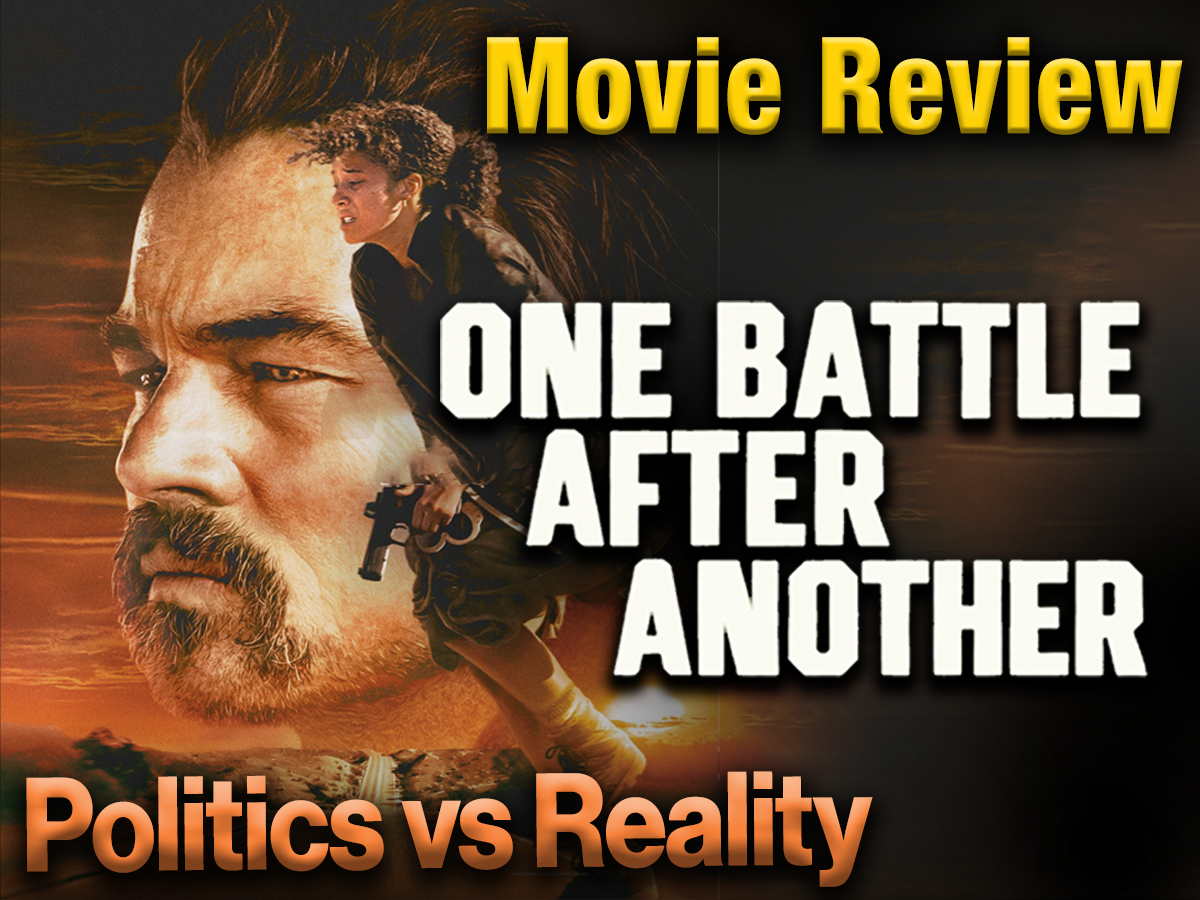
One Battle After Another is a wild, sprawling, 2-hour-and-41-minute film that stars Leonardo DiCaprio and Sean Penn. So many critics are either celebrating or panning it because they are bringing their issues into the theater instead of just watching the film.
Here’s what you need to know: One Battle After Another pulls together a story about protest, domestic terrorism, family issues, politics, race, sex, and ideology into a complex, deeply textured film that is as flawed as it is fabulous … but probably not in the way you’re thinking. With so many themes at play, the critical question is whether or not writer and director Paul Thomas Anderson pulls it off or overshoots the goal. That’s exactly what we’ll dig into today, and fair warning that I am going to touch on a few spoilers, but nothing I say will spoil the film itself. So, let’s get into it.
You can read the review below or watch the video review on YouTube:
Bob and Perfidia are members of a domestic revolutionary group known as The French 75 back in the early 2000s. They are a freedom-fighting group promoting free borders, free bodies, and free choice. The film opens with the team breaking into a migrant detention center without a hitch, and Perfidia confronts the commanding officer, Steven J. Lockjaw, in a demeaning way that triggers his obsessive desire for her, which drives the plot of the film. The team pulls off violent, public jobs with no casualties, until Lockjaw tracks down Perfidia and gives her a private deal to walk free. However, things eventually go wrong, Perfidia is caught, and the team goes dark. In the aftermath, Bob is left alone with their newborn daughter, Willa, who he raises under a false name as they go on the run.
Sixteen years later, Colonel Lockjaw gets an invite to the Christmas Adventurers Club, a white supremacist society of powerful men who covertly rule over areas of American life. The only catch is that he has to willingly expose himself to a vetting process that will dig up any and every exposure he may have had with Black people. Since he is obsessed with Perfidia, he thinks her daughter could be his, and that turns Willa into a loose end that needs to be addressed. This sparks a chain reaction of events that equate to invading a small American town to find Bob and Willa. And that’s really where the story should begin and it takes about an hour to get there.
First Impressions of the Film
So, One Battle After Another is dealing head-on with extreme themes that range from domestic terrorism to social revolution, political control, racism, immigration, and family drama. With material like that, one might expect the film to carry a heavy-handed radical left or radical right political message, pushing one side or the other. I’ve heard people call this film leftist or Trumpian, and their interpretation of the film is generally defined by their own political expectations fed by the imagery of the film. If you bring your political baggage to the movie, you’re very likely to see the film you’re primed to see from the point of view you bring into the theater. However, that is not how the film was made to be seen, and we can tell this from how the director subverts so many of his own plots and themes.
One Battle After Another is more of a centrist film that resists turning into a simple “us vs. them” narrative. Regardless of why each character acts the way they do — politically, socially, or personally — the heart of the story stays with Bob and his love for Willa. He is a crappy dad, except that he loves his baby girl and he will do anything to keep her safe. If there is a single golden message in this gawdawful mess of a film, it’s the overriding love that Bob has for his daughter.
Domestic Terrorism on Screen
One of the core strengths of One Battle After Another is how it handles domestic terrorism by not shying away from the despicable nature of violence. It draws on the history of 1970s radical groups and tactics, groups that were both liberal and conservative that committed violence in the name of their political cause such as abortion clinic bombings, the Weather Underground’s attacks on government buildings, and Ku Klux Klan firebombings. These examples feel like they were fed straight into the French 75’s playbook for these fictional “freedom fighters,” who are fighting against modern issues of border control and personal freedom.
It would be easy to think the film is lionizing leftist politics and promoting domestic terrorism, but it isn’t because it is borrowing from both the radical left’s and the radical right’s history of violence. It shows us how screwed up militant violence is, with nothing glamorous about it. They achieve nothing, and when one of them is caught, the wind turns instantly as names are named. Lionizing a political group generally doesn’t include portraying them as utter failures with zero positive outcomes, and yet if we don’t stop to really think about this, it’s likely we won’t see it.
The Pregnant Rifle Scene – Symbolism vs Shock Value
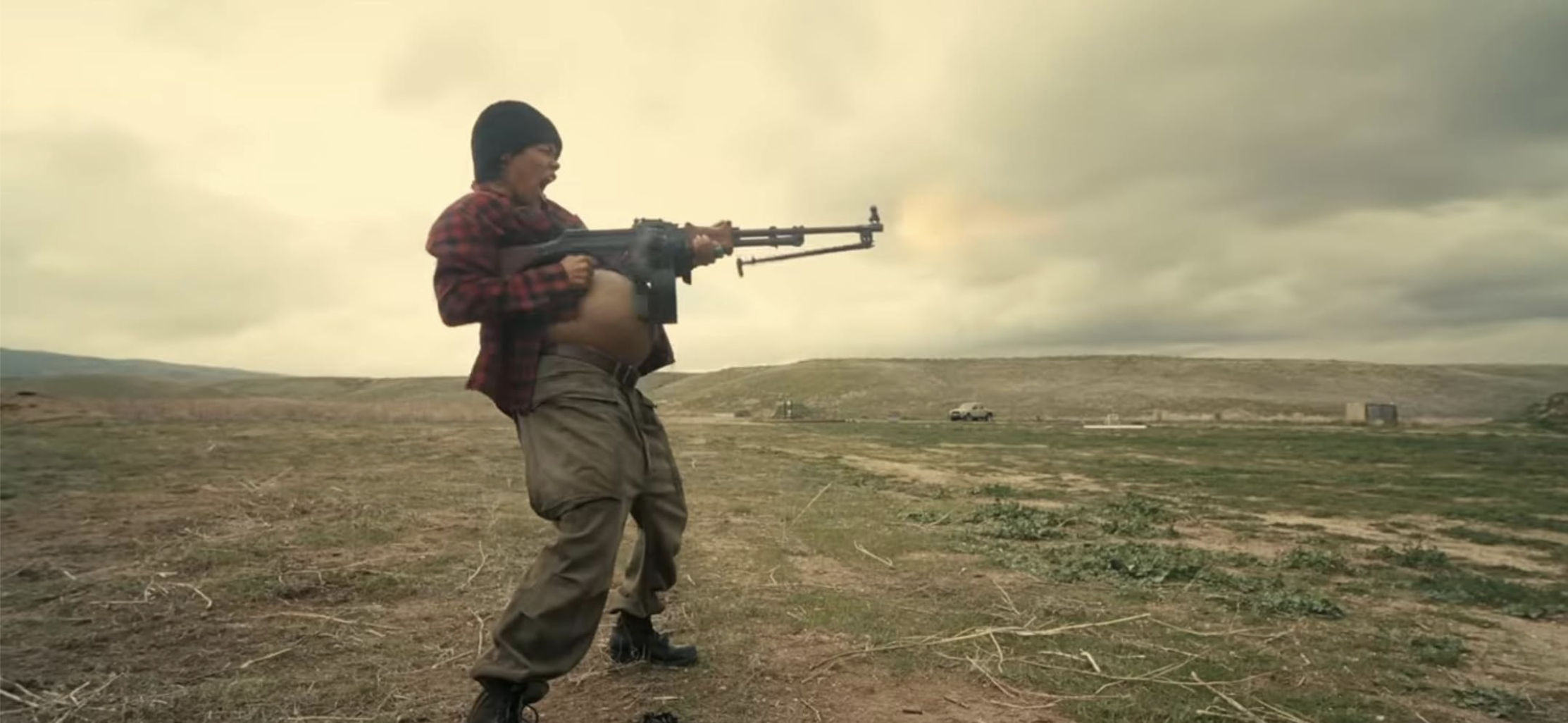
Then there’s the image of Perfidia nine months pregnant and firing an automatic rifle at a shooting range. Her belly swell sticks out beneath her shirt while she braces the rifle against the baby for support and pulls the trigger. At first glance, it looks like leftist propaganda of a black woman at war, packaged neatly for conservative’s social media feeds. The image is so absurd that it immediately inspires a visceral response in viewers ,but you have to stop and think. Paul Thomas Anderson is not a rookie. He knows how imagery carries messages in film, especially imagery with so many political trapping. Yet, he still chooses to do this scene, knowing it will undermine the very narrative Perfidia seems to be supporting.
So, what is Anderson really trying to say? He has her screaming while shooting, with the but of the gun pressed against the baby. I think it’s because she knows that baby is Colonel Lockjaw’s. She sold a part of herself to stay free. Her self-loathing, the absurdity of the image, and the damage she may be doing to the baby … none of this is not political. It’s emotional. It’s human, and it’s female. She hates herself and is carrying a baby from a man she despises, and she chooses not to abort. That scene holds as many conservative messages as liberal ones, but if you walk in with a fixed point of view, you’ll miss that nuance.
A Lens into Government Overreach
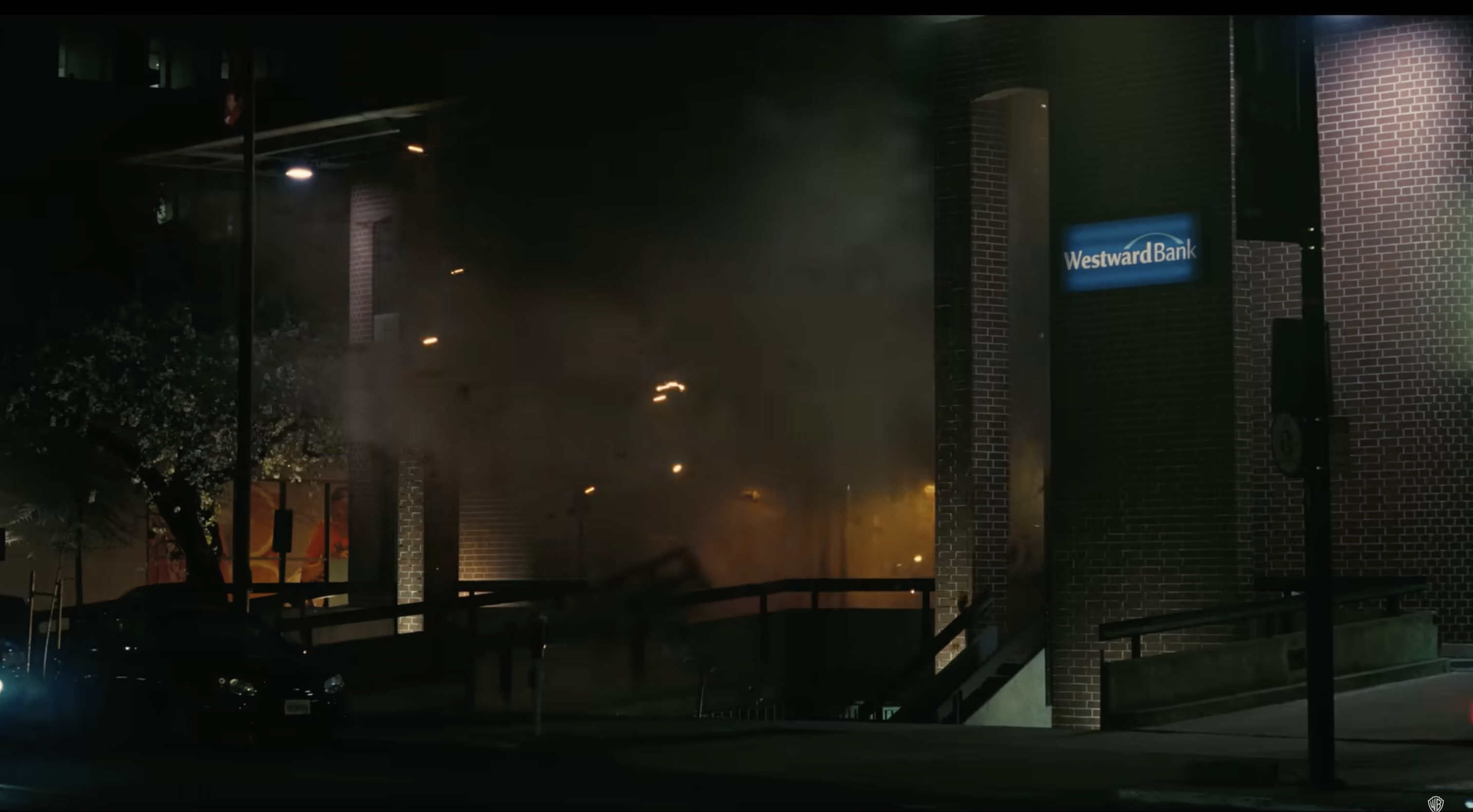
We also see government overreach at its most grotesque when Colonel Lockjaw mobilizes federal military resources under the cover of official channels to find Bob and sixteen-year-old Willa. The terror of seeing soldiers roll into an American town as they invade streets, sweeping through buildings, and search for migrants is presented in the most absurd light possible. Everything is over the top. Nothing is believable … except that ironically we are seeing similar actions in the real world today. While the military stages a “sanctuary city raid,” Lockjaw secretly redirects a group of men to find a teenager and her father without any further explanation to his team. Everyone who sees what’s happening knows it’s wrong, because it’s clear he’s not there for immigrants. The absurdity of the situation cuts through political ideology, and that’s why it works as a story device to turn this theme upside down. We all recognize one man’s unchecked power, and no one under his command can stop it.
The Christmas Adventurers Club, White Supremacy, and Black Obsession
The film also unpacks a hidden power structure through the bizarrely named Christmas Adventurers Club, which is a white, racially “pure” society that Lockjaw is desperate to join, despite his obsession with Perfidia. To be accepted, he must pass a “vulnerability test.” However, after all these year’s Lockjaw finally decided to deal with his one weakness, which is Willa, and he thinks he can outsmart the investigation by eliminating his “problem” by spending hundreds of thousands of tax payer dollars to solve that problem so that he can join the group. In an equally absurd set of circumstances, he gets what he wants: inclusion in the club in the most fitting way possible. It underlines the deprivation that drives Lockjaw to want a seat at the table as well as how easily a person in a powerful position can forget that he serves the organization, not the other way around.
Paul Thomas Anderson’s Real Focus
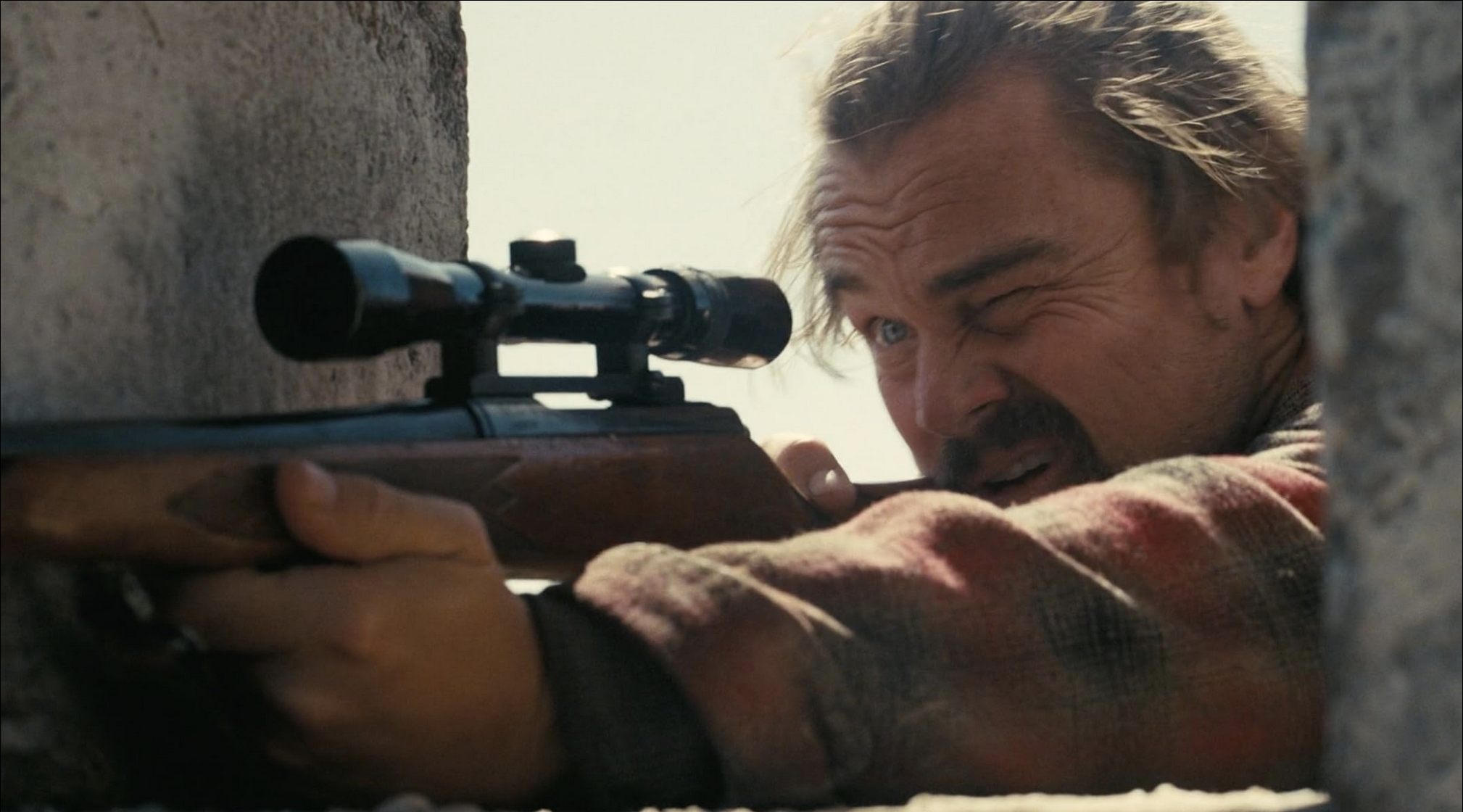
Despite the elbow pokes and political winks, One Battle After Another resists taking sides. This film doesn’t declare who’s right or wrong, even if it might seem like it does because of the focus on the French 75. Instead, it peels back the scabs to show the infected flesh beneath in order to examine the putrid rot within every theme. The only pure storyline is Bob’s love for Willa. That’s the one thing worth holding onto, and Paul Thomas Anderson knows it, which is why it’s the one that he uses to hold everything else together. If there’s any genius here, it’s in this directorial choice that tests us. Do we see what we want to see in this film? Or do we see what he presents in the way it is presented? … and what he presents is a picture of flawed ideals, ineffective choices, and people who are so busy putting their “everything” into a pursuit that never pays off that most of them lose everything. There is a very human lesson here, if we are willing to see it.
Cast and Character Development
While the characters in the film could have used a little more development to let us know who they are as people beyond just the roles that they play as part of the story, the actors all do a great job with what they are given.
- Bob (Leonardo DiCaprio) pulls off the former radical who has drowned his grief in drugs and booze with conviction. He’s compelling in every scene, but honestly, I just wish he’d burn that robe he wears through the second half of the film.
- Colonel Steven J. Lockjaw (Sean Penn) seems like someone you want to respect, but Penn leans into the role’s darkest edges, and you can’t help but hate Lockjaw for it.
- Perfidia (Teyana Taylor) is almost comically sexualized in the film, but Taylor’s performance plays directly into her character’s contradictions.
- Sensei Sergio St. Carlos (Benicio del Toro) is a highlight. He only appears in the second half of the film, but every scene he’s in is exciting. Del Toro makes you wish there were an entire movie built just around his character.
- Willa (Chase Infiniti) flat-out steals the show. This is her first major motion picture, and with only a handful of minor credits behind her, she still manages to outshine a cast of A-listers. Every scene she’s in, she holds your attention.

Pacing & Structural Challenges
For all its strengths, One Battle After Another has one glaring flaw: it feels like two shorter films fused together. The first half, focused on Perfidia and Bob, is important in the larger context because it sets up and subverts the themes the film wants to explore. Meanwhile, the second half focuses on Willa and Bob and includes most of the exciting action.
But at 2 hours and 40 minutes, the overall runtime is too long, and the story could have been trimmed by 40 minutes, which would have made it stronger. Instead of building momentum, it lingers in scenes, forcing us to sit and stew on what we’re watching, when a tighter approach could have landed with more impact. A hard-hitting, run-and-gun style of storytelling would have let the themes breathe in our minds after the credits rolled.
Instead, the film locks us into its narrative for too long, cooking us in our own political stews rather than letting us experience what Paul Thomas Anderson was really trying to convey. That’s disappointing.
The Scene that Makes it All Worthwhile
However, there’s one scene that is truly masterful. It comes at the very end of the film, and I suspect it’s the moment that has critics standing up and taking notice. I won’t give too much away, but a series of events unfold where all the characters and storylines collide.
What follows is an incredible car chase with a breathtaking blend of cinematography, geography, and motion. The way it’s shot, the way it dips in and out of perspective, keeps you locked into the action. If you’ve seen the movie, you’ll know exactly what I mean.
The choices the characters make, and the way they converge in that final confrontation, are spectacular. It’s the most original car chase sequences I’ve seen in a long time, and it’s the kind of scene that makes you glad you saw it on the big screen. For me, it’s made the movie worthwhile.
Recommendation – Is One Battle After Another Ticket-Worthy
Is this film ticket-worthy? Maybe. There is a lot to commend, but you have to be willing to put in the time for this film … in so many ways. It should have been shorter. However, it does give you a lot to talk about with people. So, I guess that’s something, right? One Battle After Another is a lot more complex than the critics give it credit for, even though so many of them are raving about it. I think their focus is placed more on their own political ideology than the story itself, which is unfortunate because their views will impact how regular people end up interpreting it.
But, hey, that is enough from me. So, One Battle After Another, what do you think about it? Are you planning to watch it in the theater or wait for it on streaming? Have you heard any of the political machinations that people are chewing on about it online? What do you think of my take that this film actually subverts everything the critics told us that it’s about? Let me know.
If you enjoyed this review, please give it a like and subscribe for more. You can also visit my YouTube channel at @ErinUnderwood for more videos.
***
If you’d like to watch ONE BATTLE AFTER ANOTHER on Blue-ray, you can use my Amazon Associate links:
- One Battle After Another, Blu-ray disk: https://amzn.to/4nJ4yJZ



 Erin Underwood Presents