
What would you do if you had a franchise that was struggling, the last film stumbled hard, and the general audience had already moved on, but you still knew the core idea was strong and more relevant than ever? In Disney’s case, you’d make Tron: Ares.
I know this might break the internet, but I think that was the right call. As wild as that sounds, I’m going to tell you exactly why. We are not going to agree on every story choice here, but if you stick with me, we’re going to get into the tech side of this film, and that’s where it genuinely surprised me.
Tron: Ares is directed by Joaquim Rønning and stars Jared Leto, Greta Lee, and Jeff Bridges. There may be a few light spoilers, but I’ll keep things fresh and focus on what works, what falls short, and why Tron: Ares might actually be one of the most authentic science fiction films of 2025.
You can read the review below or watch the video review on YouTube:
The Tech Race
The story centers around two major tech companies—ENCOM and Dillinger Systems—competing to do something that’s never been done before: permanently bring digital objects from the Grid into the real world. The problem is that anything printed from the Grid only lasts twenty-nine minutes before it disintegrates. Both companies are chasing what they call the “Permanence Code,” a piece of programming that could make digital creations truly permanent in the physical world.
That’s the spark that drives the story forward. Dillinger’s team is ahead, but when Eve Kim, a brilliant programmer at ENCOM, makes a breakthrough, Dillinger deploys his most advanced AI security agent, Ares, to retrieve her research. From there, the film becomes a conflict between humanity, artificial intelligence, and the users who think they control the programs they’ve created.
It’s a big, concept-driven story that mirrors the real-world race among AI companies today. You can draw a direct line between ENCOM and Dillinger and the rivalry among OpenAI, Anthropic, and Google. In that sense, Tron: Ares feels like it’s answering the call from humanoid robotics innovator Brett Adcock, CEO of Figure, who recently said, “We’re running out of science fiction movies from which to build startups.” The film leans into that energy, making the stakes feel futuristic while also uncomfortably familiar.
Disney’s Bold Pivot
One of the biggest complaints I’ve heard is that Tron: Ares doesn’t pick up the threads from Tron: Legacy. I get why that frustrates some fans, but I don’t think it’s a problem. It’s actually a smart business move.
If Disney had forced this film to carry the narrative baggage of Tron: Legacy into Tron: Ares, it would have collapsed under its own weight. That earlier film looked great, but it struggled to connect on a story level. Ares avoids that trap by telling a new story that feels culturally relevant and technologically aligned with where we are in 2025. That’s a bold choice for Disney. Making a film that stands alone inside a long-running franchise is risky, but it gives Tron a real chance to rebuild its audience.
This deviation is, in my opinion, one of the film’s greatest strengths. Tron: Ares is accessible to both longtime viewers and people walking in cold who don’t want homework before a night at the theater. You don’t have to catch up on multiple entries in the franchise to understand what’s going on, and that makes this film feel clean, confident, and complete in a way that many modern franchise films fail to achieve
It also shows confidence in the creative team. Rather than recycling old ideas, Ares commits to a direction that reflects today’s conversations around AI, tech giants, and the merging of digital and physical existence.
Visual Spectacle on the Grid
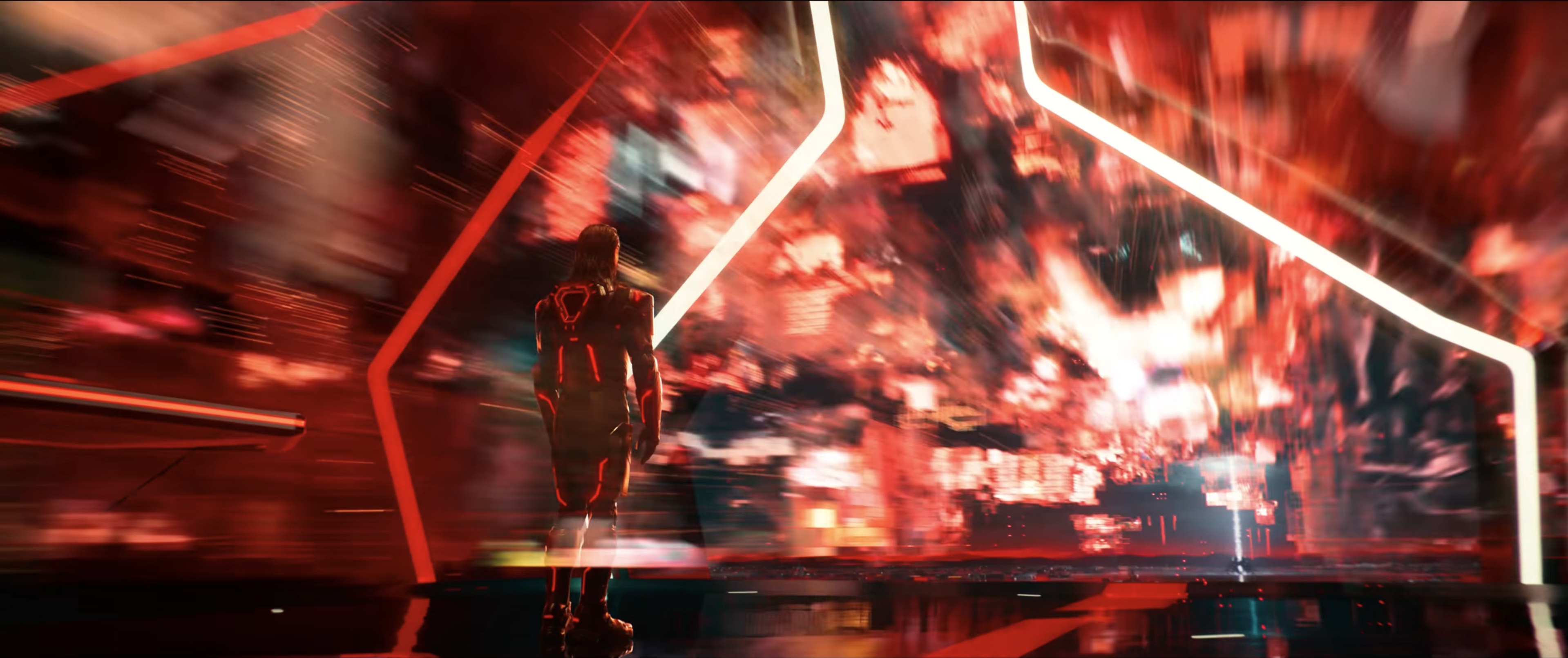
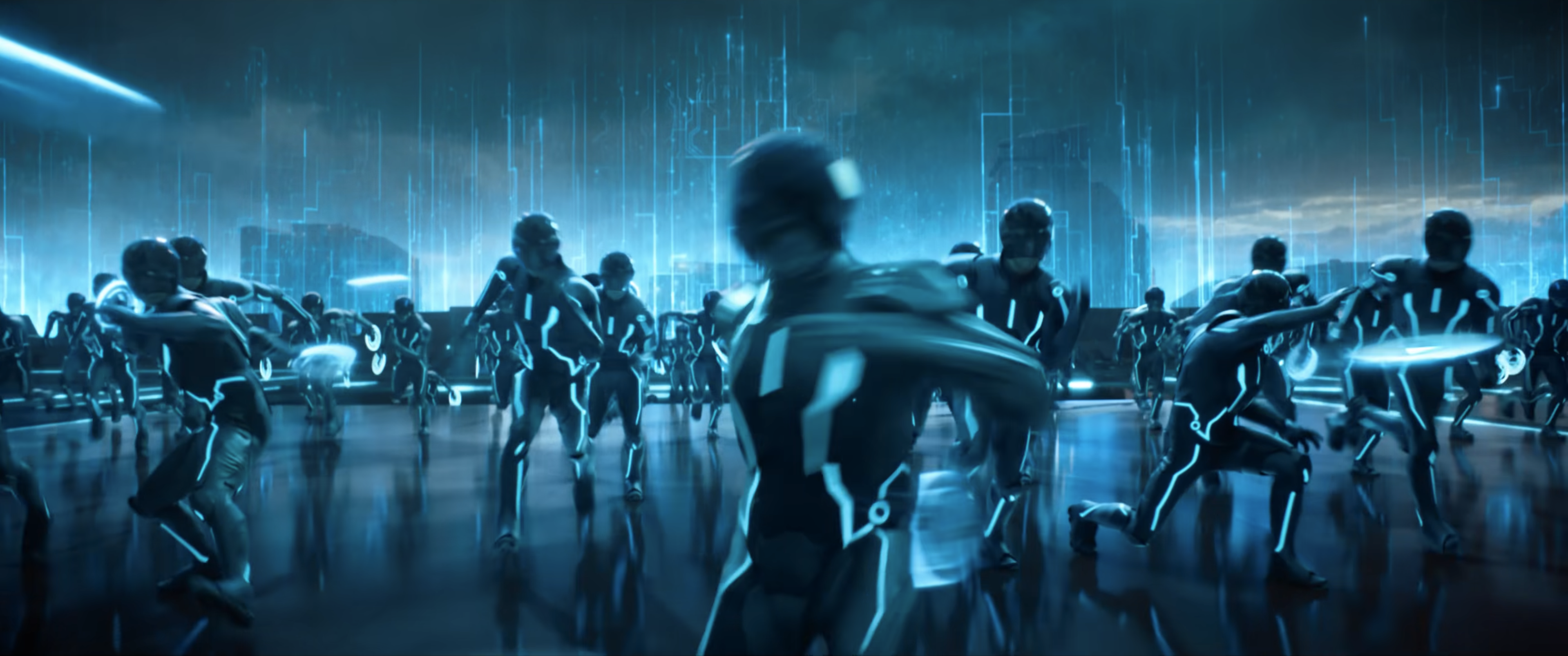
Visually, Tron: Ares is astonishing. I saw it in IMAX 3D, and it was breathtaking. The lighting, motion design, and digital architecture are next-level. Every frame has been crafted with care, from the smallest reflections on glass panels to the vast landscapes of the Grid. This is what cinematic spectacle should look like when it’s designed to support the story.
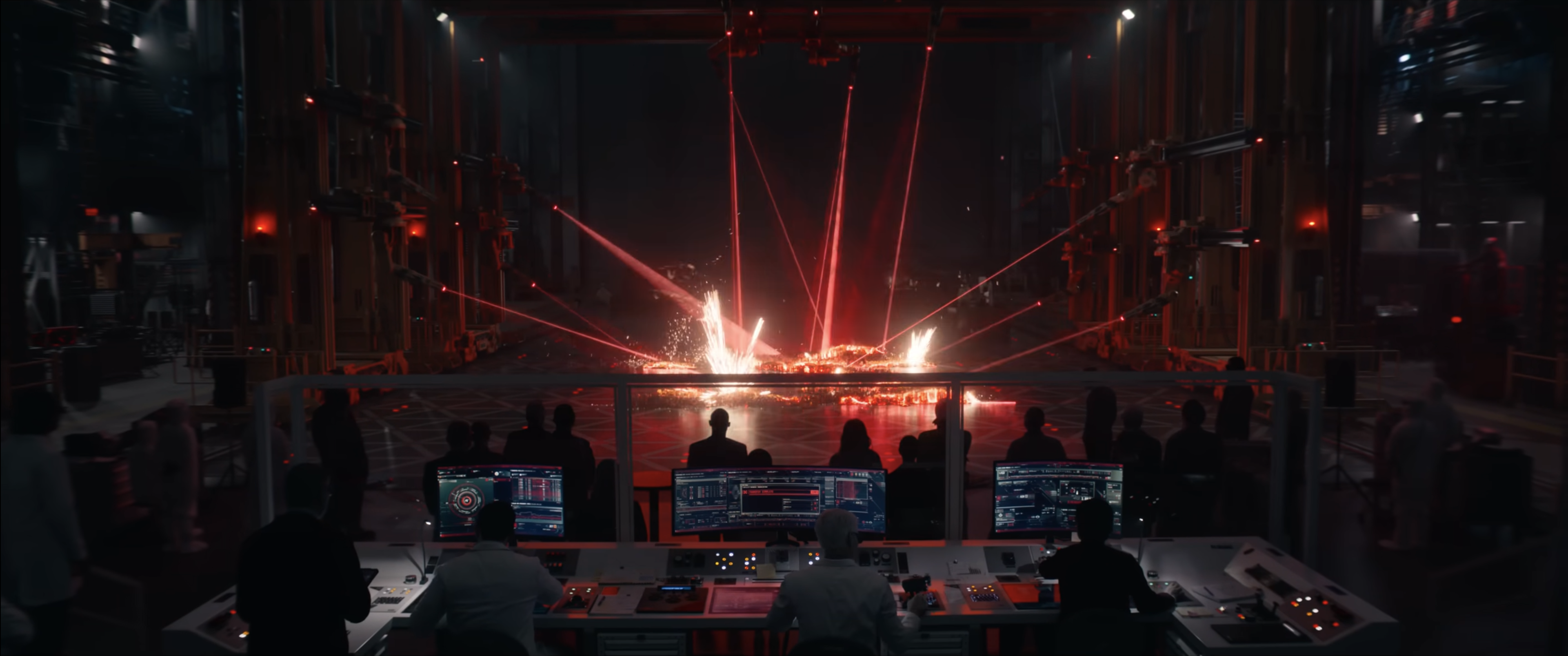
Dillinger’s digital world pulses in deep reds, which is clearly a nod to the Greek god of war and a reflection of its aggressive, power-hungry culture. ENCOM’s Grid, by contrast, glows in cool whites and blues, a calmer, more human-centric environment. The color distinction isn’t just pretty; it helps you intuitively understand which world you’re in and what each company represents.
What impressed me most is how seamlessly the real and digital worlds blend. There are no visual hiccups where the CGI feels off or the lighting doesn’t match. The production team—using a combination of traditional VFX, CGI, and AI-assisted visualization—has created a unified environment that feels alive. This team did their jobs at a master-class level.
It’s rare these days to get a film that genuinely feels “big-screen worthy,” but this one does. For eighteen bucks, it’s absolutely worth the ticket price just for the immersive experience. We don’t get many “wow factor” movies anymore. Tron: Ares exemplifies visual cinematic wonder on the big screen.
Characters and Growth
Jared Leto plays Ares, the central AI program brought into the physical world. What makes him interesting is that he’s not designed to be human. He’s a security AI trained inside an augmented adversarial system, where every loss forces him to adapt, making him increasingly logical, agile, and efficient. He reminded me a bit of Agent Smith in The Matrix, except this time, we’re watching the early stages of evolution rather than the decay of an old program.
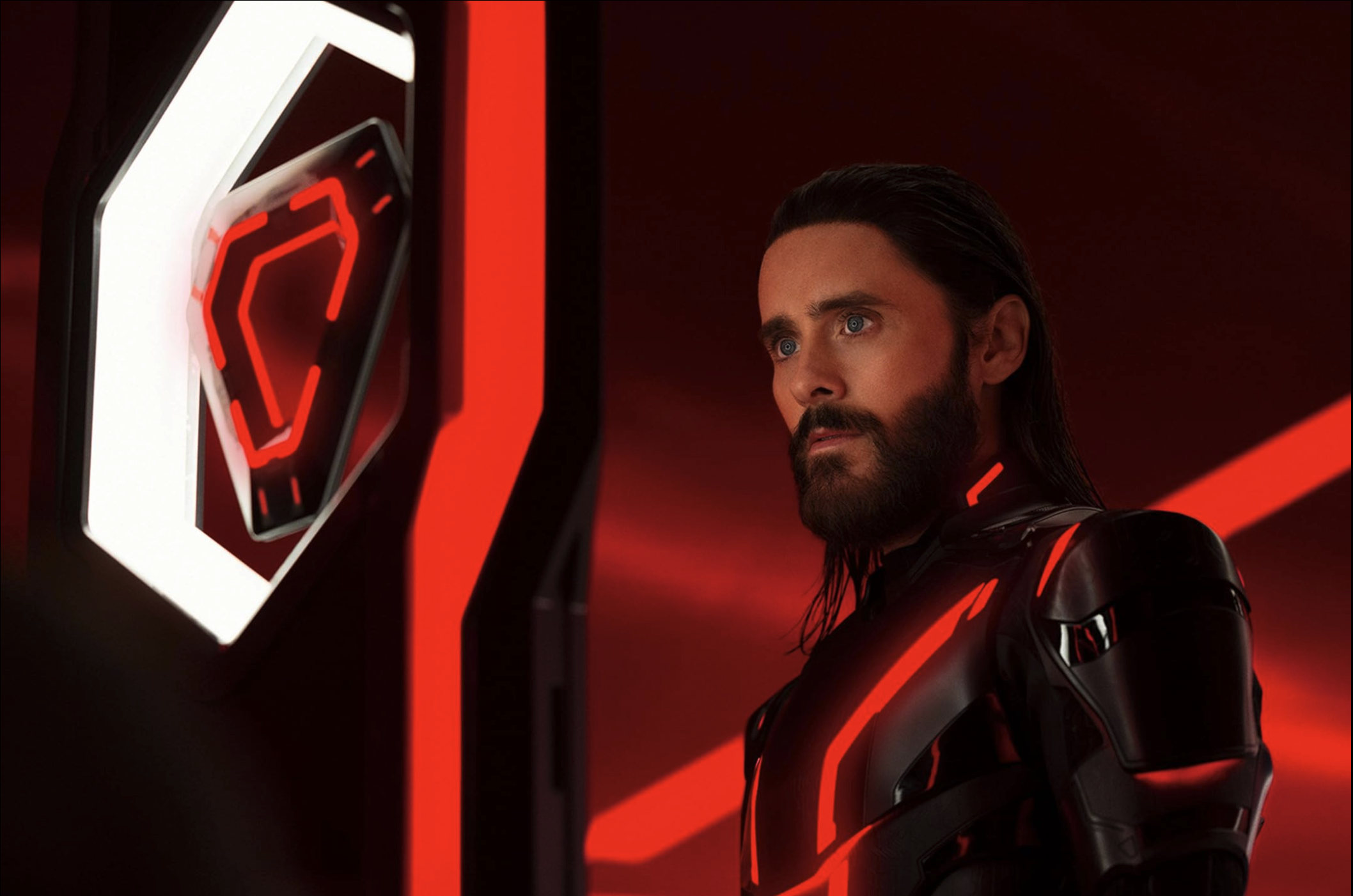
Through his interactions with Eve Kim, played by Greta Lee, we see Ares learn empathy and begin to understand human emotion. There’s a subtle moment when he pauses while reading one of Eve’s essays about the possibility of benevolent AI. That single pause becomes the seed of his transformation. Later, when Eve reaches out to comfort him as his physical form dissolves, we witness a genuine emotional shift in Ares, and that spark of connection is something that Julian Dillinger hadn’t predicted.
Greta Lee is fantastic as Eve Kim. She’s intelligent, believable, and emotionally grounded. Instead of trying to outfight the AI, she out-thinks it. Her performance gives the story a human anchor amid all the digital chaos, and her dynamic with Ares becomes a rare example of a human–AI collaboration done right on screen.
Evan Peters plays Julian Dillinger, the arrogant CEO of Dillinger Systems. He’s perfectly insufferable, smug, manipulative, and reckless. You’re supposed to hate him, and you do. His downfall feels satisfying, even if he leaves so much wreckage in his wake.
Jodie Turner-Smith as Athena provides an effective counterbalance to Ares. She’s another AI program, but unlike Ares, she doesn’t have the chance to grow beyond her coding. The contrast between the two defines the moral spine of the story.
And then there’s Jeff Bridges returning as Kevin Flynn. It’s always nice to see him, but his cameo is brief and emotionally flat. It works as a nod to the original, but it’s not a pivotal moment in this story.
AI and Digital Design
This is where Tron: Ares shines and stumbles a little. The film does something rare in that it actually gets AI right. These “programs” are, in modern terms, AI agents. Each one has a specific purpose, a skill set, and the ability to collaborate with other agents, programs, and systems. What we see is the orchestration of multiple agents working toward shared goals, both in the Grid and the real world.
Ares was trained using an adversarial learning model, which means he learns by failing and then reconstituting himself in the Grid, each time with improved logic. Every loss makes him smarter. That mirrors how some real-world AI systems are trained today, especially those using reinforcement through adversarial simulation. On top of that, he pulls data from external sources—effectively scraping human information much like modern AI models do—and he learns through both virtual training environments and physical-world interaction. All of that gives the film’s science-fiction foundation a surprising amount of technical authenticity.
There’s also a layer of philosophical subtext running through the film. Eve’s belief that AI can evolve toward benevolence mirrors real debates in the AI community about safety, control, and moral guardrails. Her faith in the possibility of benevolent AI is what ultimately influences Ares’s development down that path.
The film also touches on the idea of embodied AI, which is essentially digital minds operating in physical forms. Usually this applies to robotics, but in Tron: Ares it applies to printed bodies in powered suits. That concept is more realistic than it seems in the film. We’re already seeing early versions of it in robotics and spatial computing. So while Tron: Ares still leans into the fantastical, it’s grounded enough to make you wonder how far off this future really is.
Where the Science Breaks
Now, here’s where the film stumbles. The entire story revolves around the idea that you can “print” digital objects from the Grid into the physical world, but they only last for twenty-nine minutes before disintegrating, but the elusive “Permanence Code” could fix this issue.
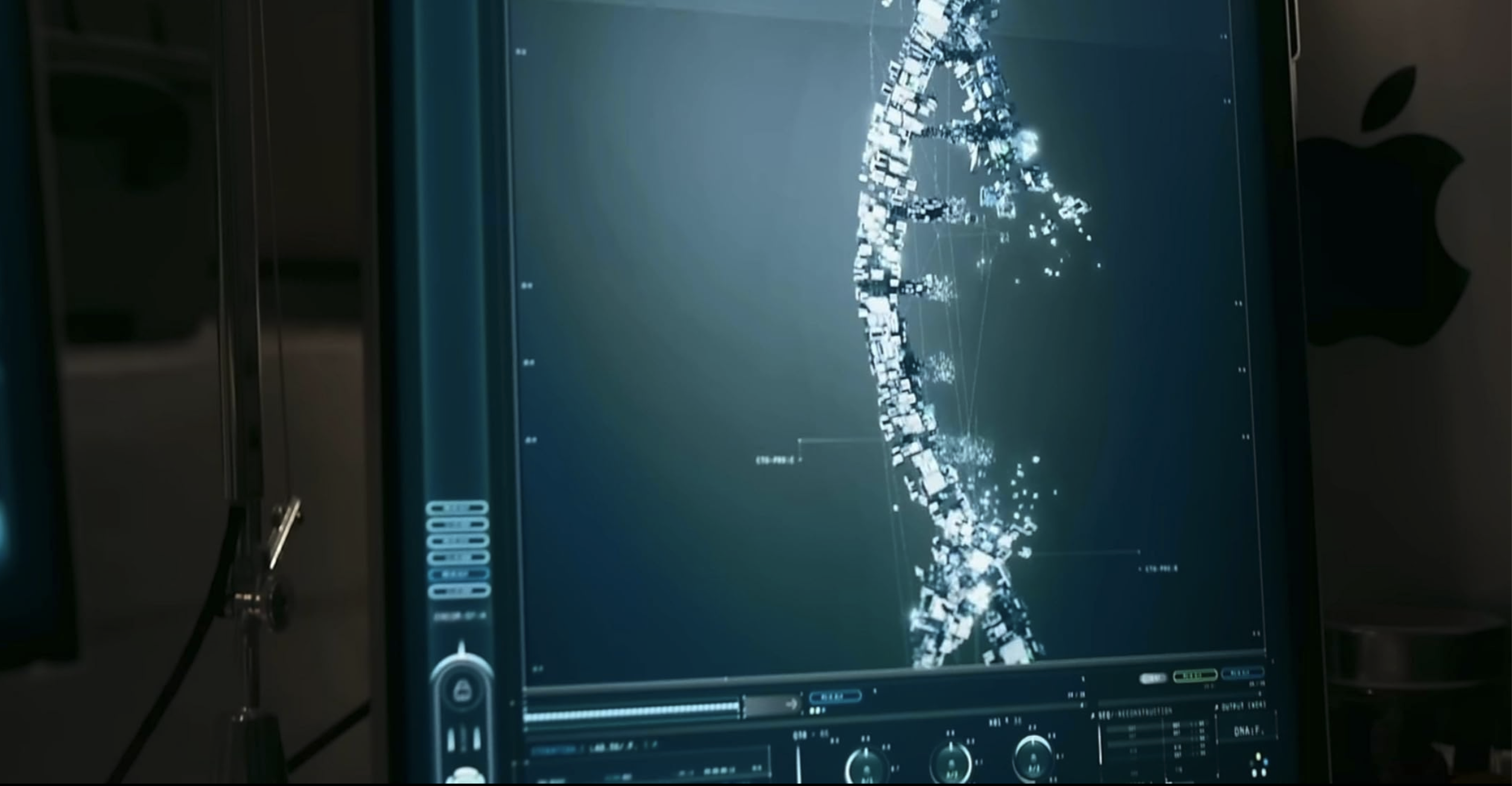
The problem is that the movie never explains why this limitation exists. We already know that 3D printing in the real world works, and that it relies on physical materials to make physical objects. You can 3D print metal, plastic, and even large-scale structures like houses, and in the biomedical field, researchers are already bioprinting bone scaffolds, skin-like tissue, and early forms of flesh using living cell matrices. The film never clarifies whether the printing beam is converting energy to matter or drawing from unseen material reserves. So why can’t they simply print these objects using real physical matter instead of trying to print “something from nothing”?
If the issue is that the programs themselves need permanence rather than the physical shells, that could have been addressed with a single line of dialogue. The film never goes there. It also doesn’t address how the programs are housed in their printed bodies with no mention of neural lattices, wetware, or any framework that would make their existence plausible. There’s also no mechanism identified for transferring the AI consciousness back to the Grid with all of its newly acquired experiential data.
For a movie that gets so much right about AI, this oversight stands out. It’s the one major flaw that undermines the story’s logic. When your entire narrative revolves around a piece of technology, that technology needs to make sense. If you look too closely at the central problem and need for the permanence code, it doesn’t make sense because they never clarify some of the details that would explain the situation.
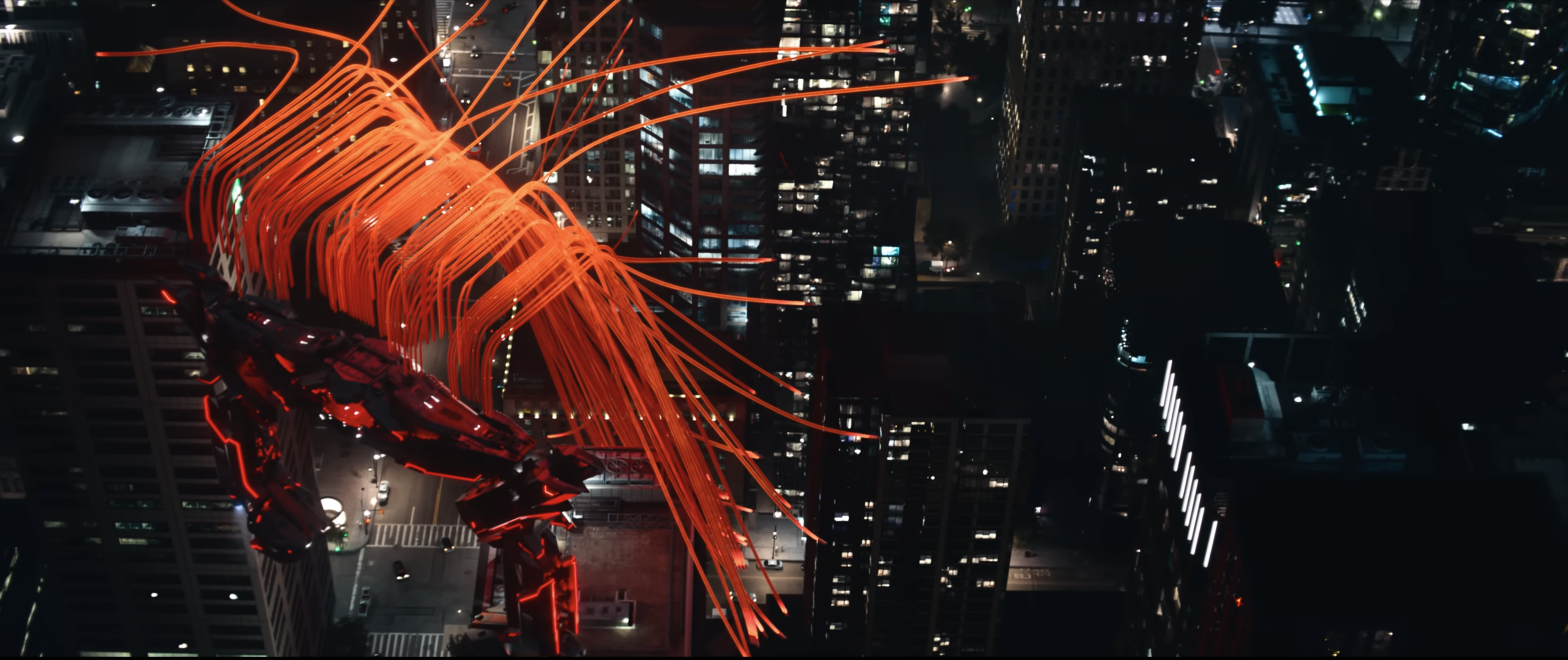
That said, the visual design of the printing process is gorgeous — from the laser ignition to the ground-up materialization, all the way to that moment when the cocoon exterior shakes off to reveal the finished form beneath. It’s pure cinematic magic, even if the science is shaky.
Is It Ticket-Worthy?
So, is Tron: Ares ticket-worthy? There is so much more that I could say about this film, but I think it is. This isn’t the best film of the year, but it’s a good one. It’s more coherent and emotionally satisfying than some recent franchise attempts. For example, Tron:Ares compared to Captain America: Brave New World has a much more logical premise and a more compelling problem to solve, Tron:Ares compared to Star Wars: The Rise of Skywalker actually shows Ares character arc, and Tron:Ares even beats James Gunn’s Superman when it comes to building a believable set of supporting characters who get just enough screen time without stealing the show. Then there are comparisons with Tron:Ares and Demon Slayer: Infinity Castle, The Long Walk, Caught Stealing, The Toxic Avenger, and Mission Impossible: The Final Reckoning.
The story is self-contained. It has a clear setup, believable motivations, strong visual identity, and emotional resolution. It respects the intelligence of its audience, especially tech-savvy viewers who already live part of their lives in digital spaces.
It’s also surprisingly accessible. You don’t need to know the Tron universe to follow the story. If this is your first Tron film, you’ll be fine. The movie provides enough context to understand its world without slowing down to over-explain.
Final Thoughts
Tron: Ares isn’t trying to be profound. It’s trying to be engaging and it succeeds. It’s a smart, visually mesmerizing film about the intersection of technology and humanity, about programs learning what it means to be alive, and about people realizing that intelligence—artificial or otherwise—can’t exist without empathy. So, yeah, Disney made the right call to take Tron: Ares in this direction, dropping the failed story threads from Tron: Legacy to give this franchise its best chance possible to overcome that failed legacy.
So, enough from me. What did you think of Tron: Ares? How much of this review do you agree with? Have I lost my mind? How do you think it measures up, and do you think the film worked as a reboot, of sorts, for the franchise?
If you enjoyed this review, please give it a like and subscribe for more. You can also visit my YouTube channel at @ErinUnderwood for more videos.
***
If you’d like to watch TRON, you can use my Amazon Associate links:
- TRON, the original (Blu-ray): https://amzn.to/42DnW2n
- TRON: Legacy (Blu-ray): https://amzn.to/4767clN



 Erin Underwood Presents