Review: Changes by Jim Butcher

Author: Jim Butcher
Publisher: Roc
First Ed: April 2010
ISBN-10: 045146317X
ISBN-13: 978-0451463173
Details: 448 Pages | Hardcover | $25.95

Changes by Jim Butcher is the twelfth installment in the bestselling series The Dresden Files. Readers are sure to get everything they expect out of a Dresden Files novel as well as a few unexpected surprises since Butcher delivers even more blood-pumping action and wizardly mayhem, which is sure to stir Dresden fans into a frenzy.

After the arrival of Harry Dresden’s ex-girlfriend Susan, Chicago’s resident private eye/wizard for hire finds himself hard pressed to investigate the kidnapping of a young child, and this time the stakes have never been higher. Not only is the child his, but she has also been kidnapped by the vicious Red Court vampires. When Dresden’s friends join the effort to rescue Maggie from certain death, he sees a chance to snatch back his child from the hands of his enemies, but at what cost? Dresden is forced to make difficult choices that will irrevocably change the course of his life, the lives of his friends, and the world in which he lives. Can he make the ultimate sacrifice to save his daughter?

This latest edition to The Dresden Files, aptly named Changes, reveals the most significant turning point in Dresden’s life and in heart-wrenching fashion. While this novel has more twists and turns than an Agatha Christie novel, Changes races through the plot at lightening speed until Butcher brings Harry Dresden face to face with the most cunning opponent he has ever faced. With precision of purpose, Butcher pulls subplots together from previous novels, solidifying an over arching plot within the series itself. In so doing, he bring Changes to a cataclysmic, shocking end that will leave readers breathlessly wanting more.

Changes reveals a maturity in Butcher’s storytelling that elevates The Dresden Files to more than just a series of entertaining novels about a Chicago based, magic wielding, private investigator. In true Dresden style, Changes delivers strong characters, a compelling story line, and more action than an Arnold Schwarzenegger movie set at Hogwarts. Changes is a wonderful addition to a solid series.

Fans who can’t wait until April 2011 for Ghost Story, the next book in the Dresden Files Series, should check out Jim Butcher’s new anthology Side Jobs, which is packed full of short stories featuring Harry Dresden and his friends.

Posted in Books and Literature, Fantasy, Reviews | Tagged , , , , , , , | Leave a comment

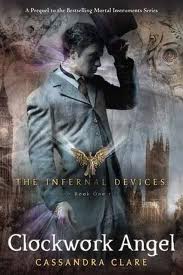
Review: Clockwork Angel by Cassandra Clare

Author: Cassandra Clare
Publisher: Margaret K. McElderry Books
First Ed: August 2010
ISBN-10: 1416975861
ISBN-13: 978-1416975861
Details: 496 pages | Hardcover | $19.99

Clockwork Angel by Cassandra Clare is the first novel in her new series The Infernal Devices, which is also the prequel to her first series The Mortal Instruments. Readers coming to this book without previous knowledge of the original series will not find themselves lost or confused since Clare successfully sets up the series to be standalone.

Tessa Gray, penniless and alone, journeys from New York to London to live with her brother after the sudden death of their aunt. However, her dreams of starting a new life go awry after being kidnapped by a nasty pair of witches and forced to do their bidding lest her brother pay the consequences. Through luck and good timing, William Herondale, a handsome young Shadowhunter, rescues her during his investigation of a local murder. Tessa soon realizes that the world she thought she knew is little more than an illusion and that her brother’s circumstances are far more desperate than she imagined.

Clare delivers a strong urban/Victorian fantasy infused with descriptive passages and exquisite period details that blend together into a vibrant historical landscape. Clockwork Angel evolves organically, creating a world where Shadowhunters, downworlders, and demons feel as natural and believable as the steampunk elements within the story.

Clockwork Angel is a stunning tale that begins slowly as Clare sets up her magical world within Victorian London and takes her time to establish Tessa’s situation for readers not familiar with the first series. The combination of strong characters, unique plot twists, and quickly paced action scenes easily keeps the plot fresh and exciting. While Tessa may appear a little too naïve at times, even for a young Victorian woman, she is a capable and likable character who easily caries the story. In addition, the relationship between Tessa and Will is wonderfully well-done and punctuated with confrontations that are steeped in romantic tension, all of which draws them together as forcefully as it splits them apart.

One of the strongest features of Clockwork Angel is the fully developed ensemble cast of characters. They are unique, exciting, and at times desperately funny. Each character, no matter his status, adds value to the story either through his history with the main characters or his effect on the main characters’ decisions. Other than the deeply conflicted and emotionally tortured Will Herondale, The Magister, Clockwork Angel’s cunning villain, is likely to be one of the most memorable characters in the novel.

Clockwork Angel is a true pleasure to read. With strong writing and an engaging story, it will appeal to people of all ages, not just the young adults.  While the novel builds slowly, it gains the momentum of a freight train, driving the story forward, faster and faster with each turn of the page. Fraught with gripping drama and a truly magical setting, Clockwork Angel is sure to bring readers back for the next installment of The Infernal Devices.

The U.S. book trailer from Simon & Schuster:

The U.K. book trailer from Walker Books:

Posted in Books and Literature, Fantasy, Reviews, Uncategorized, Young Adult Literature | Tagged , , , , , , , , , , | 1 Comment

Realms of Fantasy Brought Back From The Brink – An Interview with Kim Richards Gilchrist

The publishing industry has been hit hard by a weak economy and the changing entertainment marketplace. Print magazines have felt the brunt of these changes more than most, and Realms of Fantasy, one of the premiere fantasy magazines within the fantasy fiction community, has announced its closure twice in as many years. And yet there is still life beating within this magazine, which won’t go gentle into that not so good night. The resiliency of the science fiction, fantasy, and horror community is nothing, if not impressive in its ability to reinvent itself.

A year and a half ago, Realms of Fantasy announced that its publisher was closing the magazine, but at the 11th hour Warren Lapine of Tir Na Nog Press stepped in and offered to take over the magazine, keeping it in print for a while longer. Last month, Warren announced that for a variety of reasons Realms of Fantasy would be closing its doors for good. In true underdog form, Damnation Books tossed Realms a lifeline, pulling it back from the brink of extinction once again.

While some readers and writers may be familiar with Damnation Books and its CEO Kim Richards Gilchrest, most people are still trying to get better acquainted with this small press and eBook publisher. Although there are more questions to be answered, this interview should help to dispel rumors, to answer questions, and to give the SF/F/H community a better idea of what the future holds for Realms of Fantasy and its new publisher Damnations Books.

~

Many of Realms of Fantasy’s readers and writers may not be familiar with Damnation Books. Can you give a glimpse into Damnation Press’s mission, what kinds of books you publish, and how long you have been in the publishing business?

Damnation Books publishes dark fiction: horror, thrillers, paranormals, dark fantasy—we also publish some gay fiction, science fiction and erotica with dark themes to them. We want to become THE place to go for dark fiction.

Now, Damnation Books (as the LLC) also owns Eternal Press, which publishes erotica, romance, westerns, science fiction, paranormals, historical fiction and contemporary fiction. It’s much more of a mainstream market.

What do you see as the greatest benefit that Damnation Books has to offer Realms of Fantasy Magazine, its readers, and its contributors?

There is a little cross over with genres between both Eternal Press and Damnation Books with Realms of Fantasy. In fact we took out ads twice in 2010 for our books in the magazine. The common elements mean some of our promotion points and distribution are the same and others are ways for both the magazine and books to expand.

Realms of Fantasy has mainly been a print magazine, with some PDF and a few Kindle editions. We plan to expand more into the electronic arena to reach new readers, reconnect with former readers and offer more ways for people to read this incredible magazine. Those who love print need not worry; we have no plans of going completely electronic. It’s an exciting time in publishing and we want to be there and available for everyone, no matter how they like their fiction.

Realms of Fantasy announced its closure several weeks ago. When did you decide to buy the magazine? What was it about ROF that made you want to bring it back from the brink for a second time within the last 18 months?

I’ve enjoyed Realms of Fantasy since the 1990’s. I have a binder of issues from back then so my husband (the other co-owner) and I have a love for the genres. When I heard RoF had folded again, it made me sad. Then I was on a writer’s chat with guests who publish a different magazine. They mentioned the former owner of Realms joking about selling it for a dollar. I teased my husband about buying it and when he didn’t faint, the conversation turned serious. So I contacted them.

Obviously we paid a LOT more than a dollar for the magazine. That would be insulting for something worth so much more. It turns out we use the same software to format books that the magazine uses and with staff and distribution already in place, we were a good choice.

It’s exciting how the staff asked the hard questions and are confident enough in us to stay on board so the fiction editors and columnists are remaining.

Considering that the magazine industry is on shaky ground and Realms of Fantasy has struggled with generating adequate subscription renewals to keep the magazine going, what is your plan for turning the magazine into a sustainable enterprise?

Of course, subscriptions are really important but so are single sales. Maybe that’s my book background coming through but I have no problem with selling one issue to someone. If they like it, they’ll be back for more. I’ve been in the shoes of someone who cannot afford a subscription but can grab an issue on payday. Their love of the magazine isn’t any less.

That’s another reason for reaching out digitally. The affordability of electronic editions and the ability for it to reach people through their iphones, ipads and ebook readers. I’ve seen a lot reported on interactive books and see the potential to sell a digital subscription where an rss feed gives you the updated new issue each release. Some people aren’t ready for that but a lot are looking forward to it. We want both kinds of readers to enjoy our magazine.

In the perfect world, looking two years into the future, where do you see Realms of Fantasy? Damnation Books? What is your vision for the future?

For Realms of Fantasy we want to have the number of electronic subscriptions match the print subscriptions. In addition we want to know that our fan base loves the magazine and always anticipating the next issue.

For Damnation Books LLC we want to continue to publish the best fiction in the industry, both from established and new authors. We will also be keeping an eye out for new technologies to leverage into our business. Most of all, we want our customers to be confident in the kind of books and magazines we publish.

What are some of the greatest challenges that you foresee in achieving that vision and getting the magazine up and running under your press?

We have some proving of ourselves to do and a lot of hard work. We’re continuing to automate some areas of the workplace to make our staffs’ lives easier, but some of that comes with training and patience. That should also help us keep costs down (meaning keeping prices down).

Impressing readers, writers and artists is not an easy job but one we’re already working on. Getting the word out that we’re here to stay is also something we’re working on.

Damnation Books is primarily an eBook publisher, which is a much different animal than a print magazine. Do you envision a dual publishing format for Realms of Fantasy in the future, will you only maintain the print version of the magazine, or will you transition to an eZine format for digital readers?

I think I addressed this before but yes, I definitely want to publish Realms of Fantasy in as many formats and sell it in as many places as possible. The former owner talked about publishing anthologies of each year’s stories from the magazine (starting with 2010). That is also something we’re interested in doing.

We’ve already heard through Doug Cohen’s blog that Realms of Fantasy’s staff will stay in place. What other logistical changes can people expect now that ROF is under new management? For example, would you consider switching to electronic submissions?

We are considering electronic submissions and are looking seriously at how to best handle them. That said, it will be a bit before we actually implement this because our focus first off is to see the December issue out to subscribers and newsstands. Then bring out the February 2011 issue with a bang.

For now, I’m recommending authors, poets and artists use the normal submissions mailing address:

Realms of Fantasy
Shawna McCarthy, Fiction Editor
P.O. Box 527
Rumson, NJ 07760

and

Art Department
P.O. Box 1357
Valley Stream, NY 11582

Regarding the content of the magazine, will Realms of Fantasy maintain the same look and quality that it has now? Other than the upcoming April 2011 edition, will ROF take on more of a dark fiction format? Will you keep the full color artwork for which ROF has become so well known?

We’re adding poetry in the coming year. We’re taking poetry submissions, but don’t expect the first pieces to appear until the June 2011 issue (which is the 100th issue of Realms of Fantasy so we’re planning a 100 page issue to celebrate).

The reason for the dark fantasy issue for April 2011 is Damnation Books is already set up for a dealer’s table and a party at World Horror Convention at the end of April and we want to show off Realms of Fantasy while there. It’s not our intent to change the entire focus of the magazine, just that one issue’s theme. I wish I could tell who the cover artist is for April but it’s too soon. I’m loving it and know you will too.

We are keeping with the full color magazine and full color art for now. However, we are planning to open to black and white illustrations as well because some artists specialize in the black and white. It’s more of an expanding options than anything else, but note that not all issues will have black and white.

Where can authors go to get more information about the transition to Damnation Books and their submissions?

I’d say keep an eye on the website. It will be going through updates and some changes in the next couple of months as we transition. You can also follow us on facebook and twitter.

Where can readers go to subscribe or renew their subscriptions?
That’s the first thing to be updated. Subscribers can use the subscription card in their issues and mail them to :

Realms of Fantasy
P.O. Box 1208
Santa Rosa, CA 95402

Or they can email me at kim@damnationbooks.com

We can send a paypal invoice (which can be used to pay via paypal or by credit card) if you prefer. I will also be writing to all of our current subscribers in the next few weeks to reassure them we will honor their current subscriptions. The plan is to include a subscription renewal form in case they need one.

We plan on adding email subscriptions soon as well so look for that option in probably January. For an email subscription, you can receive the pdf mailed to you with each issue’s release.

I’d also like to mention the advertising contact is also kim@damnationbooks.com

Realms of Fantasy
P.O. Box 1208
Santa Rosa, CA 95402

~

Kim Richards Gilchrist lives in northern California with her husband. Together they own and operate Damnation Books LLC, Eternal Press, and Realms of Fantasy Magazine. They are supervised by two cats. Kim loves dark fiction and fantasy be it books, movies or gaming. She enjoys costuming, writing and music. Shhh…don’t let on that you know but she’s going to be a grandmother in June 2011.
CEO Damnation Books LLC/Eternal Press/Realms of Fantasy Magazine
www.damnationbooks.com
www.eternalpress.biz
www.rofmag.com
Posted in Fantasy, Interviews, Uncategorized | Tagged , , , , , , , , | 4 Comments

Demystifying the Book Trailer: An Interview with Sheila Clover English

While assisting Nancy Holder as she developed her new book trailer for The Screaming Season, due in March 2011, I realized how little I knew about this strange new-media marketing tool. Book trailers have been cropping up here and there, announcing the coming of this book or that novel for the last several years. The more I learned about this new type of media promotion, the more I was blown away by the sheer potential of a 30-second video clip, specifically designed to market a new book.

During the early process of designing The Screaming Season’s book trailer, I must have asked Sheila Clover English, CEO of Circle of Seven Productions, a thousand questions. Her patience never wavered as she described the process or explained why things were done in a particular manner. I’m fairly savvy about technology and marketing, and I thought that if I had this many questions about book trailers, there must be others who would also benefit from straightforward, honest answers from a professional within the production industry.

Sheila graciously consented to be interviewed and peppered with even more questions aimed at demystifying the production process and marketing of a book trailer from an author’s point of view.

~

What is a book trailer? Where did book trailers come from?
A book trailer is like a movie trailer, but for books. It is a visual synopsis that leaves people wanting more. Book trailers evolved from necessity and opportunity. In 2002, if you Googled the term you wouldn’t have found it. The term was trademarked in 2003 and renewed in 2010.

Like many aspiring authors, I was looking for a way to stand out from the crowd. I was watching television when a really great movie trailer came on and I realized that it inspired me to see the movie, why not a “book trailer” to inspire someone to want a book?

I spoke with my uncle who did videography work and he loved the idea and suggested we do it as a business, so we did.

What are the key benefits of having a book trailer for your book? Other than just talking about a single book, how else can a book trailer be used?
There are a variety of ways you can use book video and in a variety of venues. The internet is a vast and extraordinary landscape. There’s nothing that anyone can write about that doesn’t have an audience. Book video can get you and your book in front of that audience in a way that most audiences are used to consuming entertainment advertising–visually.

But book video can do more than just promote your book. It can be a powerful way to establish a brand, gain publicity and help sell foreign rights or even movie options.
The ways a book video can be utilized continue to grow as technology grows.

What advice would you give to an author who is trying to decide if he should have a book trailer made?
My advice to anyone who is contemplating spending money and/or time on any promotion is to have clear goals for what you’re doing and what you want to get out of it. Your goals may be easily achieved with book video or they may not. Don’t just do something because it seems everyone is doing it.

Book video is a tool. Think of it like a hammer. It is an important tool you use a lot. But, you can’t build a house with just a hammer. Similarly, you can’t build a strong book marketing campaign with just a book video. Treat a book video, or any other promotion, like the tool it is meant to be.

Where can authors find reputable production companies? Can people create their own book trailers using a program like iMovie?
People can certainly create their own book videos using the program on their computer. Whether you have a Mac or a PC, there’s editing software that comes with your computer, and it is very easy to go to a DIY site and learn how to use that editing equipment.

Authors are creative and resourceful. I’ve seen some amazing videos done by authors. We even give special pricing to authors who make their own book videos as a way to support and encourage authors.

One thing to keep in mind is that it takes time to do it. You need to ask yourself how valuable your time is. Perhaps your time is your greatest resource and you have a lot of it, or perhaps you just love creating video, then by all means give it a try!

Remember that having a video is half the work. Once you create it, what will you do with it that will make it a hard-working tool for you? Just putting it up on YouTube and GoodReads is not enough. Have a plan!

Finding a reputable book video production company is important too. My advice on that is–check references! Don’t just take their word for it that they are great, ask the authors or publishers who have used them. Find out what they do for you that you can’t do yourself. Do they have a greater reach in distribution? Can they make better videos because they have advanced equipment and experienced editors? Do they have a strategy once you tell them your goals? Are they even interested in what you hope to achieve with the video? Before you give your money to someone you should know a little about them, their reputation, their reach, their professionalism, quality, etc.

What is the general price range to produce a book trailer? How do you know if the company you have hired will produce a high quality video?
I’ve seen book videos go for $50. They look like someone spent $50 on them. I doubt that’s surprising to anyone. Generally speaking, I see them go for as little as $350 and as much as $10,000. A lot of production companies won’t tell you what the cost is unless you contact them. I do understand that way of thinking. They want to know what your expectations are before they give you a quote. But, you should be able to get them to give you a ballpark figure for basic video and ask them if that includes the distribution. At COS Productions we let you know in advance what the price range is for a given product. You also get to see samples of those products and that’s how you know what kind of video you’re going to get.

Always look at the other videos the company produced. You might want to list the ones you really like and ask them how much those cost. If they are not willing to tell you, I would wonder why. This is a production business, there is no “secret sauce”. They should be forthcoming with answers concerning costs.

What kind or timeline is required for planning, producing, and promoting a book trailer?
I suggest to people that they start with the end. When will the book be released? When would you like booksellers to see it so they can determine if they’d like to feature the video, or stock more books? When would you like it on your site? On YouTube? Start there.

A very basic video will take only a few days to make, but if you want custom work, special effects, voice over or animation you will need 3-6 weeks according to complexity.

Other than money, what resources will authors need when making a book trailer?
They will need time and perseverance. Editing software either on their computer or online (try Animoto! It’s very user-friendly!). Either their own photos that they own or they will need to license photos. Just because it says “royalty free” does not make it free to use. Be sure to read the fine print. I have seen publishers named in law suits over copyright infringement issues surrounding author-made book video. Be careful!
Music, same licensing issues there, but sometimes you can get an unsigned band to let you use their music for credit!

Your book cover! Don’t forget to include that! And your URL!

Once an author has his book trailer, what does he do with it? How does he get it in front of people?
You can upload it to social media sites like YouTube, MySpace, Facebook, DailyMotion, etc. To bookmarking sites like StumbleUpon, Digg, etc. Readers sites of course and to any booksellers you may know. Give it to your publisher! They may have venues as well. Put it on your Amazon Connect account if you have one.

You can always hire a professional company to distribute it, but make sure they offer something of value when they distribute. If they’re just putting it on YouTube and the other usual suspects for online video, you’re really only hiring them to save you time.
Don’t forget to have it playing when you do book signings or other events. If you keep it to 30 seconds you can always use it as an advertisement if you want to pay for that.

Put it on your own website! Link to it in your newsletter or signature line. Be creative!

What book trailers do you think were particularly well done? Do you have any favorites? What is it about these trailers that make them so effective?
I love different book videos for different reasons. Mostly, I like the ones that make me feel something.

I love Dogtown by Stefan Bechtel and Mickey Rourke done by VidLit because I love animals, I love how they used so many elements and it’s so interesting!

I love Leviathon by Scott Westerfeld (can’t recall who made it) but it is amazing animation!!

Abraham Lincoln: Vampire Hunter by Seth Grahame-Smith cracks me up!!!

This World We Live In by Susan Beth Pfeffer gives you that “gasp factor”

Neverland by Douglas Clegg is so creepy! I love it!

I could go on and on! There are a lot that I love!

These are visually effective. However, there are some that are very simple, but were effective in creating a reader community and going viral.

Evermore by Alyson Noël has over 200,000 views on YT and the book hit the NY bestseller list!

Hush, Hush by Becca Fitzpatrick was a huge success because the goal was to let people know about a new series and get them to talk about it. And talk they did!

Zombies vs. Unicorns, edited by Holly Black and Justine Larbalestier is quirky with quirky animation and was blogged about more than any book video we’ve ever created!

Do you have any final advice for authors who are deciding on whether or not to make a book trailer?
Yes, don’t do anything without purpose and goals. Write down your goals first. Then determine if a book video is something that can help you attain your goals. Don’t ever feel obligated to do something because it seems popular. Be thoughtful in your decisions, especially if they cost you money or take up your time.

~

Sheila Clover English is the CEO of  Circle of Seven Productions. She is a marketing visionary and entrepreneur who works specifically within the publishing industry arena. In 2002 she started the book trailer market and in 2003 trademarked the term “book trailer”. She has worked with top authors such as Christine FeehanDouglas CleggGail Martin,Heather GrahamLA BanksLisa Jackson and publishers such as TOR/ForgeSt. Martin’s PressPenguin USA,Simon & SchusterKensington Publishing and Harper Collinswww.cosproductions.com
Posted in Interviews, Marketing, Uncategorized | Tagged , , , , , , , | 5 Comments

The One Word Interview: WORD

W O R D
By Erin Underwood

Interviewing may be an art, but it can also create art depending on the form and structure given to the answers. The One Word Interview examines a particular word, eliciting responses that create the effect of a literary mosaic when brought together. It seems especially appropriate for the inaugural One Word Interview to  feature writers, publishers and bloggers responding to the word WORD.

When I see the word -WORD- the first thing that comes to my head is slang.
Lisa: “That shirt is sick!”
Amanda: “Word!”
Then comes the common word and word of mouth. Words can move people positively by helping someone out or negatively by causing a riot.
Christina Brandao, founder Book Club

WORD
Jewels that fall from your lips to my ears and my lips to your ears. Divine way to agree that red is red and blue is blue. Secret tool to build beautiful and terrible worlds.
Cecil Castellucci, author

WORD: How I make my living. The right one makes all the difference.
F. Brett Cox, author

There’s a motto taped over my computer in inch-high letters, white on black, like a ransom note: “One word at a time.” I cut it out of Locus years ago when I decided it was time to get serious. When I’m stuck (specifically or generally), there’s the answer!
Eljay Daly, author

In the beginning wasn’t the word. The word came absolutely last. First there was everything: so much everything. People were amazed. Someone made a noise: it wasn’t “wow”; “wow” didn’t exist. But someone else heard it, and–even before noise had meaning–agreed. Through concord the word was born.
Carlos Hernandez, author

I believe that words define thoughts, which define words. The words in our language define our reality–our varieties of snow, the complexities of our emotions. Words imprison us and free us. Words really are us. Take away words, and you take away life itself.
Nancy Holder, author

Word is the software with which I’ve written millions of words and made thousands of dollars as a technical writer and fiction writer. There’s comfort in that glowing white page of possibility, a cursor waiting to take you forward or backward, though I love it and hate it.
Will Ludwigsen, author

Word(s) are who we are. Without them we have but action. They tell of our past, present and future. They can help, hurt or heal. Words can be life or death. Choose wisely.
– Georgia McBride, author and founder of YALITCHAT

As a writer, editor, and publisher, I play with words for money. But words are both vitally important (when choosing exactly the correct word for the precise meaning) and interchangeable symbols (whatever it takes to get across the concept). Thus, I recently described a cookie as both “friable” and “mmm”.
Ian Randal Strock, author, editor and publisher

Just the right WORD in the right place at the right time is a thing of beauty quite apart from the fact that the thought it might be helping to express is totally wrong and maybe even ugly.
Ray Vukcevich, author

This fifty-word interview is supposed to focus around a single word – and that word happens to be word. A tiny door leading into an enormous room. Recently, my words have been noir. Century. And American. Which takes me to veterans, on this day. Love the soldier, hate the war.
Scott Wolven, author

Published by UNDERWORDS on November 14, 2010.
Posted in Interviews, One Word Interviews, Uncategorized | Tagged , , , , , , , , , , , , | 1 Comment

Interview with James Patrick Kelly

This interview was originally published by SFScope.com on November 26, 2008.

Interview with James Patrick Kelly, featuring his new collection The Wreck of the Godspeed
By Erin Underwood
November 26, 2008

James Patrick Kelly is an award-winning science fiction writer. Although he’s best known for his short stories, Kelly has also written novels, novellas, poems, plays, essays, and reviews. His novella “Burn” won the 2007 Nebula Award from the Science Fiction and Fantasy Writers of America and he’s won the Hugo Award twice: once for his novelette “Think Like a Dinosaur” and again for another novelette titled “Ten to the Sixteenth to One.” Kelly is also well known for his podcasts and his regular internet column for Asimov’s Science Fiction magazine. In addition to his writing work, Kelly is on the faculty of the Stonecoast Creative Writing MFA Program, the Vice Chair of the Clarion Foundation, and is a councilor on the New Hampshire State Council on the Arts.

The Wreck of the Godspeed by James Patrick Kelly
Golden Gryphon Press, $24.95, 350pp, hd, 9781930846517

SFScope: The Wreck of the Godspeed is a collection of stories you’ve written over the last five years. When you were putting this collection together, what inspired you to choose this group of stories?

Kelly: Well, I could give a, how shall we say, artistic, deep answer, but the fact of the matter is that these are the stories that I wrote in the last five years. So, basically this is everything that I think is good that I have written in the last five years. I have left a few things out, but not too much. Having said that, I really feel like this group of stories is among my strongest as a whole. Now, of course, this is my third short story collection from Golden Gryphon, and I have some stories in my other two collections that I love dearly. Many people who know my work, at all, know me for my story “Think Like a Dinosaur”, which was the title story of my first collection.

I am very proud of these stories. There are, as I’m looking at the table of contents, I think, seven stories that were in “best of the year” collections in various and sundry forms: best fantasy of the year, best science fiction of the year, best short novel of the year, and several award nominees, some Nebula nominees, couple of Hugo nominees, and after a long, long drought, my Nebula award winning novella “Burn”.

So, I picked these stories because they were the stories that I wrote in the last five years, but I also think that they’re some of the best work I’ve done.

SFScope: Most of the pieces in this collection, as with your main body of work, are short stories. What is it about the short story that draws you to this medium with such passion?

Kelly: One thing is that it’s a very nimble art form. So, if people are talking about some issue, it isn’t that big a commitment of time to sit down and say, “Okay, I would like to write about some issue that people are talking about or this discovery that is really very intriguing, or to weigh in on some of the artistic controversies of the day.” I can do that in a way that a novelist can’t.

A novelist really has to make a big commitment to say, “Okay. So, I’m not really going to write any short stories for the next year.” For some of them, in some cases, it may be more than a year. Some of them are faster than that, but it would be a real hardship for me to not be writing short stories.

Having said that, “The Wreck of the Godspeed”, “Burn”, and “Men are Trouble” are three longish novellas. So, although I haven’t actually written a novel in a while, I think that these particular three stories have the heft of intellectual conceptualization that many readers go to a novel for.

SFScope: When you were writing the longer pieces, at what point did you realize, “Hey, this isn’t a short story anymore. This is a novella. This is something different.” How did it affect your writing process, once you realized it wasn’t a short piece?

Kelly: Well, “Burn” is a special case, because my contract for that was designed from the get-go, from the beginning, to be a chapbook. It was to be a novella from the moment that I agreed to write it, but what happened was that it was supposed to be between 25,000 and 30,000 words. At the time, I hadn’t really written anything quite that long in a long time, not since I had written my last novel.

So, when I agreed to do that project, I basically said, “Well, you know, I guess I could write 30,000 words, but if I can’t, I can have big margins and sort of fake it. So, if I get up to 25,000 words, no one is going to turn me down for that.

As I started writing “Burn”, it really took on, as I said before, the heft of a novel. Ultimately, it turned out to be 40,000 words, and because I had postponed writing it until the deadline loomed, I really was out of time. I probably could have written more about “Burn” and about the world of “Burn”. Many readers have asked me, “What else happened? There is this whole universe that exists in ‘Burn’ with the thousand worlds, what else is happing there?” I knew from the get-go that I wanted to do that.

On one hand, “The Wreck of the Godspeed” was supposed to be a novelette, but it was supposed to be a 15,000-word novelette. Once again, I just really fell into that world, and it got bigger and bigger and it wouldn’t fit into the amount of space that I had been contracted for. So, I went and wrote what needed to be written. On the other hand, when I come across a short story like “The Ice is Singing”, for instance, that was a matter of a whim. It’s the story about an ice skater at Christmas who finds a body and throws it into the ice. I was ice skating at Christmas one time and the ice was a little shaky and I was a little trepidatious. I came back, and the feeling was so strong that I went and batted that out in a matter of four or five days.

I get asked a lot about why I write short stories? What I like about the form? I think that it’s because the form can give me the satisfaction of writing a short novel. At the same time, it can give me the satisfaction of basically conceiving and producing a story overnight, or very quickly, so that the initial feeling I began the story with is still very strong when I get to the end. When you write a longer piece, like a novella or a novel, obviously you have to find a ways to sustain your interest and to sustain your excitement.

Many novelists, myself not the least of them, get kind of bogged down in the middle of a long project, saying, “Oh, my gosh. Is this ever going to end? I’m so tired of it. I’m so tired of these characters. I’m tired of this world.” I like the fact that even within the boundaries of what is considered short fiction—from short stories to novellas—I can have a variety of writing experiences.

SFScope: One of the problems with short stories, and maybe it’s not that big of a problem nowadays, is that their life expectancy is pretty short. When putting this collection together, which of these stories were you most excited about reviving?

Kelly: Oh, interesting! You know, when you say that, I will agree in general, but my specific experience has been—you know, there’s just no humble way to say this—my stories get reprinted a lot. So, the thing that was most exciting to me about collection was reprinting “The Wreck of the Godspeed”, because I had written this story for Robert Silverberg, he asked me to contribute to a collection called Between Worlds and it was well published as a hardcover, but hardly anyone saw this story. It was longish. It wasn’t a good candidate to get reprinted in any of the year’s bests, and it did not.

This is its first reprinting, and I really think that this is some pharmaceutical quality James Patrick Kelly fiction. That’s the story that I’m most excited to have showcased here.

Originally, my editor wanted to call the collection Men are Trouble. He really loved that story, and not to put too fine a point on it, so do I. But when Bob Eggleton, whom we contracted to do the cover—he’s done the covers for all of my Golden Gryphon short story collections—read the collection, he was taken by “The Wreck of the Godspeed”. He produced what I think is just a gorgeous cover. So, we just decided that this collection should be called The Wreck of the Godspeed. Really, “The Wreck of the Godspeed” has more of a science fictional flavor to it as the title of a short story collection.

“Men are Trouble”, for those who may not know it, is a detective story set on Earth in a world where all of the men have been disappeared. It has the flavor, that’s exactly what I wanted, of Raymond Chandler and Dashiell Hammett hard-boiled noir detective. So, to have this short story collection named after a story called “Men are Trouble”, which would have been fine, would have pointed some readers in the wrong direction. There’s one really, really good detective story in there, but the rest of this is science fiction.

What’s interesting about this is that some of the science fiction is as science-y or as space opera-y as I have ever written. “The Wreck of the Godspeed” and “Dividing the Sustain” are stories that take place way the heck out there on a starship, and that had never been my forte. I’m very pleased with the way those stories turned out; it’s a new direction for me.

SFScope: In addition to publishing in print, you’re also very well-known for your podcasts. How has working in both media, fiction and audio, affected your fiction writing?

Kelly: The sad fact of the matter is that while I was busy doing an enormous project for Audible.com—they contracted with me to read 52 of my stories, which is about the equivalent of four short story collections—it was very difficult to get new stories written during that project.

So, in the short term, I think it was somewhat of a detriment to my output as a fiction writer. On the other hand, it was a very interesting process, because when I put a short story collection out like The Wreck of the Godspeed, I look at my bibliography and say, “There’s a story, there’s a story, here are the stories that I have written in the last five years.” They’re all stories. Then I read them, mostly for proofing.

It’s a much less intimate proposition than sitting down, reading these stories aloud, and then editing the rereading. Meanwhile, I do some voice acting and I’m trying to say, “Well, what is my motivation here? Why am I saying it? How do I feel when I read this line?”

So, to have gone back over my entire career pretty much, 52 stories, and to have that intimate connection with stories that I haven’t really thought deeply about in twenty-some-odd years was very helpful in sort of gauging where I am and where I’ve come from, where I am now and what I still need to do. A writer who has been at it as long as I have has to worry about repeating himself, stealing from himself, or covering the same ground too many times.

Reading all of those stories for Audible.com helped me to realize that there are, sort of, obsessive issues that appear again and again and again in the work, but also that I don’t need to write some stories that I easily could write but I’ve done that material already, maybe to death in some people’s opinions, but nonetheless I’ve done that stuff. So, it was a year of thinking about my career and thinking about myself as a writer and going back to the work, which I’m hoping will be helpful going forward.

SFScope: What do you think you have coming out in the future? What kind of projects are you planning? Are there any more novellas out there, or even a novel waiting to be written?

Kelly: Most immediate on my plate is a sequel that I have already begun to “Men are Trouble“. Because I am very much an aficionado of Raymond Chandler, it took me a long time in my career to actually write a story that was an homage to him. I reread the entire Chandler oeuvre every five or six years. As a matter of fact, I’ve read his letters, I’ve read his notes, and I’d read his checks, if I could get my hands on them.

SFScope: You sound like a stalker, Jim.

Kelly: Yeah, I know! But he’s dead, so he doesn’t mind. I’m sure that wherever he is in the Cosmos, he’s happy that he has a fan as devoted as I. So, I was really happy with the reception that “Men are Trouble” got. I have another story that involves the main character Fay Hardaway, which I’m in the middle of writing at the moment.

I also have in my head maybe some more to do about “Burn” and the world of “Burn”, the thousand worlds, and maybe Chairman Winter. I’m not really sure.

The other thing I should say is one of the stories in this collection, a short story called “Mother”, is actually a chapter from a novel that I have had underway for lo these many years, maybe fifteen years now, which I go back to from time to time. It’s sort of a… I guess you would say it’s a comic, cyberpunk, alien first encounter novel set in New Hampshire. If you want a taste of that book, which I have twenty thousand words of (I don’t know why I’m stopped on it because I know what happens next. It’s a thing that, when I looked at my own process, it’s a puzzlement to me. Nonetheless, I intend to someday finish that novel), “Mother” is a piece of it.

SFScope: You’ve also been doing some work as an editor?

Kelly: Yes, in one of my other careers, I have crossed that line from being a writer to being an editor. I’ve had a bunch of projects with my pal John Kessel where we tried to define some genres in these collections. One of them is called Feeling Very Strange, the slipstream anthology, and the other one is called Rewired, the post cyberpunk anthology. It’s interesting to look at a collection of stories or a possible crop of stories that you want to select, and you decide how you want to shape a book when it isn’t your own work.

One of the “inside baseball” things about doing a collection is how you actually decide what comes first, what comes last, and what goes in the middle, and what’s the rhythm of the book. Doing these other collections with John, it was somewhat easier since we stuck to chronological order, not always, but sometimes.

In The Wreck of the Godspeed it was more like, “Okay, I want a long one. I want a short one. I want a fantasy. I want a space opera. I want something that’s sort of gritty. I want something that’s light and funny.” So, that process of deciding how to put a table of contents together… my work as an editor has helped me in that very small, but not unimportant, part of putting a short story collection of my own together. That is, how does the reader experience it?

Of course, after I’ve done all of this over-thinking, what will happen when someone buys this book is that they’ll look at the titles, and say, “Oh, I want to read this one first.” Or say, “No, that one looks stupid. I want to read this one next.” Or, “Oh, I heard that this one is really good.” Or, “Oh, I already read that one so I don’t need to read it again.” So, all of this careful planning has gone for naught. Nonetheless, thoughtful short story editors try to accommodate some kind of rhythm for the reader, assuming the reader is going to read the collection front to back.

SFScope: When someone does read the collection front to back and they still want more James Patrick Kelly, where can they go?

Kelly: Well, there are a couple places. Of course, there are two other short story collections from Golden Gryphon: Strange, but not a Stranger and Think Like a Dinosaur. You can also go to my website, www.jimkelly.net, which is rather extensive, and I have posted many of these stories, if you can stand to read them off of a screen, as PDF files on my website. Then there is an expansive podcast collection as well, all of it for free. There are 52 stories on Audible.com. There are a couple of novels, including Burn that you can read on my website. For free on my podcast website, called Free Reads, there are many stories and more to come.

SFScope: Thank you so much Jim. I really appreciate your taking the time to do this interview for SFScope.com.

Kelly: You’re welcome. It was my pleasure.

Posted in Books and Literature, Interviews, Science Fiction | Tagged , , , , , , , , , | Leave a comment

An Interview with coauthors Nancy Holder and Debbie Viguié

Interview originally published by SFScope.com on 9/10/2010.

An Interview with coauthors Nancy Holder and Debbie Viguié
By Erin Underwood
September 10, 2010

This isn’t your standard, everyday interview. This is The Assistant interviewing the Bosses, bosses who just happen to be New York Times Bestselling Authors Nancy Holder and Debbie Viguie of the Wicked Series and the new Crusade Series.

Why have the assistant interview the bosses? Why me? Well, because I know where all of the dirt is and I know where they hide the bodies. Who better to interview these writers than the person who knows them best?

So, here it is, the inside scoop on the ever so wicked Team Crusade, Nancy Holder and Debbie Viguie.

Q: The first few books in the Wicked Series were out for a while before hitting New York Times Bestsellers List. What was it like to find out your novels were New York Times Bestsellers?

DEBBIE: I screamed until I lost my voice. I called all of my friends and screamed in their ears and they couldn’t even understand what I was saying. So, I had to hand the phone to Scott so he could “translate”! The funniest part, though, was I got the news first. Our editor called me at home to congratulate me and then I saw the news in my email. Nancy wasn’t home when our editor called her, so I called her cell to tell her the good news. And this was the best part of the entire thing. She didn’t believe me! First she thought I was kidding her. Then she thought I just misunderstood. She made me stay on the phone with her until she could get home and check her email. And then… we both screamed. And you know what? We haven’t stopped!

NANCY: I had just climbed into my car from a trip to the post office. I started to back out of the parking space when my cell phone rang. It was Debbie. She said hello, then paused, and said, “You don’t know, do you?” Then she told me we were on the NYT. She’s right; I didn’t believe her. I thought maybe it was the extended list, or some sub-list. I was so flummoxed that I couldn’t make myself put the car in reverse, so I crossed about six parking spaces horizontally while I kept Debbie on the phone. Other drivers were staring at me like, “What the H are you doing?!” I went home and stared at my computer. I also noticed that our editor had left a voice mail for me. I finally started to believe it.

Q: You both have successful individual and coauthor writing careers. How does the writing process change when working with a coauthor? How does the story benefit from two sets of fingers on the keyboard? What are some of the pitfalls or dangers that may come up with the two of you working on the same piece?

DEBBIE: I don’t have to write the parts of the story I don’t want to, I just make Nancy do it. 🙂 Seriously, when one person is struggling with a particular section or character we can pass it back and forth until we’re both happy with it. The biggest danger? Version control. Keeping straight the most recent copy of any given section and making sure we’re not both editing the same bit at the same time.

NANCY: Version control. Yes. Today I complimented Debbie on a character’s name and she laughed and said, “You came up with that.” Then I convinced her that she came up with it. But as I’m typing this, I think maybe I did come up with it. But as you can see, that’s not the important thing to us. What is important is getting the character’s name right.

Q: Nancy, you have a massive collection of short fiction, most of which is now difficult to find. Do you have any stories that you’d love to breathe new life into?

NANCY: I have a new story out called “Letters to Romeo” that I’d like to expand. But there appears to be a new novel out with similar subject matter. I sold a novella that I’m planning to turn into a novel (“Beyond the Pale,” which will appear in Chicks Kick Ass.)

Q: Debbie, one of the things that your Wicked fans and Crusade fans may not know is that you also have a successful career writing Christian fiction. How has writing in these two genres benefited or detracted from your writing as a whole? How has this dual experience influenced your storytelling?

DEBBIE: Although I’m certainly not the only writer to write in both the secular and the Christian markets, some days it feels like it! I think one of the things that has benefited my writing is that I blur the lines a little more than I might otherwise. For example, I have secular fiction that tackles religious themes or has religious characters. At the same time, I write religious fiction that’s easy for people who aren’t religious to read because I believe that it should be a natural part of the character’s lives and not the sole focus of the story. My story comes first and religion helps and informs the character’s thoughts and decisions. I have atheists reading my religious fiction and Christians reading my secular fiction. In that way I think I’ve got the best of both worlds and I’m excited that I can make stories which appeal to a broad audience.

Q: In the words of The Assistant, your new novel Crusade is nothing short of the opening for an epic urban fantasy on a grand scale, featuring a large cast of characters who are wildly different from each other. What excites you most about taking on a large project like this? What scares the heck out of you when starting an expansive story?

DEBBIE: I love epics, I like being able to be swept into that universe. Getting to write one is exciting because I want to try and sew the seeds in the first book that will bear fruit in the last book. You can build an entire plot twist in book three off of a single sentence in book one. I love that. I get scared sometimes because with such a large cast and sweeping plot there are a lot of balls in the air and you don’t want to drop any of them. I hate that feeling where you realize you meant to add a little bit more here or tie this loose end up better there.

NANCY: I get that overwhelmed feeling when I think about all the themes and character issues we take on. As Debbie says, we don’t want to drop any balls. Every time you introduce something, it’s a promise to the reader that you will follow through on that idea/character/plot point.

Q: Crusade was inspired by a short story called “Passing.” Why this story? What was it about “Passing” that inspired you to write not just a novel, but an entire series?

DEBBIE: We ended up doing so much world building in that short story that we realized we had far more story than we had words to write it in. When we finished writing it, we loved the characters so much we realized we needed to take that start and make it the foundation for a new series.

NANCY: What Debbie said. It was a very exciting moment. Screaming ensued.

Q: In your new novel Crusade, do you have a favorite moment in the story? Or a scene that you loved writing? Or something that broke your heart?

DEBBIE: The answer to all three is the same scene, the one where Jenn is betrayed.

NANCY: I agree with Debbie. My heart breaks often for Antonio, as well.

Q: Often times it is the villain who creates the need for the story and causes the readers to fear for the well-being of the hero. Who would you say is your all-time favorite fictional villain and why? How would that villain stack up against the Crusade villains?

DEBBIE: Darth Vader from Star Wars episodes 4-6. I was 4 years old when I saw Star Wars: A New Hope in a theater. When he walked through the smoke and appeared on screen, I leaned over to my father and asked if that was Satan because I knew he was evil. My father whispered back that he didn’t know, but thought he just might be! Ultimately, we discover that Vader wasn’t always evil. This is the case with Aurora in Crusade and I think that makes for a compelling villain: a basically good person who has been twisted around and turned into a monster. Of course, I don’t see a shot at redemption in Aurora’s future!

NANCY: Debbie, maybe Aurora will be redeemed. It’s a thought! I loved Tim Curry in Legend. He reminds me of Chernobog, who is truly a gorgeous villain (the demon in “Night on Bald Mountain” in Disney’s original Fantasia. And what kind of vampire person would I be if I didn’t love to hate Dracula?

Q: Do you have any juicy story tidbits from future Crusade novels? Is there a nugget or two about Jenn and her friends that you can share with readers?

DEBBIE: Hmmm… Juicy. Well, for readers of our Wicked series this will probably come as no great shock, but brace yourselves anyway: Someone is going to die.

NANCY: How can I top that? Someone else will survive!

Q: All right, one last Crusade question. Are you a Hunter or a Cursed One?

DEBBIE: I’m going to cheat. Hunter by day. Cursed One by night. I guess that makes me Antonio!

NANCY: Cursed One by day. Hunter by night. If only. That would mean I get to nap while my daughter’s at school. But I do like to stay indoors out of the sun. Which is weird, since I’m a native Californian.

Nancy, Debbie, thank you so much for agreeing to be interviewed.

DEBBIE: No problem, Erin. Now, please let go of that arm you’re twisting. 🙂

NANCY: My pleasure. Now, where’s the twenty?

~

The Cursed Ones are here. The Hunters are coming. Prepare for battle. Crusade hit local bookstores and online shelves on September 7, 2010.

Nancy Holder has published sixty books and more than two hundred short stories. She has received four Bram Stoker awards for fiction from the Horror Writers Association, and her books have been translated into more than two dozen languages. She has written or cowritten twenty Buffy and Angel projects. Her books from Simon Pulse include the New York Times bestselling series Wicked and the novel The Rose Bride. A graduate of the University of California at San Diego, Nancy is currently a writing teacher at the school. She lives in San Diego with her daughter, Belle, and their growing assortment of pets. Visit her at www.nanacyholder.com.

Debbie Viguié holds a degree in creative writing from UC Davis. Her Simon Pulse books include the New York Times bestselling Wicked series and the Once upon a Time novels Violet Eyes, Scarlet Moon, and Midnight Pearls. She lives in Florida with her husband Scott. Visit her at www.debbieviguie.com.

Posted in Books and Literature, Fantasy, Interviews, Uncategorized, Young Adult Literature | Tagged , , , , , , , | Leave a comment