Why SF? — An Interview with Dr. Robert Satcher, Physician and former NASA Astronaut

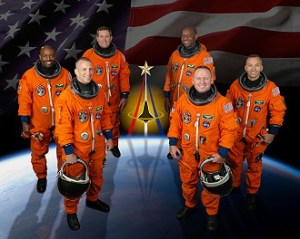
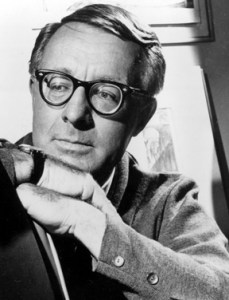
Photo Credit: NASA

Underwords is honored to present the next edition of “Why SF?” featuring Dr. Robert “Bobby” Satcher, Jr.

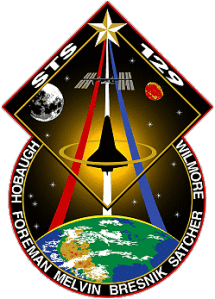
Dr. Satcher is a physician, chemical engineer, and former NASA astronaut. He was a crewmember of the STS-129 space mission, which launched out of Cape Canaveral on November 16, 2009, logging more than 259 hours in space.

Dr. Satcher received his PhD in chemical engineering from MIT and his MD from the Harvard Medical School. In addition, he has also been awarded honors for his work as a surgeon and as an engineer. He is married with two children.

~

Erin: You had a career that most people only dream about. Did you always want to be an astronaut or doctor? What inspired you to these career choices?

Dr. Satcher: I always wanted to have a career where I was using math and science. I always liked those subjects in school, in my early days in school. I also liked experimenting and tinkering. So, that put in my mind that I wanted to be doing something that would give me the opportunity to ask questions in laboratories as well as doing hands-on things. That was always in my mind.

I didn’t know exactly what my career would be. In fact, when I started college, I majored in chemical engineering, thinking that that was going to be my career, but what evolved in college was work related to medical problems and questions. I also enjoy thinking about medical problems, and I really got interested in the whole concept of surgery and perhaps one day being able to do that. I encountered and met some surgeons, being up at MIT and Harvard. It was always surgery that fascinated me the most. That was, coming out of college, what I thought I’d be doing. I, of course, went to medical school.

I also had the opportunity to meet Ron McNair during my later years at MIT and grew up in a generation in which Hollywood was fascinated with space. We had Star Wars, Star Trek, and a whole other plethora of movies, which came out that were focused on space–which fired the imagination. That’s the initial thing that got me to thinking about the possibilities of being an astronaut. Back then I never really thought that I’d have the opportunity to do it. I just thought it was something beyond what I would be able to do, and so I focused on medical school.

Eventually, I wound up going out to the west coast for my residency at UC San Francisco and being involved with research looking at what happens to the musculoskeletal system in reduced gravity environments. It was really through that that I finally met some physician astronauts. That really was the final thing that helped me to go on and decide to try to be an astronaut.

Erin: That is an incredible journey. We’ve all imagined what it must be like to be in space. We’ve watched the Star Wars movies and we’ve read about space in fiction, but you have actually been there. How did the reality of being in space differ from your expectations or from the experience that is usually depicted in films, television or fiction?

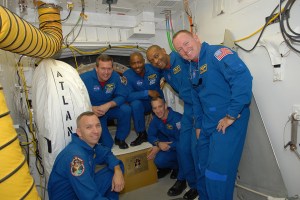
Photo Credit: NASA

Dr. Satcher: It exceeded my expectations. I knew it was going to be a fantastic experience, and basically before you go, you’re relying on the stories from people who have already gone. We spend anywhere from two to four years training for a mission, and all crews that go are a mixture of people who have already gone and some first time flyers. You basically get to know each other very well. You get the reflections, the experiences, and the insights from the people who have gone before. That really shapes your expectations leading up to your flight. Nothing really reproduces it in any of the training that you go through. It is a unique experience. As I said, for me it exceeded my expectations.

Image Credit: NASA

It was much more fantastic than I thought it would be. The whole time you are up there it’s just…you’re discovering this whole new world with no gravity and adapting to that. Also, just the views are spectacular, looking down at the home planet, looking off into deep space. The whole thing is really an amazing experience. Up until now, there have been a little more than 500 people who have had the privilege of going into space and that number is only going to increase as time marches on. I think the more people who are able to experience it the better.

Erin: If I could do it, I would be up there. It sounds like you really do live a science fiction life–especially with your time in space and some of the medical advances that are now in place. How has science fiction enriched your life and/or your career? Do you ever feel like you’re living in a world designed by Isaac Asimov or Ray Bradbury? 

Dr. Satcher: I never really thought about it that way. I think science fiction has been wonderful in the sense of laying out possibilities and some of those possibilities have actually been realized. People imagined certain things that we have initially done–like building a space station. I can’t tell you the author who did it, but I know this was something in science fiction literature a long time before it got realized.

The same thing is true with the space shuttle, which is a fairly radical concept for a spaceship, being that it acts as both a spaceship and as a glider once it gets back into Earth’s atmosphere.

There are other things that we’ve seen, like when you go back and look at Star Trek and some of the devices that they used–like the tricorder. There are certain companies that are trying to develop something like that now. And then there are the communicators, which look remarkably like cell phones that we’re using.

Erin: They really do. I would love it if you could develop a teleportation system. That would be fantastic.

Dr. Satcher: Yeah. I’d love to see that developed too. It would be great. One day it will happen. It just points out that imagination, of being able to come up with these concepts and it’s science fiction that at least creates the visual for us before we can have the real thing, is an essential part of the whole journey. It really captures the creativity and innovation before the science can actually catch up to it.

Erin: So, what was your favorite moment as an astronaut or as a doctor? What will you never forget from all of your experiences that you’ve had so far?

Photo Credit: NASA

Dr. Satcher: Well, the whole experience from take off to landing is…I’ll never forget the whole experience, but the obvious things are take off because that is so dynamic. You’re sitting on a rocket, and it’s all about the power of the rocket and the incredible speed that is unlike anything else. I also had the opportunity to do two space walks. Going out on those space walks was just extraordinary.

Erin: For many people you are a role model, but who was it that inspired you? Who were some of your role models that encouraged you to reach beyond what you might normally have otherwise accomplished?

Dr. Satcher: The people who had the biggest influence on me were my parents and family members who encouraged me every step of the way and basically let me know that they thought I could do all of these things a long time before I heard that from others. They were the most important people for me. Then, of course, I had a whole slew of role models throughout college, even going back to high school and elementary school, but certainly more recently college and grad school and professional training. For being an astronaut, Ron McNair sticks out, Charlie Bolden, and another guy Leland Melvin who was one of my crewmates and who was one of the first astronauts that I met when I was applying to become an astronaut. Then there are a whole lot of people who I haven’t named.

Erin: It’s impossible to name everybody, I’m sure.

Dr. Satcher: It really is. I haven’t even gotten to the people who were important to me going to medical school and in becoming a doctor and all of the research that I was interested in doing.

Erin: What were some of the biggest obstacles that you faced growing up or in pursuing your career? How did you overcome those?

Dr. Satcher: I think the obstacles are both external and internal as they are with everyone. Not everybody sees the potential that is there. Some people just see your exterior. I’m African American and I’ve had some teachers who, I can remember distinctively some of the teachers back in high school when I was applying to go to MIT, who thought I was crazy for doing that and in so many words let me know. Of course, I remember the ones who encouraged me, remembering both the positive and the negative.

Photo Credit: NASA

Also, as you’re going every step of the way, you always have doubts about yourself whether or not you’re going to be able to actually do what you set out for yourself. Have you set the bar too high? Are you really able to do that? We all have those questions. The whole thing is a process. I think the important thing is (and I always tell this to young folks who are asking, “What should I do?”) assembling a set of role models that works for you.  That takes some effort. Not everybody out there who you know or who might be easily available is the right role model for you. Also, don’t put all of your eggs in just one basket that way. You got multiple role models. There are people who are important to be there for you in educational developments, but also for you developing as a person because it all works together.

Erin: It’s important to have people to ground you as well as to inspire you. I’m guessing that a man who ends up working in outer space and becomes an astronaut must enjoy science fiction, either reading it or watching it. How much of an effect did science fiction have on inspiring you to choose MIT, or how did it enhance what you were already doing once you were in your career or educational path?

Dr. Satcher: Science fiction was huge. It definitely had [an effect] since we had all of these great movies in high school and junior high school. I also remember, although it wasn’t science fiction, the whole Apollo missions and the astronauts scampering across the moon. If you remember those moon images, I was about age five or so when it happened. The thing that really sealed the deal was when Hollywood got ahold of all of this and put it on the big screen. That really fired the imagination.

You could see what the possibilities were and wanting to actually be a part of that really brought it home for me even though I didn’t fully realize that until later on in life. It had a very large effect on my outlook. So, science fiction, again, was very instrumental in me realizing that I really wanted to be involved with space exploration in some way, shape, fashion or form.

Photo Credit: NASA

My favorite movie still of all time is the Star Wars series, at least the first ones. The later ones were just kind of okay, and I know a lot of fans who liked them. Then there’s the Star Trek movies, even though I liked the Star Trek series too, the first few Star Trek movies were fantastic. Then, of course, 2001 and 2010 were a couple of my favorite books and movies.

Erin: They were terrific. Many early science fiction writers wrote about future worlds, which now seem ordinary to us because our scientific advances. For today’s children, who might be dreaming about things that seem like they’re straight our of a science fiction novel, what advice can you give them to turn those dreams into reality?

Dr. Satcher: Pick something that you’re really interested in, and you really have to spend the time and effort going after it. I think there are a lot of distractions nowadays, and I see that with a lot of the students that I deal with. They’re sort of focused on an end goal and neglecting the importance of the process. They’re looking for the big payoff, the big discovery, the fame and the fortune, and everything that goes with it and not staying focused enough on the process.

Erin: Right. They need to put the time in, in order to get the reward out.

Dr. Satcher: They have to put the time in. There have been some very well publicized books, most recently the biography of Steve Jobs and in that book, and he’s not the first one to talk about this, there are lots of people who have talked about this, the amount of time that it takes to focus on the work. That’s just something you have to do. It’s not glamorous. When you’re doing it, the cameras won’t be on you. It’s just something you have to do, if you want to get to those things that make a difference. So, I think the emphasis really has to be put back on [the work]. Whenever I talk to young people, that’s what I tell them to do.

Erin: It sounds like a good plan to me. Dr. Satcher, thank you so much for doing this interview for “Why SF?” You are truly an inspiration, and I appreciate your time.

Dr. Satcher: Thank you so much.

Posted in Uncategorized, Why SF? | Tagged , , , , | Leave a comment

New Writer Spotlight: Rich Larson

Given the number of amazing new writers who have been publishing their work, it’s well past time for Underwords to do another New Writer Spotlight. This Spotlight features writer Rich Larson, who has a talent for writing strong character driven speculative fiction. I first came across his work while reading submissions for Futuredaze and was struck by his ability to build subtle, yet powerful stories that tend to linger in your imagination long past the last word on the page.

It is a pleasure to introduce you to Rich Larson whose new collection, Datafall, is now available on Amazon.

~

Rich Larson was born in West Africa, has studied in Rhode Island, and at the ripe old age of 20 now lives in Edmonton, Alberta, where he recently received the 2012 James Patrick Folinsbee Prize in Creative Writing. His work appears in Word Riot>kill author,   Bartleby Snopes, Monkeybicycle, Prick of the Spindle, AE: The Canadian Science Fiction Review, and many others, and his self-published scifi can be found at Amazon.com/author/richlarson.

~

When did you first know that you wanted to write? What inspires you to tell stories?

There was no single earth-shattering moment when I decided I wanted to write. It’s something I’ve been doing without much conscious attention for my entire life—my sister recently found a few (terrible) stories I had dictated to her around age five. However, I didn’t decide that I wanted to put my writing out into the world until last year, when my book Devolution achieved some surprising success in the 2011 Amazon Breakthrough Novel Award contest.

For someone who hasn’t yet had a chance to read any fiction by Rich Larson, how would you describe the type of fiction that you write? What is it about this type of fiction that you enjoy most?

My first love in fiction writing is definitely cyberpunk. My stories tend toward near-future scenarios and human element; aliens and spaceships are unlikely to appear. Stylistically, I enjoy dark tones and prose that really sings. What really draws me back to speculative fiction every time I branch out into general is the experience of creating a vibrant, believable new world and dropping the reader right in the middle of it.

It is said that learning to write well is like experiencing a series of never ending writing related epiphanies. If you had to pick one, what is the most important lesson you have learned, so far?

Taking critique, absolutely. When I first ventured online, I was blasted for the first time by readers who didn’t have an age-asterisk beside my name to make it “so good for how old you are!” Once I thickened my skin a bit, that anonymity was invaluable for getting no-holds-barred feedback. And even when I initially disagree with that feedback completely, if I smile, thank the reader, and try to see it from their perspective, chances are I’ll understand where they’re coming from a few days later.

Which authors, stories or novels most affected your development as a writer?

This is always a tough one. Inventing Elliot by Graham Gardner helped me fall in love with clean, spare prose. Feed by M.T. Anderson showed me iceberg theory first-hand, creating a massive, frantic, teeming world and focusing in on a comparatively tiny narrative. The Queen’s Thief series by Megan Whalen Turner was phenomenal for pacing and characterization. I also love Till We Have Faces by C.S. Lewis and nearly anything by Kenneth Oppel, who, fun fact, I telephoned at the age of seven to pester with questions about bats after I exhausted the local library’s resources.

What do you do for a living beyond writing fiction? How do you fit “writing time” into your schedule?

This summer I’m working at a liquor store and attending weddings, but come fall I’ll be a full-time university student again. When I’m not in class I play soccer, watch basketball, see movies and occasionally get drunker than intended. Writing is something I do when it comes to me, unless I’m working on a novel. In that case, 200 word spurts throughout the day with a goal of 1000 per.

You’ve recently published Datafall, a collection of your short fiction. How would you describe it? What can someone expect when picking up this collection?

Datafall is the result of 1) a lot of hard work and 2) the epiphany that what I write is of genuinely publishable quality and something people will willingly pay to enjoy. All seven stories are firmly in the speculative fiction genre, where I do my best work, and all have been written and polished over a span of two years. Expect fresh twists on old tropes—unruly AIs, time-travelling assassins, intergalactic colonization gone horribly wrong—and a few things you’ve never seen before.

Do you have a favorite piece with the collection? If so, what is it about that story that resonates most with you?

This is another tough one. I have a real soft spot for “Every So Often,” because of its cards-on-the-table simplicity while dealing with a scenario so often subjected to cheap twists. But I think “Back So Soon” stands out to me most, and will to readers as well, because it’s a far lighter and funnier piece than what I normally write.

Was there a theme or special selection process used when choosing what to put into Datafall and what to leave out? What was your favorite part of the building process?

Put simply, Datafall is made up of my strongest unpublished speculative fiction pieces, not including those currently being considered by mags. I did have a few stories that leaned too far into “weird fiction,” a little too surrealist, so those I left out in the interests of cohesion.

One of my absolute favorite parts of the process has been having the artwork, done by ridiculously talented writer / artist / friend Christopher Ruz, appear in my inbox at bizarre hours of the morning. Datafall contains six of his original cover illustrations and each of them is simply phenomenal.

If someone is looking for new fiction by you, where can they find it? What new projects are you working on now? What will be coming out soon?

Well, apart from “Your Own Way Back,” which I’m ecstatic to say is slated to appear in Futuredaze: An Anthology of YA Science Fiction, I also have publications upcoming in Daily Science Fiction, The Adroit Journal, and Short, Fast, and Deadly. Links to all of these will no doubt appear on my Facebook page. (www.facebook.com/richwlarson)

Projects currently on the go: editing my YA steampunk novel Clockwork, which is currently floating with a possible publisher, writing two wedding-related general fiction pieces and a futuristic prison-break short story, converting a play about a suicidal hostage into a novella, and, as always, writing mediocre poetry on the side.

…When I list it like that, it really makes me feel like I should get off the internet and open up Word. Thanks so much for having me, and remember to check out Datafall: Collected Speculative Fiction! (http://www.amazon.com/Datafall-Collected-Speculative-Fiction-ebook/dp/B008TXBZ5Y)

Posted in Interviews | 2 Comments

Andre Norton Award Interview – Signal Boost

“What’s the Andre Norton Award?” you ask.

Author Pheobe North did a great interview with author E.C. Myers about the Science Fiction Writers of America’s Andre Norton Award (which recognizes excellent in young adult science fiction and fantasy). It’s a terrific interview and has been published on The Intergalactic Academy’s blog.  I highly recommend it.

Phoebe’s interview discusses what the Andre Norton Award is as well as the award granting process and some of the key issues surrounding the award itself. This is a great interview for anyone who is interested in YA fiction.

Posted in Interviews, Signal Boost, Uncategorized, Young Adult Literature | Tagged , , , , | Leave a comment

Two New Short Stories from Erin Underwood (Coming Oct 2013)

While it’s always fun to promote books and stories that I’ve enjoyed reading, it’s just as much fun to also announce my own good news. I have two short stories coming out in October 2013. Both of which I’m really excited about since the Table of Contents look outstanding!

  • “The Foam Born” will be published by Ticonderoga Press in their anthology BLOODSTONES, edited by Amanda Pillar.

BLOODSTONES: Table of Contents:
Joanne Anderton, “Sanaa’s Army”
Alan Baxter, “Cephalopoda Obsessia”
Jenny Blackford, “A Moveable Feast”
Vivian Caethe, “Skin”
MD Curelas, “Smoke Gets In Your Eyes”
Thoraiya Dyer, “Surviving Film”
Dirk Flinthart, “The Bull in Winter”
Stephanie Gunn, “The Skin of the World”
Richard Harland, “A Mother’s Love”
Pete Kempshall, “Dead Inside”
Penny Love, “A Small Bad Thing”
Karen Maric, “Embracing the Invisible”
Christine Morgan, “Ferreau’s Curse”
Nicole Murphy, “Euryale”
Kat Otis, “And the Dead Shall be Raised Incorruptible”
Dan Rabarts, “The Bone Plate”
Erin Underwood, “The Foam Born”

DANSE MACABRE: Table of Contents
“Introduction” by Nancy Kilpatrick
“Danse Macabre” by Ian Emberson
“The Secret Engravings” by Lisa Morton
“Death in the Family” by Morgan Dempsey
“Blue-Black Night by” Tim Reynolds
“La Senora Blanca” by Lucy Taylor
“Totentanz” by Nancy Holder and Erin Underwood
“Out of the Sun” by Gabriel Boutros
“Pressed Butterflies” by Lorne Dixon
“Matryoshka” by Sabrina Furminger
“Fingernails” by J. Y. T. Kennedy
“Ghost Nor Bogle Shalt Thou Fear” by William Meikle
“Death Over Easy” by Suzanne Church
“Mr. Go Away” by Brad Carson
“A Song for Death” by Angela Roberts
“Therapy” by Bev Vincent
“Me and Lou Hang Out” by Tom Piccirilli
“Elegy For a Crow” by Opal Edgar
“The Angel of Death” by Lawrence Salani
“The Physician’s Assistant” by Dan Devine
“An Appointment in the Village Bazaar” by Stan Hampton, SR.
“The Exclusive” by Edward M. Erdelac
“For I Must be About My Father’s Work” by Brian Hodge
“The Death of Death” by Tanith Lee
“Symeon” by Bill Zaget
“Old Man With a Blade” by Brian Lumley
“Population Management” by Tom Dullemond

Posted in Books and Literature, Fiction, Horror, Signal Boost, Uncategorized | Tagged , , , , , , , | 4 Comments

A Quick Underwords Update

Underwords has taken a short break to finish reading the submissions for Futuredaze: An Anthology of YA Science Fiction, which we have just finished. The responses have all be sent out and we’re now in the process of finalizing the contracts. Soon we’ll be releasing the Table of Contents and previewing the cover.

One exciting note about Futuredaze is that it will feature authors from all over the world, including the US, Canada, Australia, the UK, and Taiwan. Plus, our authors range from award-winning to New York Times bestsellers to up-and-coming professionals as well as a few new writers. All in all, it’s an exciting combination. We’re anticipating a February 2013 release date for Futuredaze.

In other Underwords updates, I just completed an interview with former NASA astronaut Robert Satcher, which will be featured in our series Why SF? later this month. I’m also working on putting together another Free Fiction Sampler for the fall, so stay tuned for that!


Posted in Uncategorized | Leave a comment

Why SF?: An Interview with Alexander Falk, President & CEO of Altova

Alexander Falk
Photo Credit: Calvin Falk

Welcome to the newest install of Why SF? With each new interview, Underwords explores how “science fiction has affected the lives of a variety of creative and influential people.” In this interview, I talk with Alexander Falk, founder, President and CEO of Altova.

I first became aware of Alex when he and his family began renovating a historic house that was in desperate need of repair. My husband and I began following his blog and were fascinated by how Alex combined his love of technology with his desire to historically preserve as much of his family’s new home as possible.

As I got to know him in person, I learned of his career as a software developer/inventor/CEO, his love of science fiction, and his proactive work in helping to turn technological concepts into reality. When I began developing plans for WHY SF?, I knew that Alexander Falk would be a perfect person to interview for this series.

Please join me in welcoming Alexander Falk to Underwords. I hope you enjoy this interview and be sure to read our previous installments of WHY SF?

You’re the founder of Altova, a software industry leader, and the co-creator of the XMLSpy, XML Editor, and other key XML development tools. For people who are unfamiliar with the term XML, can you briefly describe what XML is for the low-tech among us?

XML stands for eXtensible Markup Language, which is an industry standard for structuring and describing data. It is mostly used by different applications to exchange data between different computer systems or software products. For example, when companies report their financial results to the SEC, they do so in the form of XBRL reports. XBRL is the XML Business Reporting Language and used to capture financial data in such a form that it can be easily processed by banks, investors, and government regulators. In a similar fashion, health-care related data is exchanged between doctors, hospitals, and insurance companies using HL7 – another XML-based standard for data exchange. And a lot of the web sites that people use every day – from Facebook to Google and from Twitter to Wolfram Alpha – often exchange data between one another in the form of XML messages.

What was it that attracted you to pursue a career in technology, specifically within the software industry?

I’ve been fascinated by computers ever since I was about 12 years of age. At that point in time my dad, who is a university professor for organic chemistry, was invited to speak at a series of conferences, colleges and universities across the US, and he took the family with him on a six week round-trip that started at Lake Winnipesaukee and ended in Miami with stops in New York, Salt Lake City, Reno, San Francisco, Los Angeles, Phoenix, Austin, and various other places.

This trip influenced my life in many more ways than my parents (or I) would have thought possible at that time. Firstly, I discovered my love for the English language and resolved then and there that I would only read books in their original English version rather than in a German translation, and I applied the same approach to movies, which I started watching only in English in one of the view cinemas in Austria that showed the original English reels rather than the dubbed German version. Secondly, I fell in love with the vastness, beauty, and diversity of the USA. And thirdly, during that trip I was able to see some pretty exciting computer simulations, including what we would now think of as crude and primitive line-graphics on a low-resolution mainframe terminal at Texas A&M university. The most exciting simulation was that of a Star Wars X-Wing fighter flying along the channels of the Death Star and trying to deposit the bomb into the correct shaft to free the Rebel Alliance from the Empire.

Upon my return to Austria, I started getting into computers fairly soon thereafter, teaching myself BASIC programming from a few books. I then quickly proceeded to getting started programming on my dad’s Apple II in his research lab, on the TRS-80 at our high school, as well as on a friend’s Commodore PET.

Being introduced to something revolutionary like a computer can be a transformative experience when you’re young. However, when kids are asked what they want to be when they grow up, most of them don’t say “software developer.” What did you dream of “being” when you grew up?

When I was very young, I wanted to be a firefighter. I remember getting a red fire truck for my 2nd or 3rd birthday and that was awesome. Soon thereafter, I decided that I wanted to succeed Mr. Spock in becoming the next science officer on the Enterprise. He was always working with the shipboard computer system, so I guess being a software developer is not that far removed from being science officer on the Enterprise – especially not nowadays as we run around with tablet computers and talk to our personal assistants on our smartphones. And, of course, the beauty of social media is that I can now follow Leonard Nimoy, George Takei, and William Shatner on Twitter and Facebook and actual interact with them. LLAP.

I think Spock would be honored.

Social media definitely seems like a step or two away from using a Star Trek communicator, minus the “like” button. What is it about science fiction, whether in print or film, that captures your imagination?

I’ve always been fascinated by ideas, memes, concepts, and visions about the future. What excites me is the possibility to explore the potential ramifications of a new technology on society, on humanity, and on the individual through the vehicle of a story-telling. It allows us to think about, to discuss, and to ponder the potential implications of advances in science and engineering before they actually happen. This, in turn, can prepare us to better deal with the reality of some of these technologies as we approach a scientific breakthrough.

While not every imaginary SF invention is possible or even probable, I think that the symbiotic relationship between SF authors and cutting edge scientific research cannot be understated. Given your answer above, are you thinking that science fiction literature is like a sandbox in which SF authors try out new ideas and concepts that researchers might someday pick up for development?

Yes, to some extent SF can provide that kind of sandbox environment and let authors try out new ideas without budgetary constraints or being hampered by the actual laws of physics. However, I personally find the sociological impacts of technology a much more fascinating topic, and exploring those in a SF sandbox can have an impact not just on researchers but also on society and how we deal with new technologies once they emerge. For an example just think back to Michael Crichton’s novel Jurassic Park (1990) and what an impact it had on the discussions about the ethical considerations with respect to cloning, especially around the time when Dolly the sheep was born as the first mammal cloned from adult cells on July 5, 1996.

We are  influenced by any number of things when growing up. How much influence (if any) did reading science fiction have on your interests, your education, or your career?

I would say that my love for science fiction has definitely turned me into a “typical geek” in my teenage and young adult years, and I am, in fact, proud of having been one. My kids would say that even today I am still a geek, even though I now am CEO of a multi-national company. SciFi has undoubtedly been extremely influential on my education choices – obtaining a college degree in semiconductor physics – as well as on my career in software engineering. And to this day I closely monitor advances in technology, computer sciences, as well as physics and often blog about them.

Your blogs are fascinating. The one that really caught my attention was the detailed, nearly day-by-day blog you wrote when you renovated your house, restoring it to its past lustre and bringing it into the 21st century–literally. What inspired you to restore your antique house with such high-tech upgrades?

Before I go into the details, let me just say that the house was truly in a disastrous state of disrepair when we bought it in 2007. Most people would have just torn it down. However, the house had good “bones” in terms of its framing. We were also able to save the trim in just one room in the center of the house. But we had to essentially do a full “gut job”, so in our restoration we went with a fairly modern interior design and trim in all the rooms except the central ballroom, where we meticulously restored all the saved trim. Therefore, using a fairly high-tech approach to the new portions of the house felt like it was the right thing to do.

As for the motivation of why I would want to go high-tech? There are really three reasons for this:

  1. I just love technology, gadgets, high-tech gear, and the like, so it was natural that I would build some of them into the house;
  2. We built the house as a “green” house and achieved LEED For Homes Silver Certification, and in order to make the house energy-efficient, we employed some smart-house functionality that helps us conserve electricity. For example, when the thermostat in a room calls for cooling, the smart-house controller will first deploy the shades or curtains in the room (depending on time of day and whether the sun actually hits the windows) before it will turn on the HVAC system in cooling mode; and
  3. I was, of course, also influenced by the press coverage of Bill Gates building his new house as a smart home as well as by the novel “Gridiron” by Philip Kerr, which was published in 1995. Based on those ideas I had previously retrofitted some smart house technology into our former home in 2004, which was an excellent lesson in terms of what not to do. I really learned a lot from the failures of that project and avoided many of those pitfalls when we did the system for the new house.

Speaking of your house, you have a fabulous library. Do you have a favorite novel or novels that have stayed with you over time?

Perhaps at this point is should not come as a surprise that most of my favorite books are indeed science fiction novels. Those that have stayed with me over time and that I have indeed perhaps even read a couple of times by now, are cornerstones of the genre as well as some strange outliers that are perhaps not yet sufficiently appreciated for their contribution to the advancement of SF literature. These are just a few of my favorite novels or series (in no particular order): the Robots and Foundation cycles by Isaac Asimov, the Ringworld series by Larry Niven, Solaris by Stanislaw Lem, the Well of Souls series by Jack L. Chalker, Neuromancer by William Gibson, the Night’s Dawn trilogy by Peter Hamilton, the Illuminatus! trilogy by Robert Shea and Robert Anton Wilson, the Lensmen cycle by E.E. “Doc” Smith, Ender’s Game by Orson Scott Card, the Dune series by Frank Herbert, The Hitchhiker’s Guide to the Galaxy by Douglas Adams, K-Pax by Gene Brewer, and many others – there are just too many to enumerate them all here due to space constraints.

Science fiction comes in all shapes, forms, and sizes. Who were/are some of your favorite authors or literary heroes? What is it about these people that captures your attention and respect?

Obviously, with respect to favorite authors, the previous list includes many of them already. Perhaps I should add Arthur C. Clarke, Philip K. Dick, and Robert A. Heinlein, as no list of notable science fiction authors can possible be complete without them. Interestingly, I have never really focused much on the heroes of the novels I read. I enjoy reading science fiction primarily for the ideas, the concepts, the technologies, and the memes–for thinking about the impact technologies have on society. In my mind, the people are just actors that move along the plot and I often forget about them fairly quickly. Some of the exceptional heroes that stood out and notably captured my attention are Nathan Brazil, R. Giskard Reventlov and R. Daneel Olivaw, Zaphod Beeblebrox, Ender, Louis Gridley Wu, Paul Atreides, and, of course, Spock.

Many early science fiction writers like Ray Bradbury or Isaac Asimov wrote about future worlds that seem ordinary to us now because of our scientific advances. For today’s children who dream of things that could be straight out of a science fiction novel, what advice can you give them to help turn those dreams into a reality?

Study hard, work hard, and never stop dreaming! I believe the best foundation is a solid education especially with a strong focus on mathematics and sciences. If you are good at math and especially the natural sciences, you can pick up many other things quite easily later on. You can add on legal knowledge, a financial education, and MBA, and many social sciences at a later point in time. Those can be learned from books, from courses, from evening MBA programs and can be added at any stage in life. But the fundamentals of math and sciences are generally learned while you are young and will provide the foundation for many additional skills.

We need a stronger focus on math and science in our educational curriculum and we need to focus more on making those subjects more exciting for children and young adults. One way to do that is perhaps by also adding science fiction for young adults to our English curriculum. Some of the young adult literature that I see my kids read in school is just too depressing for my personal taste.

No matter how improbable, what futuristic technology would you most like to see become a reality? Why that technology?

I love to travel, so the technologies I would most like to see become a reality are all related to teleportation. Be it the classic “Beam me up, Scotty” of the U.S.S. Enterprise, or the more elaborate Puppeteer network of Stepping Disks conjured up by Larry Niven in his Known Space series, teleportation has always been a favorite technology topic for science fiction authors. And its impact on society as a whole would be profound.

With respect to whether teleportation is actually possible or not: in the true spirit of quantum physics, one would have to say that it is both at the same time. All kidding aside, there has been a lot of very exciting progress in quantum teleportation in recent years, especially by the research group around Prof. Anton Zeilinger of the University of Vienna in Austria.

It would be amazing if something like teleportation were developed. At MIT they have come up with high tech inventions like wireless energy and nanites that deliver cancer drugs straight to the tumor. You never know what imaginary inventions might be possible tomorrow.

What do you think science fiction can add to a child’s development that other genres don’t do or don’t do as well?

I believe science fiction has the capacity to ignite a child’s or young adult’s imagination in ways that are truly unique and forward-thinking. On one hand it opens up the possibilities of a scientific career, and on the other hand it gets them thinking about the engineering challenges that may play a role in making some of the science fiction dreams a reality. Sadly, in most popular literature as well as in TV and movie depictions, scientist are all too often portrait as crazy, out of touch with reality, or power hungry. Nothing could be further from the truth. The only genre where scientists are portrayed as researches and scientific progress is portrayed at least as somewhat beneficial to mankind is half of the science fiction literature (dystopias excluded for a moment).

In his book The New Time Travelers, David Toomey examines the history of time travel science and the close connection of research inspired by science fiction. For example, Toomey writes that science fiction icon Carl Sagan actively participated in several scientific discussions with researchers that resulted in some new theoretical advances, which is not to say that time travel is “real.”

It is no surprise that we see a lot of technologies that were previously dreamed up by science fiction authors some 20-30 years ago start to turn into realities today. For example, take a look at Williams Gibson’s novel Neuromancer and then look at the multi-national corporations of today and the threat of cyber attacks against some of them. The same is true for Jules Verne and the NASA Apollo program. That is what inspired previous generations of scientists and engineers, and in a similar way today’s SciFi authors have the opportunity–if not even the obligation–to inspire future generations of scientists and engineers!

We cannot start to build these technological advances, if we don’t have the dreamers at the forefront of imagining things and coming up with the ideas that will fuel the ingenuity of generations to come!

Alex, thank you so much for the interview and participating in the Why SF? series. I’ve always felt that it is important to see the connections between literature and the real world, and you’re a true role model for a future young scientist who loves her science fiction or a writer-to-be who is working on his first SF novel.

~

Alexander Falk founded Altova in 1992 in Vienna, Austria; member of the W3C XML Schema working group that defined the XML Schema 1.0 specs; member of the W3C Advisory Committee; co-creator of the popular Altova XMLSpy XML Editor; established US subsidiary in 2001 and relocated to the USA; President & CEO of Altova; VIP member of the Kepler Society (Alumni Club of the Johannes Kepler University).

Posted in Interviews, Science Fiction, Why SF? | Tagged , , , , | 2 Comments

Ray Bradbury, In Memory Of … (1920-2012) — SF Writers Pay Tribute to an Icon

Ray Bradbury (1920-2012)

On June 6, 2012, I lost a hero. At the age of 91, Ray Bradbury passed away, leaving this world for the next. Bradbury was one of the most significant writers of our time and his influence helped to reshape the science fiction genre as well as other forms of literature.

It is a hard thing to lose a hero, especially when true heroes are difficult to find. I am grateful to have discovered Ray Bradbury and his books. In many ways his work made me want to write and inspired me to discover new science fiction stories, stories that I had once thought were just for boys…not geeky girls like me.

Ray Bradbury was a true inspiration. I can’t think of any better way to say “thank you” than to honor the man, the writer, and his work by bringing together writers who have been, in some way, touched by his influence and to give their words a place in this memorial. If you have a thought, memory, or favorite book, you’re welcome to add your voice to this tribute in the comments below.

Thank you, Mr. Bradbury. You have been and always will be one of my heroes in this life and the next. Rest in peace.

~ Erin Underwood, Underwords

~

DAVID BRIN — author
[Excerpted with permission of the author. Read the full post here.]
Good literature has that power. Indeed, science fiction offers writers a chance to create that most potent work, of which “Fahrenheit 451″ is a prime example. The self-preventing prophecy that so shakes up readers that millions of them gird themselves to prevent the nightmare from ever coming true. That’s power….

Ray was grateful, always, for what life had allowed a geeky youngster to do. I am thankful that he was my friend. And we who love both words and freedom of the mind should all feel gratitude today. For all those wonderful words.

BRUCE COVILLE — author
The great thing I learned from reading Ray Bradbury when I was young was that fantasy and science fiction could be not only thrilling, but beautifully written, even poetic. I loved the pulse-pounding pace of good pulp fiction, but in Bradbury I discovered something richer and deeper. It was a great gift to provide to an aspiring young writer.

JANE YOLEN — author
I never actually met Ray Bradbury, except in the pages of the book. But in many ways he had more to do with my being the writer I am today than most of my closest friends. His books showed me how to write a novel, his stories taught me how beauty and plot could be combined. So I guess I really did meet him. Only he didn’t know it.

JACK MCDEVITT — author
Back in the sixties and seventies, during my days as a high school English teacher, I was never a fan of the notion that my job was to teach the classics. To introduce my kids to Chaucer and Dostoevsky. Rather, it seemed as if the critical thing was to induce a passion for reading. Get students excited about books, I thought, and they’ll find these guys on their own. So I never stopped looking for books that would turn kids on. Nothing ever worked as well, or even came as close, as Ray Bradbury’s Martian Chronicles.
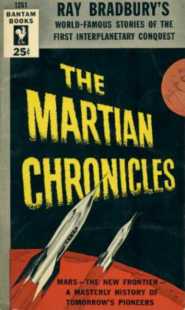
I routinely staged the first part of “Mars Is Heaven” as an introduction. My students were surprised when they landed on Mars and looked out on that alien town with its picket fences and neatly-cut hedges and its houses and church. And I’m pretty sure I heard gasps when we opened the hatch and my special effects guy started a recording of “Beautiful Dreamer.”

Teaching English with Bradbury in the classroom was not only easy, it was delirious.

I should add, probably, that I did not learn about the power of poetry from my schools. It came when I was about fifteen, reading stories with titles like “There Will Come Soft Rains.”

GREGORY FROST — author
I never met Ray Bradbury, though his fiction had far more influence on the teenage me than any of the other fantasy/sf authors who were his contemporaries. His prose was smooth and crystal-clear, his stories often quietly stunning. I’ve reread The Martian Chronicles half a dozen times over the years, and am always pleased to discover how well it holds up, how lovely it remains. Of course, it’s the Mars of Bradbury’s imaginings, his childhood–far closer to Barsoom than to the arid planet we scrutinize nowadays.

When I first started writing short stories, his works exercised an enormous influence upon me. I’m part of a generation who in the midst of conversation could casually toss out “Boys, Raise Giant Mushrooms…” and everybody knew the reference, got the joke.
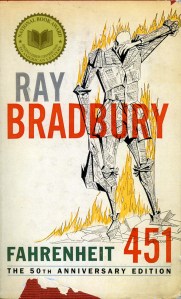
Two years back I participated in live readings for Banned Books Week at the Free Library of Philadelphia. We had a list of the most-banned from which to select a work. And there, in the very first column, was Fahrenheit 451. I hadn’t read that book since I was maybe 16. But I flipped through it and quickly found a great dramatic speech by Beatty, Montag’s boss, about the dangers that books present and need for firemen such as himself to eradicate them. That’s what I read that night.

But as I sat there waiting my turn, I wondered what in this brilliant book could possibly have scared somebody so much that they’d ordered it banned. It couldn’t be the language. It definitely wasn’t depictions of sex. What was left? Ideas? Are ideas in fiction that scary? Apparently…in which case Ray Bradbury must have scared those people shitless–because he recognized that such as they existed and wrote a novel reflecting their odious little minds. And then in an act of supreme irony, those same people banned the book about banning books. Bradbury had the last laugh and they didn’t even notice.

Bradbury was one of the best–maybe the best–fantasists of the 20th century. His works enthralled, entertained, and burrowed so deeply under my skin that I can remember whole stories that I read nearly half a century ago. But more than anything else, Ray Bradbury was a prose poet who could summon the numinous. We will be reading him as long books exist.

TOBIAS BUCKELL — author
[Excerpted with permission of the author. Read the full post here.]
I owe a great deal of my own dogged persistence to Bradbury’s being willing to talk about those 500 early rejections. Too often literary giants are presented in their current position as if they became what they were via fait accompli. Without this crucial understanding as to how freaking hard Bradbury worked, I would never have had the courage to keep pushing on despite early rejections.

And that piece of advice, that realization about how hard he worked, led me to fall even further in love with his writing as time passed.

Thank you, Mr. Bradbury. I am disappointed I never got to meet you. You and Arthur C. Clarke are the two writers that had a tremendous impact on me that I will never have gotten a chance to meet.

F. BRETT COX — author
Bradbury’s books were among the building blocks of my youth, and Fahrenheit 451 is probably second only to 1984 in terms of an sf novel’s broad cultural influence.

ELLEN DATLOW — editor
I’ve been reading Ray Bradbury’s short stories throughout my life. I’ve loved The Martian Chronicles, The Illustrated Man, heartbreaking stories such as “There Will Come Soft Rains” and chilling stories such as “Heavy Set.”
I only met him once or twice and was way too shy to tell him how much his stories meant to me, even though I published four new ones in OMNI Magazine between 1981 and 1995.

One other connection: Back in 1993 I posed for a textbook illustration artist Nicholas Jainschigg created for Bradbury’s story “The Rocket,” about a family man who dreams of going into space but realizes that he can’t afford to take his whole family. I am the wife in two illustrations. I received a copy of the book –Dream a World as payment—I’ve just found the book. (I never met my fictional “family”—Nick inserted the picture of me into the scenes).

MYKE COLE — author
For me, it was always the Hound. Reading is banned, books are being burned. Dark, ominous. I got it. But I first read Fahrenheit 451 as a kid. The idea of government, let alone oppressive government, was a distant, abstract thing. I wouldn’t want anyone to tell me I couldn’t read, and I certainly wouldn’t want black-suited fireman to cart me off, but . . . whatever. The firemen were always cops in my mind’s eye. Cops I knew, cops I was used too. Cops didn’t scare me.

But the hound was an eight-legged, silent, metal monstrosity. Its LED eyes glowed red. The database in its nose stored and tracked 10,000 scents, 10,000 identities it could locate, track and . . . bring to heel. Its darting tongue was a razor sharp needle, backed by a rotating battery crammed with liquid filled cylinders. Those cylinders were in turn filled with poisons to paralyze, sedate, stun, wound or even kill, depending on the egregiousness of your crime.

The firemen were people, humans. The hound was a demon from hell. It couldn’t be reasoned with. It didn’t have children of its own. It wouldn’t care if you cried. It wasn’t impressed by your tender years. You couldn’t lose it. You couldn’t outrun it.

The hound would find you. The hound would make you pay.

Reading the hound was one of my earliest experiences with how great writing could evoke emotion. I knew it wasn’t real, but I still couldn’t escape the chill horror that imagining it evoked. When I read those pages, when I imagined it, it was real. It was as real as anything in the sunlit world that had ever frightened me.

That was the power of science fiction. Ray Bradbury showed it to me, and it became a lifelong passion. It’s odd to mourn a man for frightening me, but life’s surprising sometimes. Bradbury showed me that imaginary stories can thrill in a bone deep way that real life is hard pressed to match. That singular lesson had the rearing of me, and is just one of the reasons why I join the rest of world in missing him so terribly.
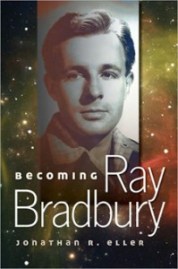
NANCY HOLDER — author
I think it was a LOSCON (Los Angeles SF convention usually held over Thanksgiving weekend) and the late, lamented SF bookstore Dangerous Visions had a booth. I was friends of owners Art Cover and Lydia Marano, so I was hanging out. Over walked Ray Bradbury, who chatted a bit and proceeded to buy every roll, every pack, every scrap of Disney wrapping paper they had. I felt the same way a little kid feels when they see their teacher at the grocery store, and I was tongue-tied and thrilled. I’m a huge Disney freak, so the fact that he bought DV’s entire wrapping paper inventory made the moment even more magical. He wrapped up my reading life and my imagination in magical paper–with his words on it. That is even more precious to me than Bambi.

KEN SCHOLES — author
I was deeply saddened this week by the passing of the man who showed me what I wanted to be when I grew up.
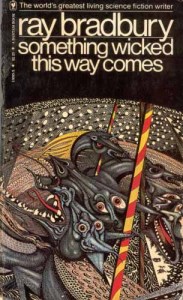
I fell into Bradbury through the Martian Chronicles as a boy and he haunted my childhood with his stories. They took me on a Roadtrip to Wonderment that changed my life and later, when I was fourteen, I read his essay “How to Keep and Feed a Muse” and suddenly knew a kindred spirit — someone else who loved Story so much that it had to explode out of him, someone else who understood that kind of deep, abiding love for wonder. I started writing stories. At sixteen, I wrote him and told him what I was doing, typing up stories and submitting them to magazines, following in his footsteps. He wrote back. He recommended some books and urged me to write a thousand words a day until I had a million words. And he encouraged me to write to him each October. The next year, I wrote again and he wrote back…this time with a silver pen on a Something Wicked This Way Comes poster. I don’t know what I wrote to him but I remember asking him questions about my favorite book and this was his reply:

“Dear Ken: Yes, Will Halloway lives in California! Jim Nightshade lives in Rome with six girlfriends — and Mr. Dark?? Mr. Dark says hello to Ken! As do I with thanks!”

It lives in my treasure box. Grace dropped like a stone into the murky pond of my childhood.

I grew up poor in a trailer in rural Washington state with a mentally ill mother and an alcoholic stepfather. It was an unfortunate childhood, riddled with darkness, but Bradbury was light in that place. A compass that pointed me toward what was good and beautiful. And ultimately, a compass that brought me to a new kind of home, at rest and play in Story, with a new kind of family that has made my life richer…and full of love.

More than the words he wrote, more than the stories he told, Bradbury was an amazing lover. He loved Story. He loved life. He loved his tribe of wonder-children and gave himself to them. When Antiphon came out, I dedicated it to him for showing me what I wanted to be when I grew up. When I wrote that dedication, it wasn’t just that I wanted to be a writer, but that like him, I wanted to bring more grace into the world than I had found in it upon my arrival.

Live forever, Ray Bradbury.

KEVIN J. ANDERSON — author
[Excerpted with permission of the author. Read full post here.]
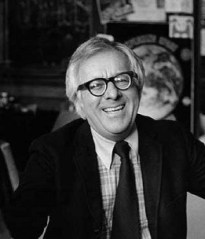
I read all those stories—every one, book after book—in high school, and they inspired me so much. I wrote my own stories, dozens of them, submitted them to magazines, got rejected, wrote more, submitted more, eventually got a few published. And then I found in my public library’s new books-on-tape section, a collection of Ray Bradbury short stories read by the author himself. I checked it out immediately and played them in my car cassette deck for weeks, listening to Ray Bradbury read his stories to me. It was amazing, and even after many years I realized how much those stories had made an impact, and that many of my own stories were taken from those great works.

GORDON VAN GELDER — editor, publisher
[Reprinted with permission of the author. Read the full post on Underwire, including additional tributes from other authors.]
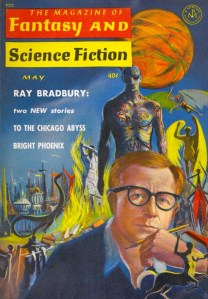
Ray Bradbury had some of the world’s best nightmares and I’m eternally grateful to him for sharing them with us.

He did a lot of other things, too — showed us that dreams of the future are compatible with nostalgia for youth, taught us the poetry of rocketry, and gave us many smiles — but it’s the nightmares I value most. Some of them came with the carnival, some lurked in the sea. One of them was just about being locked in a closet.

“I don’t try to describe the future,” said Ray Bradbury. “I try to prevent it.” For me, that one comment defined an entire style of science fiction, an approach that will always be valid as long as we have a future. I’m glad to live in a world where people learned from Bradbury’s nightmares.

KAT HOWARD — author
I might have been a writer without reading Ray Bradbury, but there is no question that, had I not read him, I wouldn’t be the kind of writer I am now. It’s no secret to anyone who knows me that I love Shakespeare, but it was Bradbury’s work that sent me in the direction of Shakespeare’s plays.
I was very young, about nine I think, when I checked Something Wicked This Way Comes out of the library. I remember telling my Mom I picked it because I loved the title, and she quoted the lines from Macbeth: “By the pricking of my thumbs/ something wicked this way comes.” And I was hooked – not just on Shakespeare, but on the idea that writers could do that, could borrow bits and pieces of cool stuff from other writers and other stories and use them to make something new.

That experience reshaped the way I thought about stories, and so I am forever grateful to Ray Bradbury, not only for the wonderful gift of his work, but for the way he taught me to think.

BETH REVIS — author
[Excerpted with permission of the author. Read the full post here.]
“All Summer in a Day” and Fahrenheit 451 are very dark. They are sad. They do not end happily ever after. In particular, “All Summer in a Day” speaks of cruelty–even at the hands of our peers–and the ceaseless darkness in any person’s heart, even the heart of a child.

And yet despite all this–Ray Bradbury’s works give me hope.

I’ve said before how to me, dystopians are not depressing books. They’re books of hope. They’re books that say even when things are at their darkest, there is still a glimmer of light.

Ray Bradbury was the first person to teach me that.

BETH BERNOBICH — author
Dear Mr. Bradbury, a Timeline

1950: The Martian Chronicles, by Ray Bradbury, is published.

1972: It’s summer. I’m twelve years old, the youngest of four kids. My older brother brings home a used copy of The Martian Chronicles. This was a tradition with my siblings–they would venture forth from our staid household, where salt and pepper were the only spices imaginable, and bring back news from the outside world.
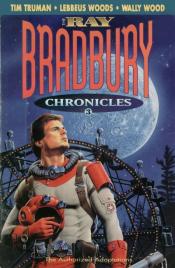
I devour the book in one sitting, then sit back, amazed.

Mind you, this isn’t my first encounter with speculative fiction–I’ve read The Hobbit and The Lord of the Rings–but it is my first encounter with science fiction. With stories about humans from our world, meeting with inhabitants from a planet in our own solar system.

And it’s just three years after I saw Neil Armstrong take that first step on the moon.

But what I really care about are the people in those stories–the people from Earth meeting the people from Mars. Those meetings weren’t always friendly, or safe, but in the end, I came away with a sense of hope and wonder.

It wasn’t until many years later that I started to write science fiction and fantasy myself, and more years until I sold those stories. Always, though, in the back of my mind, was the impression that stories should be about wonder.

Then came 2008: I had just sold a story to one of my favorite SF markets, PS Publishing, for their special Worldcon issue of Postscripts magazine. When they announced the table of contents, I scanned down the list. Of course I was pleased to see my own story listed, but my attention snagged immediately on one name.

Ray Bradbury.

OMG. I’m in the same anthology as *Ray Bradbury*.

My memory blanks out at that point. I think I overloaded with amazement and joy.

I never got the nerve to write to him, to tell him how much this meant to me. But then, how can you put into words what inspiration means?

Thank you, Mr. Bradbury, for all your stories. May your soul run swift and light between the stars.

JOHN LANGAN — author
No Longer At Ease: The Disturbing Pleasure of Ray Bradbury

For so many of his readers, Ray Bradbury is associated with childhood, specifically, with a rosy-tinted, nostalgic dream of summers past, when school was out and the days were free for imagination and adventure. It’s an association that’s easy to understand, not least because Bradbury himself maintained the persona of youthful enthusiast throughout his public life. To be honest, though, my own first, abbreviated encounter with his work, as well as my subsequent, more prolonged engagement with it, was marked by unease and discomfort.
I think it must have been because of the NBC miniseries adaptation of The Martian Chronicles that I checked the copy of it out of the school library. This would have been in 1980, when I was eleven, in sixth grade and already an avid reader of fantasy: L. Sprague de Camp and Lin Carter’s twelve-book expansion of Robert E. Howard’s Conan stories; Lloyd Alexander’s Chronicles of Prydain; Tolkien’s Ring books. I was also a devoted reader of Marvel Comics, especially Roy Thomas and John Buscema’s Conan the Barbarian. If you had asked most of the adults around me, I’m sure they would have opined that Bradbury’s would have been exactly the book to give to such a child.

From the start, though, I had my doubts. The cover, for one thing. (I know; I know: books, covers. I wish I could say I’d ever taken that maxim to heart.) Ian Miller’s pen and ink drawing showed a series of armored–were they mice? Armadillos? Some kind of four-legged, or four-wheeled, creatures, apparently with brushes extending to either side of their snouts, and wires or antennae extending forward from their noses. Above them, a robotic arm held a ruined something, a piano, maybe; although what it wanted with the piano, I wasn’t sure. A wall with a rectangular opening in it took up about three-quarters of the near background; while more of the armored things rolled over the further distance. There was no doubt that the cover was of the kind of narrative I preferred, but it was of such a distinct and unfamiliar species as to be almost completely foreign. Though I didn’t realize it at the time, it was as if I were seeing this book in the way those around me saw my usual choice of reading.

Nor did the stories inside do anything to dispel my concerns. There were rockets, yes, and Mars, and Martians, and strange weapons, but there was also a Martian woman who fantasized about the approaching human astronauts as a relief to the monotony of her loveless marriage, and her jealous husband, who loaded his strange gun with bees and set off to hunt those astronauts as soon as their ship touched down. There was a Martian asylum in which the next set of astronauts found themselves trapped by a Martian psychiatrist who believed them to be not from Earth, but insane, and when he found he could not cure them, euthanized them. There was a Martian town that camouflaged itself as a human town in order to lull the third set of astronauts into a false sense of security, to make them easier to murder in their beds at night. There was the astronaut in the fourth party who turned on his fellows, identifying himself as a Martian and trying to kill them all in order to forestall the exploration and settlement of the planet. I understood it all on the sentence level, but the emotional subtleties of the book’s contents soared clean over my head, and I didn’t finish it.

I don’t know what it was that caused me to return to The Martian Chronicles two years later, towards the end of eighth grade, but I remember bringing it with me to read on the way to and from the class field trip to Howe Caverns. This time, I completed the book, though it still didn’t make as big an impression on me as it would the following year, when, in an inspired moment, my ninth grade Honors English teacher selected it as the extra book the class would read. This pass through, “Night Meeting,” about a human on his way to a party who meets the ghost of a Martian on his way to a party, struck me in a way few things I read at the time would match. In the story, neither the human nor the Martian can fully accept what’s happening to him; each is stubbornly certain of not only the reality, but the primacy, of his circumstances. Although they’re united by a remarkable experience, in the end, the two go their separate ways because, really, what else are they going to do? How strange it was to think that you might be part of an extraordinary, even a miraculous, event, and then have to continue with the rest of your life.

This reading, I also reveled in the more savage pleasures of “Usher II,” a simultaneous homage to Poe’s most famous murders and an indictment of censorship, Fahrenheit 451 in miniature. I would read that novel not long thereafter, struck by the device of the mechanical dogs that hunt down the enemies of the state and leap on them in order to deliver a fatal injection from the needles in their chests. Inspired by Stephen King’s discussion of the book in Danse Macabre, I would search out Something Wicked This Way Comes, and be unnerved by the confrontation between the Dust Witch and Charles Halloway. And then I checked The October Country out of the local library.
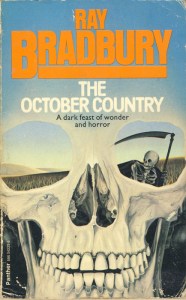
The Martian Chronicles had expanded my sense of the emotional register available to the writer of fantastic fiction. The October Country continued that expansion, and added another to it: a sense of the unbridled possibilities open to the writer interested, as was I, in exploring the darker end of the fantastic spectrum. Yes, there were the traditional monsters present in a couple of the stories, but Bradbury had succeeded in writing a new lexicon of unease, whether it focused on the crowd, or the wind, or even a baby. The best of these stories brought together a sophisticated emotional content with an innovative subject to devastating effect. Yet despite their apparently different genre, they’re not so much the opposite of the stories in The Martian Chronicles as they are their complement, using the materials of the fantastic to map the main streets and alleyways of the human heart. I can see, now, why for so many of the writers who followed immediately after him, Bradbury was as inescapable as Hemingway was for the writers who trod close on his heels.

So while I respect the tributes to Ray Bradbury that have linked him with the writers’ childhoods, for me, he will always be the writer who demonstrated the ways in which the literature of the fantastic might go with us out of childhood, along the dark highways that would follow.

JEFF MARIOTTE — author, bookseller
[Excerpted with permission of the author. Read the full post here.]
Shhh!

Listen…

Do you hear it? The world is a little quieter today. A great, loud, rambunctious, exhortative voice has been stilled.

A room that contained Ray Bradbury was seldom quiet. He was given to enthusiastic outbursts, often just one or two words: “Thrive!” “Write!” “Live!”

He could, of course, talk for longer than that. He was one of those rare beasts, a writer who’s as good, as entertaining and inspiring and important, in person, one-on-one or in a small group or in front of a packed auditorium, with people leaning against the walls and sitting in the aisles, as he is on the page. If Ray had never set fingers to a keyboard but delivered the same lectures, he would still be a seminal figure in American culture.

But he did, of course, write. All the time. Every day, for eighty-some years. He started making money at it in 1941, and he didn’t stop until he had published something like 600 stories and a couple dozen novels.

Much has been written about Ray these past couple of days, since his passing at the age of 91. That’s good—Ray needs to be remembered, and appreciated. And some, perhaps many, of those writers knew Ray better than I did.

Doesn’t matter. Ray was important to me, and I have stories to tell, too.

MATTHEW KRESSEL — author, publisher, editor
When I think of my favorite Ray Bradbury stories, I think of three. “There Will Come Soft Rains,” about an automated house that continues functioning long after the family has died of a nuclear holocaust; “A Sound of Thunder,” about a man who travels back in time on a safari to kill a T-Rex and accidentally changes the future for the worse; And “All Summer in a Day” about a group of schoolchildren on Venus who lock a girl in a closet, causing her to miss a rare and all too brief sunny day.

What unites them for me is a terrible sense of loss, a taste of what might have been but wasn’t, because of our mistakes. It’s as if something beautiful and vital has been yanked away — something that, had we been paying attention, we could have prevented. And I think it’s that aspect of Bradbury’s writing that has stuck with me the most. Without realizing it, I have been imitating that theme in my own work, trying to capture the sense of horror that comes with losing something precious and irreplaceable.

In his most recent and I believe last published work, “Take Me Home,” a sidebar in a recent New Yorker, Ray Bradbury said that as a child he was “always yelling and running somewhere, because I was afraid that life was going to be over that afternoon.” Perhaps that early sense of the transience of life awoke the fire of writing in him.

Hurry up, get it all down, before this circus ends! he must have thought. And he did get an enormous amount down, writing over 600 stories and a dozen novels in a career that spanned seven decades.

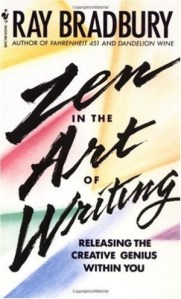
In Zen in the Art of Writing he wrote “Everything I’ve ever done was done with
excitement, because I wanted to do it, because I loved doing it.” I doubt many people can say the same of their lives, and I also doubt Ray Bradbury was exaggerating when he wrote that. When you learn the greatest of lessons early on, that life is utterly short, precious, dangerous and exhilarating, it’s easy to see how you must make every moment count. Most of us have to wait until we lose someone dear to us to learn this hard lesson, but Ray sensed the transience of life from the get go.
No wonder then why his stories are so full of vitality (that and perhaps the fact that he rented typewriters at the library by the half-hour). The best and most powerful antidote to death is life, and Ray was full of it. He wrote one thousand words a day for his entire career, even after he suffered a stroke over a decade ago. Life could not be snuffed out of him, even at 91. And I sense that in his last piece, “Take Me Home,” Ray was acutely aware of his own mortality and in his own unique way railed against the unfairness of it while at the same time accepting its bleak inevitability.

He was one of the last of the Golden Age SF greats still living, and with his passing I have the sense that we are all now like the automated house in “There Will Come Soft Rains.” We grind on with our daily routines, dimly aware that someone or something essential has been taken from our midst.

In Zen in the Art of Writing he wrote, “A well-fed man keeps and calmly gives forth his infinitesimal portion in eternity. It sounds big in the summer night. And it is, as it always was down the ages, when there was a man with something to tell, and ones, quiet and wise, to listen.” Ray gave forth no small portion of himself, I think, and the best way we can honor his passing is to heed his words. Be quiet, be wise, and listen.

May you rest in peace Ray.

DANI KOLLIN — author
[Excerpted with permission of the author. Read the full post here.]
Ray Bradbury was one such emotional maestro; was my emotional maestro. Not just an expert storyteller, but also a master craftsman. You didn’t read Ray; you lived Ray⎯such was the power of the master’s pen.

The world has lost an inextricable force of nature. Though we have his words to console us and his vision to guide us it was his voice that enthralled. A voice now silenced forever.
Posted in Interviews, Science Fiction, Special Feature, Uncategorized | Tagged , , , | 6 Comments

Why SF?: An Interview with Melinda Snodgrass, SF Novelist and Screenwriter

Underwords’ first Why SF? interview is with the extremely talented science fiction novelist and screenwriter Melinda Snodgrass.

I first met Melinda several years ago at Boskone, Boston’s local science fiction convention, where she was giving a presentation on writing for television. I was immediately impressed by her knowledge of the writing craft, but it was her love of science fiction that really shined through.

When it came time to approach potential interviewees  for Why SF?, Melinda was one of the first people I wanted to include because of her wide breath of experience with the science fiction genre–both in print and in film.  Not only is Melinda a true inspiration for science fiction fans, she’s also one of the nicest people you’re likely to meet. It was an honor to include her in the Why SF? and to interview her about her work, her views on science fiction, and her inspirations.

I hope you enjoy Underwords’ first installment of Why SF?

~

What it is about science fiction that you love or that inspires you most to write?

The optimism. The sense that there is a galaxy out there waiting for us to come and explore. I also want to write about characters who are finding their inner reserves. Who don’t think they can rise to the challenge, but somehow find the strength.

Science fiction is a large part of your writing life. What or who were some of the most important SF influences as a reader or as a writer?

A lot of early Heinlein — Have Spacesuit Will Travel, Citizen of Galaxy, Moon is a Harsh Mistress. Poul Anderson, Andre Norton, Zelazny. I never tried to write like any of them, but I tried to figure out why their stories were so compelling.

What kind of challenges, if any, have you faced as a female science fiction novelist and/or television writer? How did you overcome those challenges?

I didn’t see much affect on my prose writing career from being a woman. It is more common in Hollywood where you get pushed toward shows with more “female” themes which was not a good fit for me because I was and am known as “that chick who writes action.” I think the best way to overcome these stereotypes is to write scripts that can’t be ignored or pigeon holes.

As a science fiction writer living in an age that would have once been considered a “science fictional” world, where do you like to see SF literature go from here?

I’d like to see more space based science fiction like Heaven’s Shadow or Leviathan Wakes. I enjoy space opera, and I want stories that take me to the stars, not stories that tell me how shitty things are going to be on Earth. I prefer optimistic science fiction over dystopias.

How would you describe The Edge series for readers who are unfamiliar with your current SF novels?

The Edge books are the story about an eons long struggle between the forces of science and rationality on one side, and superstition, magic and religion on the other. I come down on the side of science.

What have you enjoyed most about working on The Edge series?

Experiencing my main character as he finds that inner strength, and comes to accept who and what he is. It’s also fun to get take on the toxic mix of politics and religion that now corrupts our political system. The rise of the religious right, and the Republican’s party rejection of rationality is one of the reasons I wrote these books.

You and George R. R. Martin created the Wild Card novels together, what is it about that series that has kept it going all of these years over a span of nearly 20 books?

The characters and their interactions. People don’t read prose superheroes for the big fight sequences–they are more effective in a comic or on the screen, but what Wild Cards has done is told very real stories about the human heart in conflict with itself.

On the advice of a friend to try your craft in Hollywood, you wrote a spec script for Star Trek: The Next Generation. Why Star Trek? What was it about that series that made you take a chance on a spec script?

It was George R.R. who encouraged me try my hand at screenwriting. He thought I would be good at it since my strength is plotting, strong characters, and good dialog. He said if I wrote a spec he would show it to his agent. I looked at the various shows–L.A. Law, I felt it was too intricately plotted for me to write an effective script. Beauty and the Beast–I couldn’t do that, George was on the show, and what if I wrote a crappy script? That would really have put him on the spot.

I grew up as a kid on original Trek and loved it so I picked Next Generation. I watched a number of episodes, decided Data was the most interesting character (which is pretty ironic since he’s a robot), and wrote the script.

Your Star Trek: The Next Generation episode “Measure of a Man”, your spec script, is often regarded as one of the best episodes of the series. What was the inspiration behind that episode? How much of yourself did you put into that story?

I couldn’t have written “Measure” without my law school training. It’s basically the Dred Scott decision updated and applied to Data rather than an escaped slave. I had a friend who was a navy officer who said that when you can’t have a formal JAG hearing the captain of a ship always defends and the first officer prosecutes. That put Picard and Riker in direct conflict with Data’s life at stake. That’s pure drama.

Currently, there are only a few original science fiction television series still airing on TV. For instance, Doctor Who and Alphas seem to have survived the most recent spate of cancellations so far this season compared to only a few years ago when multiple shows were being aired, renewed, and created. What do you think is missing from SF television today?

There’s a ton of science fiction on television. Basically we won. Movies and TV are all SF and fantasy. Grimm, Once Upon a Time, Game of Thrones, Alphas, Dr. Who, Awake, Terra Nova, Falling Skies, etc. etc. Granted some of them have been canceled, but they deserved to be–they weren’t good shows.

I wish they’d do another big space show, but they’re expensive, and you need to have the right mix of characters.

What would you like to see more of from the science fiction genre–either in print, film or television?

More space, more distant worlds, more adventure.

What are you working on now? Any new projects, novels, or stories that will be out soon?

I have the first book in a new urban fantasy series set in a vampire law firm that will be coming out in September called THIS CASE IS GONNA KILL ME. I’ve written it under the name Phillipa Bornikova so there won’t be confusion since it’s a very different genre.

  • I’m writing an Old Mars story for George R.R. Martin and Gardner Dozois.
  • I’m writing for and editing the next Wild Card book LOWBALL.
  • I’m writing on the third Edge novel.
  • And I’m outlining and getting ready to write the Wild Card movie for Universal’s SyFy Films division.

I’m kind of busy, but it’s fun.

~

Melinda Snodgrass – After eight years as a novelist which included the publication of her CIRCUIT trilogy, and co-creating, editing, and writing for the Wild Card series, Melinda began her career as a story editor on STAR TREK:TNG, and wrote the Writer’s Guild Award nominated script THE MEASURE OF A MAN. She worked for REASONABLE DOUBTS, and PROFILER, wrote six pilots, and had one produced and aired, STAR COMMAND. She is currently working on the third book in the EDGE series, has delivered the first book in a new urban fantasy series, and is starting on the second.  She has two screenplays currently under consideration in Hollywood. Visit her online at http://www.melindasnodgrass.com/
Posted in Interviews, Science Fiction, Uncategorized, Why SF? | Tagged , | 3 Comments

Introducing Why SF?: Underwords’ New Interview Series

I am pleased to announce that Underwords will be doing a new interview series called Why SF? This series will explore how science fiction has affected the lives of a variety of creative and influential people. Interviewees will range from writers, to inventors, to perhaps even a NASA astronaut. The combination of imagination and science in fiction is a powerful gift, and I am thrilled to present the Why SF? series to you through Underwords.

When I first came up with the idea for the Why SF? interview series, I was excited about  the potential interviewees who might participate. As I sat down to develop the questions for my interviewees, questions that they could really dig into, it became clear that Why SF? needed an introduction from me to clarify some of the concepts behind the series. Why is science fiction so important to me? Why is science fiction something that I feel needs to be shared and promoted among readers–both young and old? The answers to these questions touched on personal life issues that I wasn’t sure I was ready to talk about publicly. However, I also realized that I can’t possibly hope to interview anyone, asking them “Why SF?”, if I wasn’t willing to talk about my own experiences.

A year and a half ago my mother died. After almost three decades of fighting cancer, the disease finally invaded her bones, various other parts of her body, and her brain. While the cancer was slow moving and medicine fended it off for a long time, it was still debilitating. My mother was a LVN nurse in a convalescent hospital, and she spent most of her adult life making the lives of others more bearable during their last years, months, and days in this world–all the while she was battling for her own life. I believe that to some extent the scientists, researchers, and doctors who developed the cancer treatments taken by my mom had to be influenced in some way by science fiction, by imagining new ways to convert the impossible to possible, and by the dreamers whose minds were turned “on” by science that was made fun and interesting. After all, science and science fiction often go hand-in-hand.

When I was in fifth grade, the mother of one of my classmates started a book club for the people in her daughter’s class. Being a latchkey kid with nothing better to do, I joined not really knowing what to expect. I was introduced to classics such as The Yearling, Where the Red Fern Grows, Watership Down, Anne of Green Gables, and The Black Cauldron. While I enjoyed all of these books, it was Lloyd Alexander’s book The Black Cauldron that sparked a sustaining reading interest for me. We didn’t have much money at the time, which meant that once the book club ended so did my supply of books. While the school library did a decent job of satisfying my new reading appetite for a while, it couldn’t keep up with the newest publications that were hitting the bookstore shelves. Meanwhile my mom was a single parent, working three jobs, raising two daughters, and starting her battle with cancer. There wasn’t money in the budget for books. So, I went out collecting bottles and cans to trade in at the local supermarket for cash to buy my books. With just enough money for a new book and a bag of gummy coke bottles, I struck off for the bookstore to find that they had mixed the fantasy with something called science fiction.
I must have pulled out every book from Asimov to Zelazny, scrutinizing the covers and reading the blurbs. I had come for fantasy, and I left with science fiction. After reading dozens of books by authors like Bradbury, de Vinge, and Le Guin, I understood that the reading about “the possible” and “the probable” was just as fascinating as reading about the fantastic.

By the time I was fifteen, I was knee deep in science fiction, fantasy, and horror. Sadly, by that time, I was also hit with the reality of my mom’s disease. It seemed like a thousand people must have asked me if I was okay. I wasn’t okay, but I told them I was so that they wouldn’t worry. They smiled, happy to have done their job of checking on me and then they each went about their own business. I was not okay. I was scared. I was sad. I was depressed. My father had abandoned me and now I was in danger of also losing my mother. There was no part of me that was okay. While the people who checked on me left, my books stayed with me–each of them gaining a special spot on my bookshelves and in my heart.

My mom continued working multiple jobs. It bothered her than I had to come home to an empty house, but what she didn’t understand was that I came home to my books. Through reading, I found solace and strength that I couldn’t find in the real world. I learned about honor, integrity, work ethics, criminals, war, poverty, desperation, triumph and so much more. I found kindred spirits in the children and adults in the novels I read, and they stuck with me, guiding me through the difficult times until I was able to make it on my own.

The truth is that fantasy, science fiction, and horror are all important to me in different ways. These genres helped me to become a better person. They taught me how to dream. They helped me to find my path and, in so doing, they saved me from depression that threatened to remove me from the world. Fantasy helped me to imagine, horror helped me to overcome my fear, but it was science fiction that helped me to imagine my future. That is Why SF is so important to me.

When I look around bookstores today, I see a lot of fantasy and horror, but I don’t see nearly as many science fiction novels–especially science fiction anthologies for young adults. Why am I so passionate about science fiction for young adults? Although I’d like to think I’m special and that my experience with science fiction was unique, I know that’s not true. Science fiction has inspired generations of children and adults who have worked together over time to build our world, which could easily have been a science fictional location in any of the stories written by the pioneers of this incredible genre.

I could never have imagined my future days when I was a young adult, if it weren’t for the writers who shared their imaginations of tomorrow with me. This is why I love science fiction, this is why I am a strong supporter of young adult fiction, and this is why I am taking Underwords independent in order to publish the best YA science fiction anthology that my co-editor Hannah Strom-Martin and I can create. We’re going after the best fiction we can find in order to make Futuredaze a reality. This is my answer to Why SF? What’s yours?

~

Underwords is also excited to announce that our Kickstarter project to help fund the production of Futuredaze is going strong. However, we could use your help to reach our goal of $1,700. Every dollar counts since we don’t collect anything if we don’t reach our goal.

We truly appreciate anything that you can do to help — whether you pre-order a copy of Futuredaze, back us for a higher amount, or just spread the word to others who might like to help support science fiction for young adults. You can click here to back Futuredaze on Kickstarter now! Thank you for your support.

Posted in Futuredaze, Science Fiction, Signal Boost, Uncategorized, Why SF?, Young Adult Literature | Tagged , | 3 Comments

An Interview with Dark Fiction Writer & Editor Tracy L. Carbone

I’ve said this before, and I can guarantee you that I’ll be saying it again, but one of the best things about having a literary blog is that you get to talk to some of the most amazing people. Interviewing Tracy L. Carbone is no exception.

Tracy is not only a fantastic dark fiction writer, but she’s also a member of the New England Horror Writers (NEHW) and the editor of Epitaphs–the NEHW’s first anthology. It was a pleasure to interview Tracy for Underwords, and she has quite a lot to share. We hope you enjoy the interview and that you check out Epitaphs, which has received a lot of positive critical attention.

~

How long have you been writing and/or editing? 

I’ve been writing my whole life but only started getting published about six years ago. Since then I’ve been selling stories pretty regularly and recently sold my first novel. Epitaphs was the first anthology I’ve edited.

Who are some of the writing icons or role models who have most influenced your own work?

I love F. Scott Fitzgerald, Wally Lamb and Ray Bradbury. I confess I’ve also read a bunch of Danielle Steele, Jodi Picoult and Meg Cabot. I’m a fan of Oprah books as well, all the “girl” books and classics like Secret Life of Bees. I don’t think there was an one influence but many very good writers who encouraged me.

You’re primarily a dark fiction and horror writer. What is it about this genre that inspires you? What other genres have you explored?

I’ve dabbled in mainstream and literary but even that always has a dark side. I’ve got some stories that are mainstream tearjerkers. Witnessing human frailty and weakness inspires me to write about it and that results in dark fiction. On some level, I suppose I want to write away the real life darkness to justify how people and situations can be so unfortunate.

Can you tell us a little about the New England Horror Writers (NEHW)? Are there other regional associations for horror writers?

NEHW started off many years ago as a regional branch of the Horror Writers Association. We were HWA NE. They have regional groups all over the country available on their website. A couple of years ago, the HWA became more stringent with their requirements of branch members so we elected to step away and become autonomous. Many of the NEHW members are still HWA, including me, but our group is more informal.

For readers unfamiliar with Epitaphs, how would you describe the anthology?

The only theme we assigned to the anthology when we were setting forth submissions was that it be dark and that it be “damn good writing.” We have an array or straight classic horror, comedy, mysteries and everything in between.

What inspired the idea to create Epitaphs?

The NEHW hs been batting around the idea of an anthology for several years. But we’d alwayss come up with a huge list of why we couldn’t pull it off. March of 2011 we’d recently changed over most of the Board and all met for our quarterly meeting. The topic of an anthology came up again, as it always did, but this time, with the new energy we finally decided we’d just do it, and it would work. We decided not to accept defeat. We gave ourselves a tight deadline, to have it in print in less than 8 months for a debut at AnthoCon. Working hard as a team and with some wonderful submissions we were able to get it done and get a Stoker Nomination.

Was this your first editing experience? Was there anything about the process that you wish you knew before you started the process?

This was my first editing experience. If I had it to do over, I would have had the stories stripped of names so I didn’t know whose I was reading. I picked the very best stories but there were some hurt feelings and resentment.

What has been the most rewarding part of the Epitaphs experience?

Renewing my love of short story reading and writing, and giving some great writers a spot were the best parts of the project. I was impressed by the submissions, and the quality of stories inspired me to start writing more.

It is said that learning to write well is like experiencing a series of never ending writing related epiphanies. If you had to pick one, what is the most important lesson you have learned, so far?

There have been a bunch but here are a few: write everything down. You think you’ll remember it later but you won’t. Also, if you think you’ve written the best thing ever, STOP, put it down and reread it at least a day or two later. If it’s still great, then send it out. Most times, you’ll find typos or inconsistencies that were missed because you were so excited to write the story. Finally, no matter how much you hate someone, don’t submit whatever vengeful fiction you’ve written about them until you calm down. And when you calm down, if you still hate them, cloak the characters more. Then by all means, send it out. It’ll make you feel better. And it will have lots of passion.

For readers looking for more Tracy Carbone fiction, what new projects are you working on? Where can they find you?

My middle grade mystery The Soul Collector is available on Amazon. I have several short stories on the Kindle as well. In the coming months I will be working with a new publisher and will release a collection of dark stories including many never seen before, as well as a women’s thriller novel.

Updates and information on my books can be found on my website www.tracylcarbone.com.

Posted in Books and Literature, Horror, Interviews, Uncategorized | Tagged , , | 3 Comments