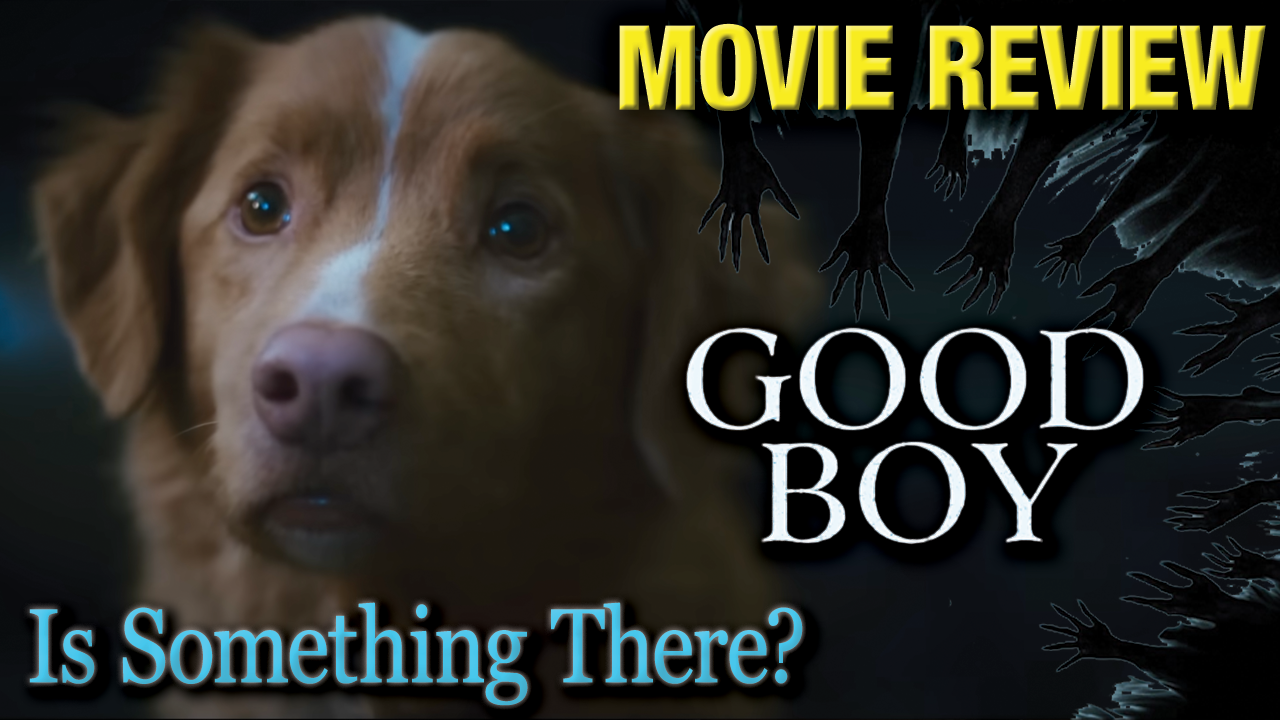
Are you a dog person? Are you a horror fan? Now imagine being caught in your dog’s horror story. That’s exactly what the new film Good Boy explores … and it’s unlike anything I’ve seen before. It stars a dog named Indy (yes, the dog is named Indy in the film, too), but this isn’t your typical horror movie. Picture a loyal dog, a possibly haunted house, and some deeply unsettling things that shouldn’t be happening. What would your dog do? Good Boy tells that story entirely through Indy’s experience.
You can read the review below or watch the video review on YouTube:
Indy and his human, Todd, move into a family home deep in the woods. Todd’s sister Vera makes an offhand joke that the house is haunted, and right away, that puts us on alert as viewers. As human viewers, we naturally start looking for the usual signs of paranormal activity like shadows, sounds, and things that move when they shouldn’t. However, we are also seeing everything through Indy’s senses, which are so much more sensitive than a human’s. His canine perception of smells, sounds, and motion clashes with our human expectations, keeping us guessing as he and Todd settle in. What begins as ordinary quickly turns strange, and before long, even the quiet moments start to feel uneasy. That’s the basic setup, and I don’t want to spoil anything beyond that.
First Impressions
Since so much of the film is filtered through what Indy senses, the lines between real life, dreams, and sensory perception start to blur. Sometimes we see what Indy is hearing or smelling brought to life on screen. Other times, we’re inside his dreams. Those worlds overlap in strange and disorienting ways, but it works. Plus, it puts us squarely inside the dog’s point of view.
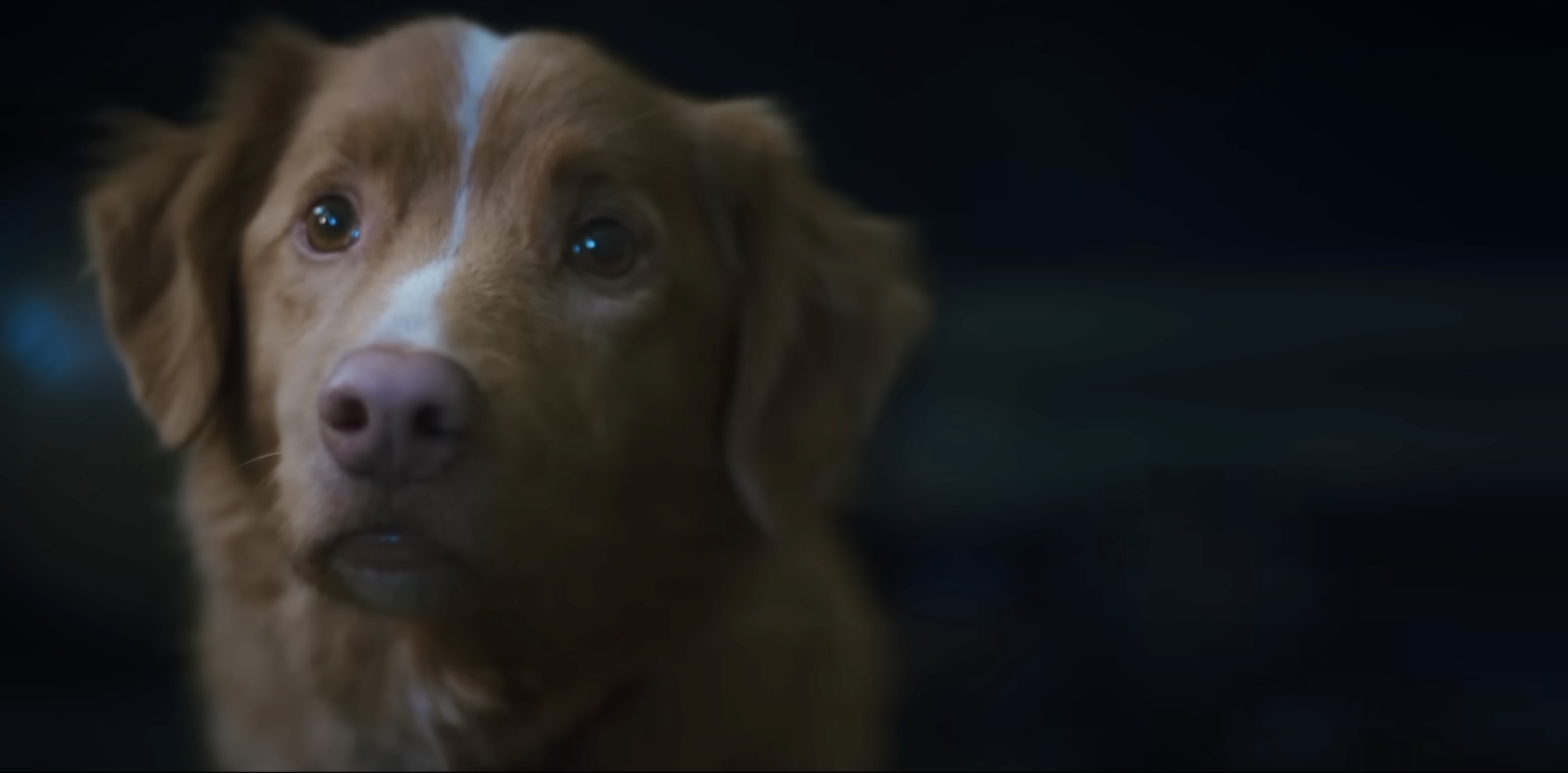
It’s a gutsy move to make a film like this, and that’s the beauty of independent horror studios like Shudder. They have the freedom to experiment. In so many horror films, everything is spelled out for the viewer so that we know how to “feel” during the film, and we can see every scare, every twist, and every clue telegraphed from a mile away. Good Boy does the opposite. It leaves space for uncertainty, letting us question what’s real, what’s imagined by us as viewers, and what’s just normal dog stuff.
Now, it’s really hard to scare me. However, I really love dogs … maybe even more than people … so I wasn’t surprised that I was invested in Indy from the very first scene. There were moments when I felt genuine anxiety, not because of jump scares, though there are a few, but because I cared about Indy. You can tell that what he’s sensing isn’t normal, and that made me feel the extra tension for him. Even though the horror itself wasn’t scary, I was still pulled into Indy’s story.
Cast & Character Development
It feels a little strange to talk about the cast and characters in this film. Todd, played by Shane Jensen, is Indy’s human, but he’s the secondary character in the story. In many ways, he’s treated the same way a dog would usually be treated in a film where the human is the lead. We get just enough background about the family, the house, and the situation to understand the story’s arc, but Todd always stays in the background and often just out of focus.
That puts Indy front and center as the true protagonist. The film actually gives him a character arc that we can follow through nonverbal cues such as facial expressions, body language, tilts of the head, barks, and all those subtle behaviors dogs use to communicate. It’s fascinating to watch. Whoever trained and handled Indy deserves serious credit, because that level of performance couldn’t have been easy to train for in a canine actor. However, if you’ve ever lived with dogs, you’ll immediately recognize the emotions he’s expressing and the things he’s communicating. It’s just really well done.
Visuals, Sound & Technique
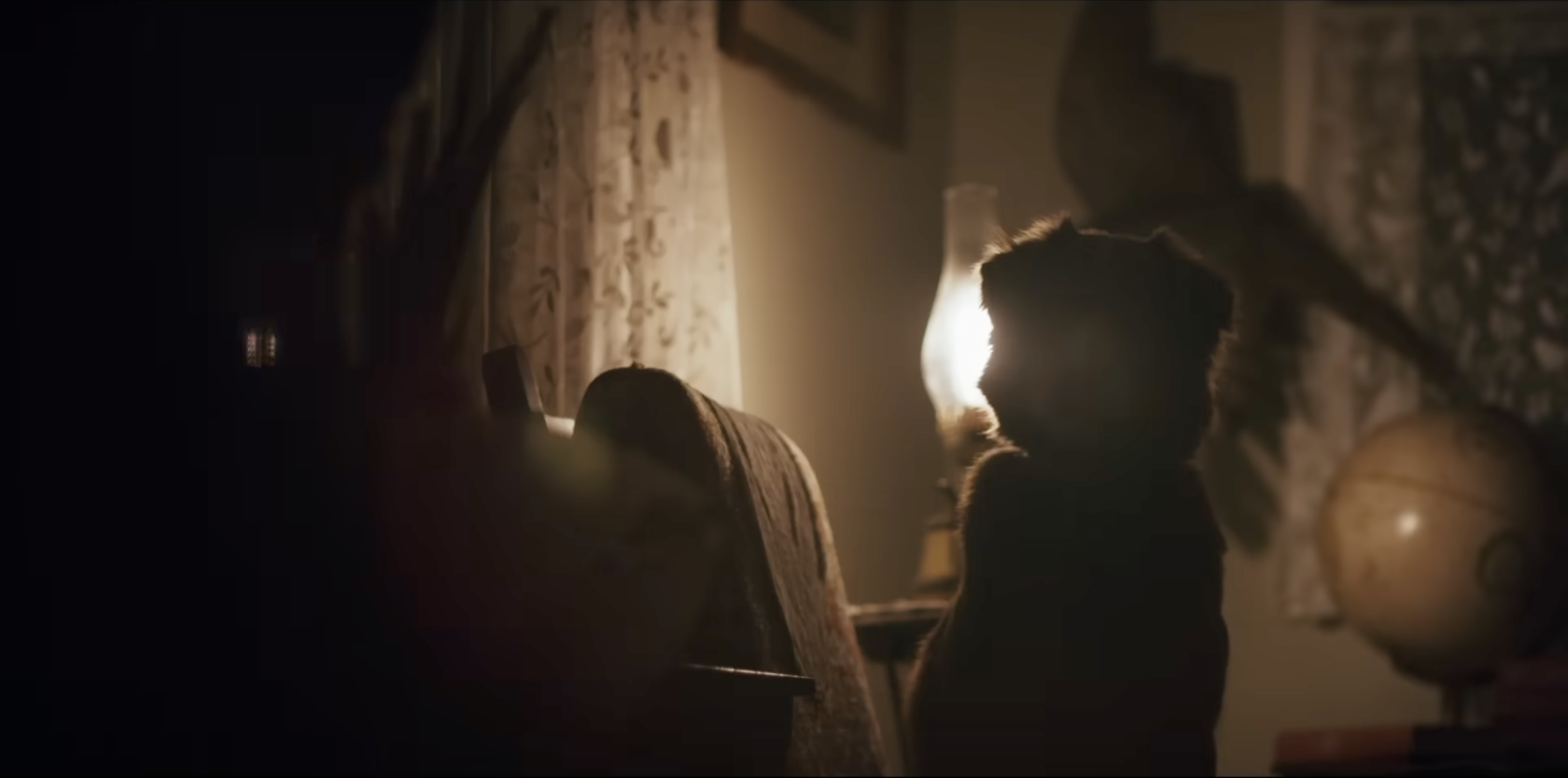
One of the most striking things about Good Boy is its visual and sensory design. The use of color, light and shadow as well as the added elements of reflections and weather create a very creepy feel to the film that is deliberate and meaningful, with each creative choice enhancing the storytelling. There are moments when the imagery reinforces the psychological and possibly supernatural elements of the film.
Good Boy is a great example of how important sound design is to storytelling and it’s something that is often overlooked by audiences. However, since we’re experiencing the world through a dog’s perspective, we naturally become more attuned to Indy senses from creaking floors to rustling wind or splashing rain. The film makes us hyper-aware of ambient sounds that we’d normally ignore, drawing us deeper into Indy’s heightened sensory world. When we hear a noise or see him catch a scent, that intersection of sound, motion, and instinct grounds us in his experience.
The cinematography adds another layer to this effect. The camera often stays close to Indy or captures the world from his point of view. The low angles, tight shots, and moments when something slips just out of sight help us see the world as he does. It’s a subtle and effective way to keep us inside his story.
The Challenge of Blurred Worlds
One of the few criticisms I have is that the three layers of the story (real life, sensory, and the dream world) sometimes get tangled on screen. That confusion feels intentional and can be an effective creative choice for enhancing the feeling of disorientation, but it happens several times, and in a few of those moments you’re not entirely sure whether what you’re seeing is a dream or reality. Again, this is fine, but when it’s done multiple times, it can create a narrative sense of confusion.
I think that ambiguity is part of what the film is trying to explore. Do dogs really know the difference between dreaming and waking life? Maybe for them, those boundaries don’t exist. Presenting them as separate worlds and then blurring the lines feels like a natural storytelling choice. I just wish a few of the transitions were a little clearer.
Ultimately, it comes down to personal preference. Some viewers will find the ambiguity intriguing, while others might see it as a bit too vague.
Recommendation
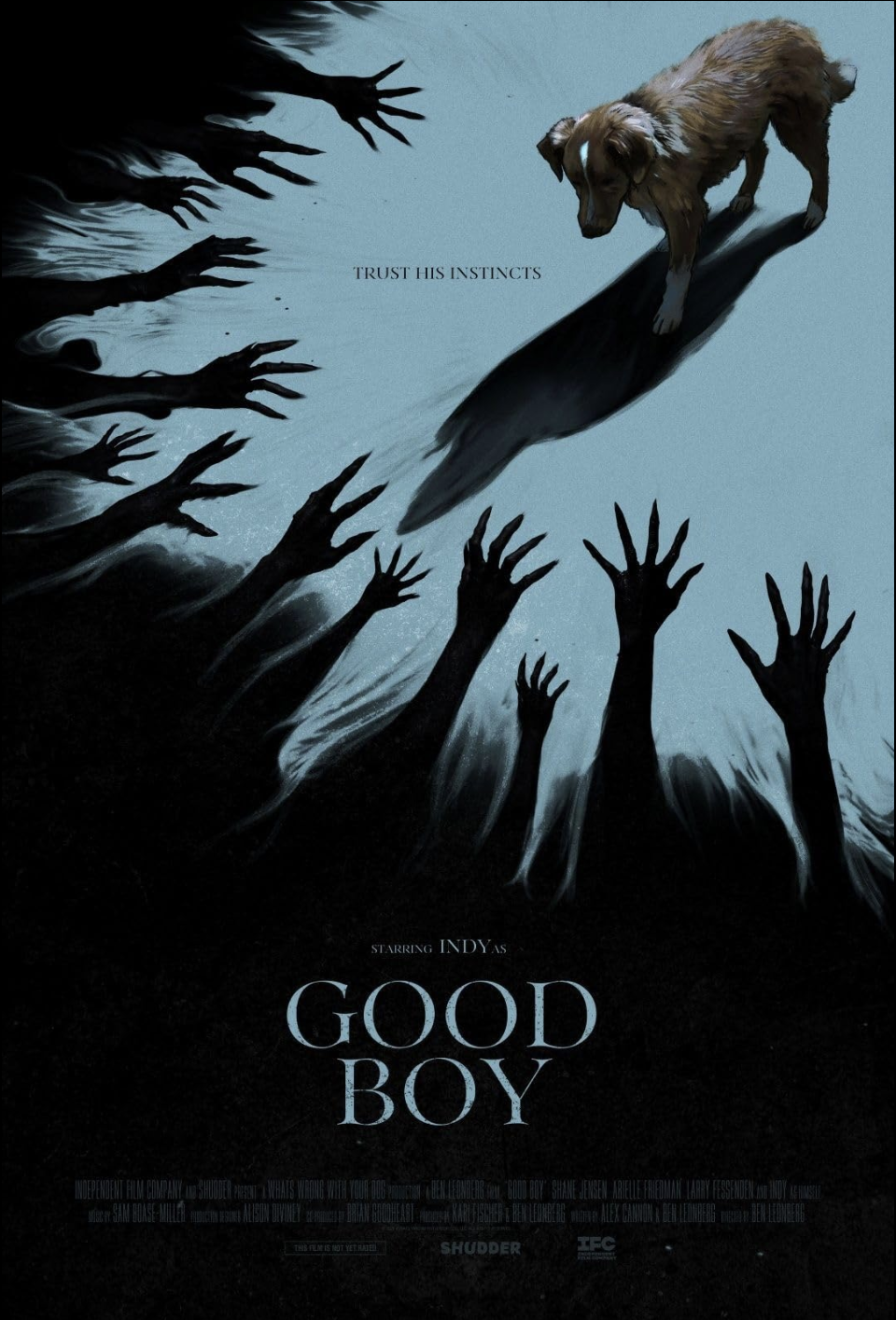
So, is Good Boy worth seeing in a theater? At just an hour and fifteen minutes, it’s short and to the point, which is a nice change in this era of overlong, overstuffed films. Whether it’s worth the price of a ticket while it’s in theaters really depends on what you want out of the experience.
If you love horror but you’re tired of formulaic storytelling and you’re open to something slower, more atmospheric, and experimental, Good Boy is genuinely different. You might not be “scared” in the traditional sense, but you’ll definitely feel like you’ve seen something different.
If you’re looking for jump scares, big monsters, or a neatly wrapped explanation, this probably isn’t your movie. If you don’t like dogs or worry about their safety in horror films, this one might not be for you. I’ll include a note under my pinned comment about whether Indy is okay at the end … just in case that’s something you need to know before watching.
So, Good Boy — have you seen it, or are you planning to check it out? If you do, I’m really curious to know if this format worked for you. Did it feel clever and new, or not quite your thing? I’d love to hear your thoughts on the film and on Indy. Let me know in the comments. Let’s talk.
If you enjoyed this review, please give it a like and subscribe for more. You can also visit my YouTube channel at @ErinUnderwood for more videos.
***
If you’d like to watch GOOD BOY on Amazon Prime, you can use my Amazon Associate links:
- Good Boy (2025 film) will be on Amazon Prime: https://amzn.to/4pXhJs6



 Erin Underwood Presents