The One Image Interview: Silence

This month, the One Word Interview has a special edition – The One Image Interview. Just as the authors of the One Word Interview have been asked to respond to the word SILENCE, we have also asked several talented photographers to participate by sharing images that represent what silence means to them. But first, to set the mood, a short piece on silence Nathalie Boisard-Beudin.

~

SILENCE

Silence would be a black and white photograph for the absolute value of the concept. The picture might be distressed at the edges because absolute as such only exists as a scientific concept; total silence so evanescent that it has to be engineered.
A mirror that has forgotten the art of reflecting.
Or a fracture across an otherwise pristine wall.
Silence as an absence.
Silence as a presence.
Stubbornness in the eye of a child.
Or in the tensed back of the adult he or she might grow into.
Four padded walls, no windows, no exit.
A derelict hospital, abandoned years ago.
A broken shell that will not even retain rumours of the sea.
Or a stumped flower blossom, frozen into inaction.
Silence as a statement.
Silence as a lie.
The register of shock on a face that should have seen it all already, yet has not.
Or a comforting shadow, numbing life’s sharp edges.
Silence as a burst of colours still, so loud it cancels everything else – the ultimate supernova.
Silence as a black hole.
Silence as pandemonium.
Silence. Potentially anywhere and in practice nowhere at all.
by Nathalie Boisard-Beudin

~


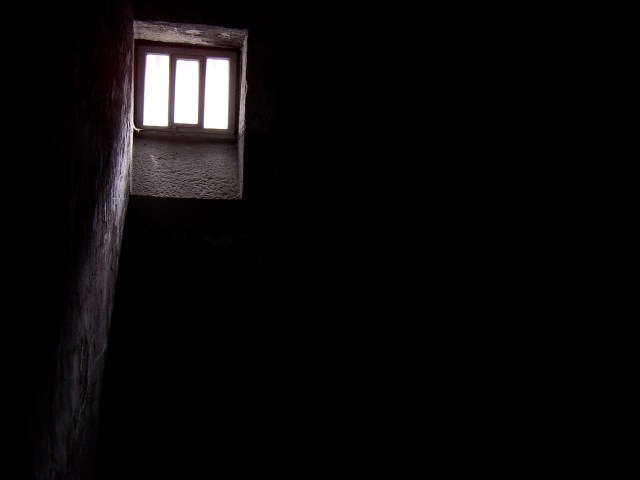
“Through the Keyhole, Kilmainham Gaol” by Erin Underwood

~


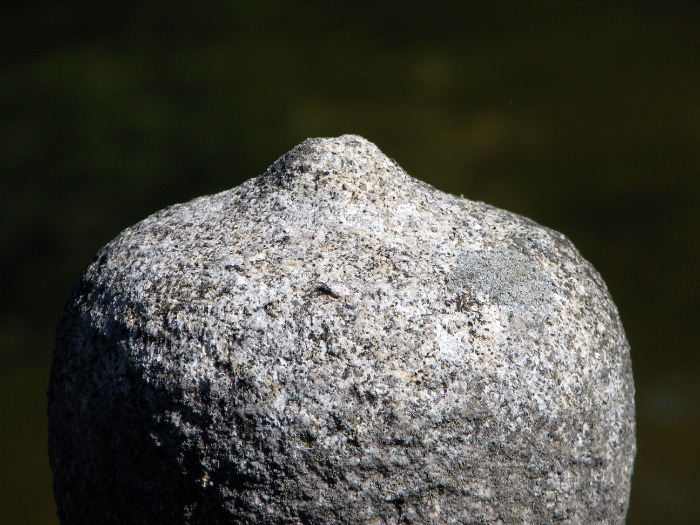
“Stone Lantern” by Lucy Huntzinger

~


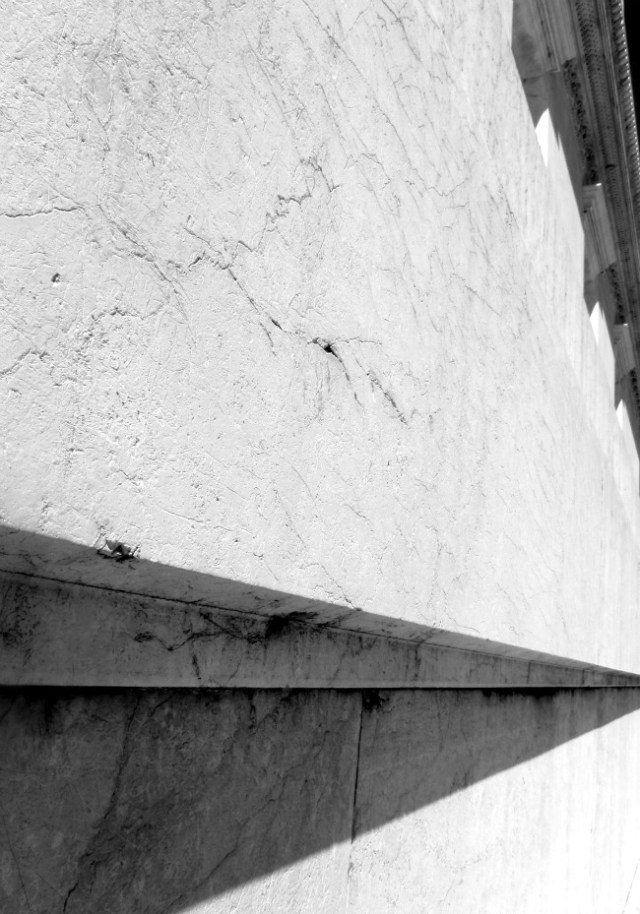
Untitled by Nathalie Boisard-Beudin

~


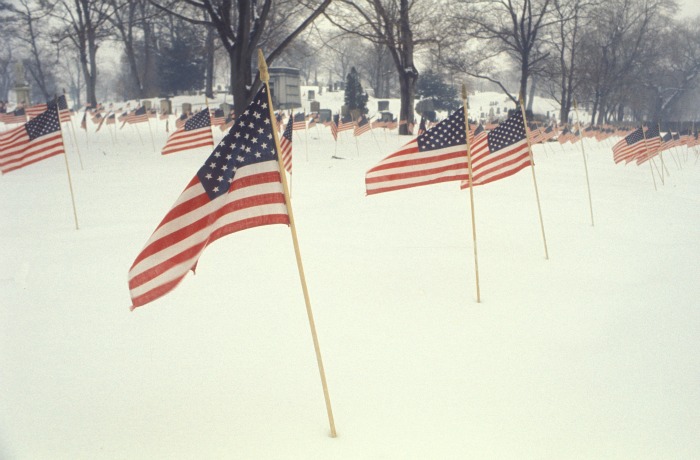
“Military Cemetery” by Owen Franken

~

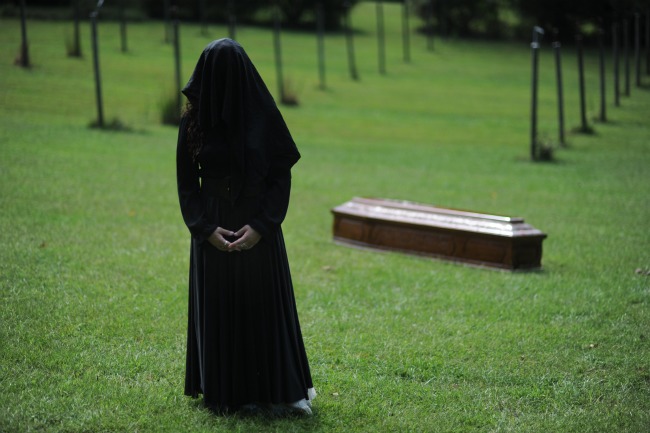
Untitled by Kyle Cassidy

~


“Nusco Paternopoli” by Robbin Gheesling

~


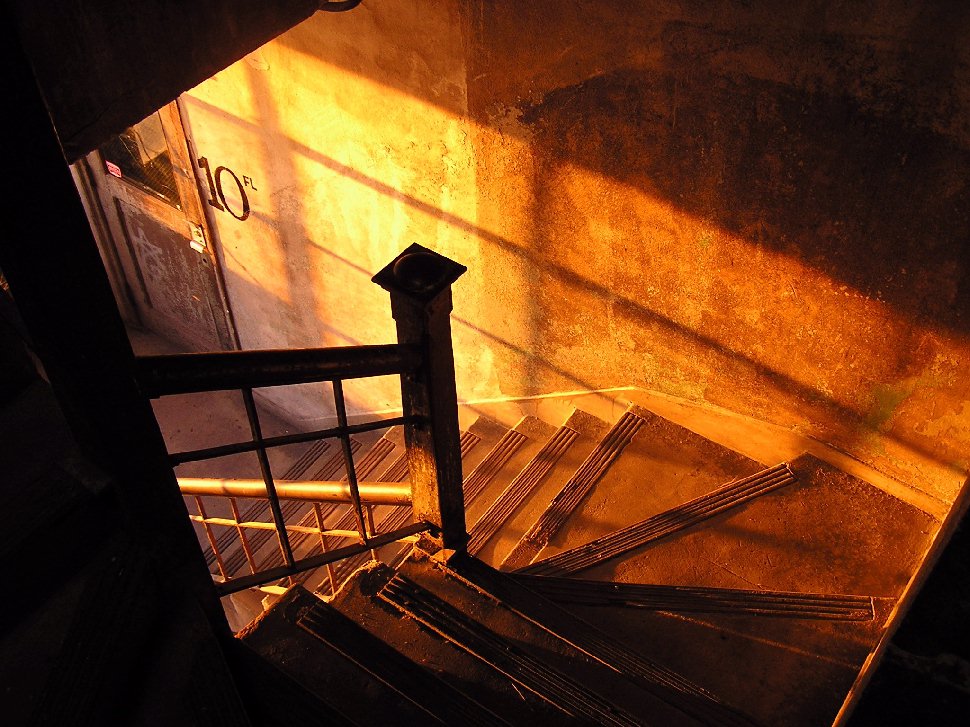
“Jesse’s Stairway, Brooklyn” by Michael Kimball

s i l e n c e . . .
.

Be sure to also view the companion interview,
The One Word Interview: Silence

Posted in Uncategorized | 8 Comments

Interfictions Zero – Academia, Interstitiality, and an Amazing Collection of Essays

Children come in all shapes and forms. One of my children is an idea that has since grown into something I am proud to see come into the world. That idea is Interfictions Zero – the new online critical anthology of essays, discussing literature that may be considered interstitial at the time the work was originally published. Interfictions Zero, which was conceived during a lunch conversation with my good friend Geoffrey Long, has since been nurtured and reared by editors Delia Sherman and Helen Pilinovsky.

For the last several years I have served as vice president of the Interstitial Arts Foundation (IAF), but recently stepped down to the IAF’s working group in order to give greater focus to my own work. My association with the IAF has given me the opportunity to help this amazing organization provide community, information, and exposure for artists who produce work that is often difficult to place because it doesn’t fit squarely within a category or genre. The Interfictions Series is one of the most notable products that the IAF has produced, providing writers a vehicle to publish their work that would otherwise have a difficult time finding a home – not because it wasn’t well written, but because it didn’t quite fit anywhere else.

The remarkable thing about interstitial writing is that it’s often the pre-evolutionary step for new literary movements, which develop as more and more writers produce similar work. There are many pieces of literature that were considered unique, ahead of their time, or didn’t really fit in anywhere when they were published, but many of these pieces have since become icons of their genres like Mary Shelley’s Frankenstein or gave birth to a whole new way of writing such as James Joyce’s Ulysses.

While academics have studied various literary genres and the writers within those genres, there hasn’t been much (if any) critical work done to examine  interstitial pieces of literature or study done on interstitial literature as a whole. This is where Interficitons Zero comes into play. It is the start of the critical examination that interstitial literature so richly deserves, but hasn’t truly received until now.

In addition, the IAF has also developed the Interfictions 2: Study Guide to help academics who are using the Interfictions 2 anthology in the classroom. Between Interfictions Zero and the Interfictions 2: Study Guide, not to mention the Interfictions Series itself, the IAF is establishing a strong interstitial literature platform for writers, readers, and academics.

Interfictions Zero is a free online, rolling anthology of critical essays examining interstitial literature. One essay will be published every month and submissions for new essays are being accepted. The first essay in this collection is “Oscar Wao: Murdering Machismo” by Carlos Hernandez. Come read the essay. Let us know what you think.

Plus, it’s a great time to start thinking about what other literature deserves the interstitial spotlight, and you might even decide to write your own essay for submission to Interfictions Zero.

Posted in Books and Literature, Fiction, Signal Boost, Uncategorized | Tagged , , , , , , , , , , , | Leave a comment

Judging a Cover by Its Book

Don’t judge a book by its cover. How many times have we heard this old adage? How many times have we done just this sort of thing when shopping for a new book to read? I’ve done it. You’ve probably done it too.

With thousands of titles for a reader to choose from, a book cover can either give a book an edge in the sales line or bury it in the bargain bin. It’s difficult not to be pulled in by a beautifully designed cover that attracts your attention and stimulates your imagination as you’re walking down the aisles of your local bookstore. You stop and scan the tables and the shelves, letting your eyes linger on images that are interesting and pleasing.

There are no two ways about it…book covers can help to sell books. But how well do they reflect what’s inside? Sometimes the cover perfectly reflects the essence of the story  and sometimes the cover doesn’t come close to the novel or completely misrepresents the book. Choosing a novel should be about what lies beneath the cover, but we have become dependent upon the visual clues on the cover that are meant to help us decipher if this book is our “type” of fiction.

The real question is how well do book covers do their job? To help answer this question, I asked a few book bloggers to judge a book cover of their choice by the book that it is supposed to represent. You may be surprised by some of the responses.

~

Georgia McBride
Blog: Georgia McBride Books

Book: Twilight by Stephenie Meyer

I was first turned on to Twilight by my brother-in-law (you read that right) back in 2007. He knew I was penning a young adult novel and mentioned I might be interested in Twilight. With no time to read (and feeling later as if I had been living under a rock)—I feverishly pumped out 170,00 words in three months and set my novel aside.

I picked up Twilight and upon first seeing the cover mused, “I thought he said this book was about vampires.” I found while reading the book and once done, I was drawn to the cover and its not so subtle implications. It was perfectly simplistic and complex all at once. The apple, known to many as a forbidden fruit/taboo is being offered by someone who is not scary—like a snake or even an evil, crumpled up old lady like in Snow White–but someone who is seemingly harmless, someone who may even look very much like the reader, someone you would never suspect is capable of harm.

The colors–black, white and red are used in a way to draw the reader to the book and away from everything else on the shelves in much the same way that Bella is drawn to Edward and away from everything and everyone else. It is the perfect use of design, color and content. It takes imagery we are already familiar with and twists is just enough to make it new and exciting so that we want to know what’s beneath the pages. Who will fall for the forbidden fruit and what will become of them? What is the forbidden fruit? And why is it forbidden? It’s also an amazing visual stunt in that the reader is being offered the forbidden fruit. Do you dare take it? The original Twilight cover is by far one of the best of the past decade.

~

Chelsea Mueller
Blog: Vampire Book Club

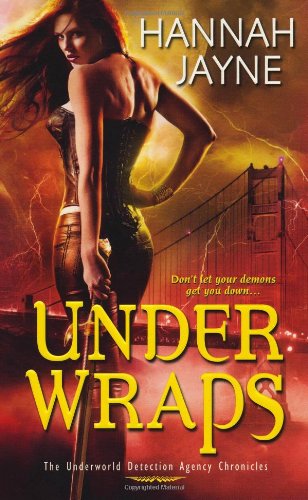
Book: Under Wraps by Hannah Jayne

The main character of Hannah Jayne’s Under Wraps isn’t a fighter. Sophie is sweet and determined, but when taken to the gun range it takes her all day to learn not to shoot the floor or the ceiling. She tries to store her new weapon in the refrigerator. She doesn’t like weapons. And you won’t find her fighting physically. And with that, I can say I have no idea who that sword-wielding badass on the cover is supposed to be, because it sure as hell isn’t Sophie.

The novel is fun, light urban fantasy, but the cover would have readers expecting a woman who kicks ass and takes names.

~

Jessica Estep
Blog: Confessions of a Bookaholic

Book: Perfect Chemistry by Simone Elkeles

I admit that I put a lot of faith in book covers. It’s the first thing that catches my eye and I will add, or not add, books based on a cover. I’ve had this backfire quite a few times. Occasionally I’ll pass over a book that turns out to be amazing, or read a book with a beautiful cover that turns out to be …not so great. One book in particular helped me see the error of my ways.

Perfect Chemistry by Simone Elkeles was a book I had heard of, but the cover seemed so boring to me. I read reviews that gushed about the book and the characters, but I just didn’t see the pull from the cover. Then one day I decided to give it a chance. I was blown away! It was, and continues to be, one of the best young adult books I have ever read. If it hadn’t been for the bloggers singing the praises of this title, I would never have picked it up on my own.

The funny thing about this cover is that it does, completely, represent the book. This is exactly how I would picture the characters. I just think it’s something a reader may not appreciate until after they have read the story. After connecting with the characters in the book, I loved the cover. I saw the significance of the couple and it helped me connect more with the story. In some cases, this can happen in the opposite way. A cover helps the reader get a glimpse at the book, and then the story brings the pieces together.

Covers are a funny thing and I think it’s impossible to say that they don’t matter. People are visual. We see things that interest us first, then we read the summary and decide if it’s something we may enjoy. Publishers spend thousands of dollars deciding what covers to use for a story. Recently I have been amazed at some of the outstanding covers they have come up with. As a blogger, I don’t see books in the same way I did before. In the past I would enter a book store, browse around, and only pick up books with a cover that grabbed my interest. Now, I may see a cover first, but I make sure to always read about the book as well. I know now that I could miss out on some amazing stories if I judge a book by its cover.

~

GMR
Blog: Satisfaction for Insatiable Readers

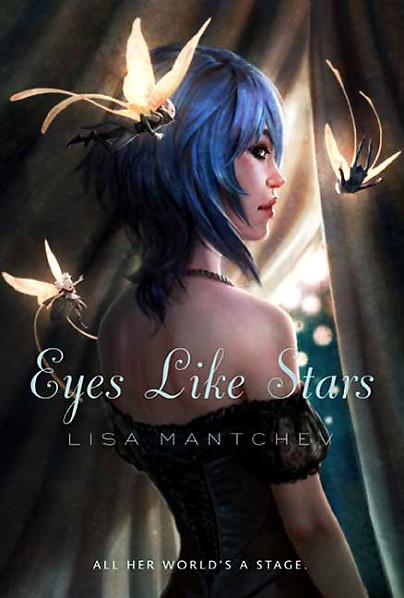
Book: Eyes Like Stars by Lisa Mantchev

The cover for Eyes Like Stars may not show a lot of action, but it does reflect the story well. Bertie’s unique look (blue hair and all), her fairy friends (even if they are trouble makers at times), the all eyes on her situation that she finds herself in (see all the lights/eyes in the audience just beyond the curtain?), and her determination (with a bit of mischief) to see things come out all right in the end (hence the look in her sideways glance) are all equally represented and in beautifully magnificent colors to boot.

All the world is a stage…and for Bertie (as the cover suggests) it’s her WHOLE world.

~

Mel
Blog: He Followed Me Home…Can I Keep Him?

Book: The DUFF by Kody Keplinger

It is sad to say that we judge books by their cover, but first impressions have a huge impact. in deciding what books make it to the wishlist. I remember reading reviews of The DUFF by Kody Keplinger, yet the cover did nothing to grab me at all. Had it not been for those glowing reviews I doubt I would have picked this one up. You know what, The DUFF ended up being one of my favorite reads last year!

I am not a big fan of faces on the cover, let alone a face being the entire cover. I chalk this up to wanting to visualize the character in my own head. The girl is depicted blowing a bubble with matching aquamarine colored eyeshadow, nothing that jumped out at me causing me to wonder who she is nor what the book is about. In fact, it brought back those horrible memories of Grade 7 and blue eyeliner…oh how I thought I looked so cool!

After reading The DUFF, I have a greater appreciation for this cover. The DUFF is about those odd teenage years as told from the perspective of a neurotic, sarcastic teen sadly given the title Designated Ugly Fat Friend. The simple cover perfectly captures those awkward moment’s in a teens life and the main character’s attitude all in one! I’d give it two thumbs up for perfectly depicting the story but not in making the book stand out as a must read, which it is!

~


Shiai Mata
Blog: Slayerlit

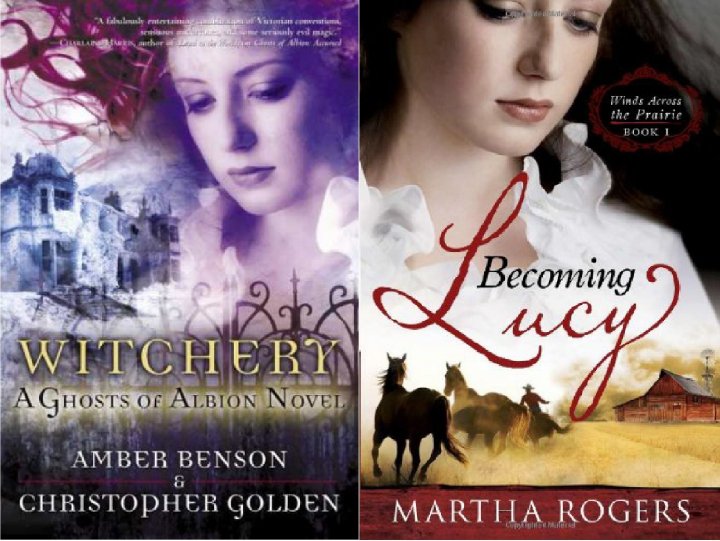
Book: Witchery: A Ghost of Albion Novelby Amber Benson and Christopher Golden

I think that the cover to Witchery: A Ghost of Albion Novel is particularly striking.  I recall that when it was published, a number of people online said how much they liked it (and a few wondered aloud if the woman on the cover was Alyson Hannigan; clearly, it’s not, but there is a passing resemblance).  I think many people assume that authors help design their book covers, but in fact its the publishers who generally handle that exclusively.

At any rate, I’ve always liked it, so imagine my sense of betrayal when I found that the cover girl was playing the field!

Obviously, the same stock photo was used both times, and the publisher of Becoming Lucy probably had no idea it had already been used.  It is kind of funny, when you think about it.  🙂

~

Erin Underwood
Blog: Underwords

Book: Possessions by Nancy Holder

I’m adding the Possessions cover last since I am admittedly biased on this book. Here’s another case where the publisher changed the cover image. My guess is that the change was made to better reflect the story and to attract readers who would be interested in a dark fiction/horror ghost story. The original cover (see right) depicts the image of a wide-eyed, dark haired girl who is standing in front of a nondescript house, which doesn’t capture the story in the slightest. In fact, the cover fails to adequately reflect the genre, the characters, or the storylines within the novel.

The new cover is gorgeous (see left). More to the point, the new Possessions cover targets with pin point accuracy the ghost story that fills the pages. In Possessions, Lindsay finds herself in a new private school that is haunted by ghosts who are tied to the mysterious black lake on the edge of the property – and one of those ghosts wants to possess Lindsay at all costs.

The beauty of this cover is that you see the double image of the girl as she emerges from the black lake, but you don’t know which image is the ghost and which one is Lindsay. Not only is the cover beautifully illustrated, it’s also a perfect visual metaphor that accurately represents this chilling young adult ghost story. Anyone who picks up this novel will be expecting a spooky read…and they will get exactly that!

~

There are a lot of books out there. We’d love to know what you think. Have you read any of these books? Do you agree with the analysis of these covers? Is there a cover that you think does a particularly good or bad job representing its book? Let us know how you would judge a cover by its book.

*Note: Due to an error on my part, I’ve removed the response to the Storm Front cover.”

Posted in Books and Literature, Uncategorized | Tagged , , , , , , , , , , , , , , , , , , , , , , , , , , , , , , , , | 13 Comments

The Mosaic Tardis – the most wondrously beautiful box

This is the story of two girls, Robin M and Erin U. They live far apart and were looking for a more convenient way to visit each other. Then for Erin’s birthday, Robin built a special Mosaic box that traveled through Time And Relative Dimension In Space. She constructed the box from hand, using wood and grout and glass. Her hands turned midnight blue from the grout dye and people mistook her for a druid. But no! Robin was no druid. She was the mystical engineer, designer and pilot of the most wondrously beautiful box the world would know – The Mosaic TARDIS. Erin was delighted!

The Mosaic TARDIS

One of the best things about owning your own blog is that you can put whatever you want on it. Underwords is primarily a popular fiction literary blog. However, I wanted to share The Mosaic TARDIS with you that my friend Robin and I have entered into the http://www.WheresTheTardis.com contest – and we could use your votes!

For my 40th birthday, Robin built the most amazing present ever – The Mosaic TARDIS. By sheer chance or perhaps fate, some may call it Doctor Who obsession, I discovered the www.WheresTheTardis.com contest sponsored by BBC America and Doctor Who.

Well, Robin and I put our heads together and decided to enter. I took pictures. Robin wrote descriptions of how she build the Tardis.

The Mosaic TARDIS under construction.

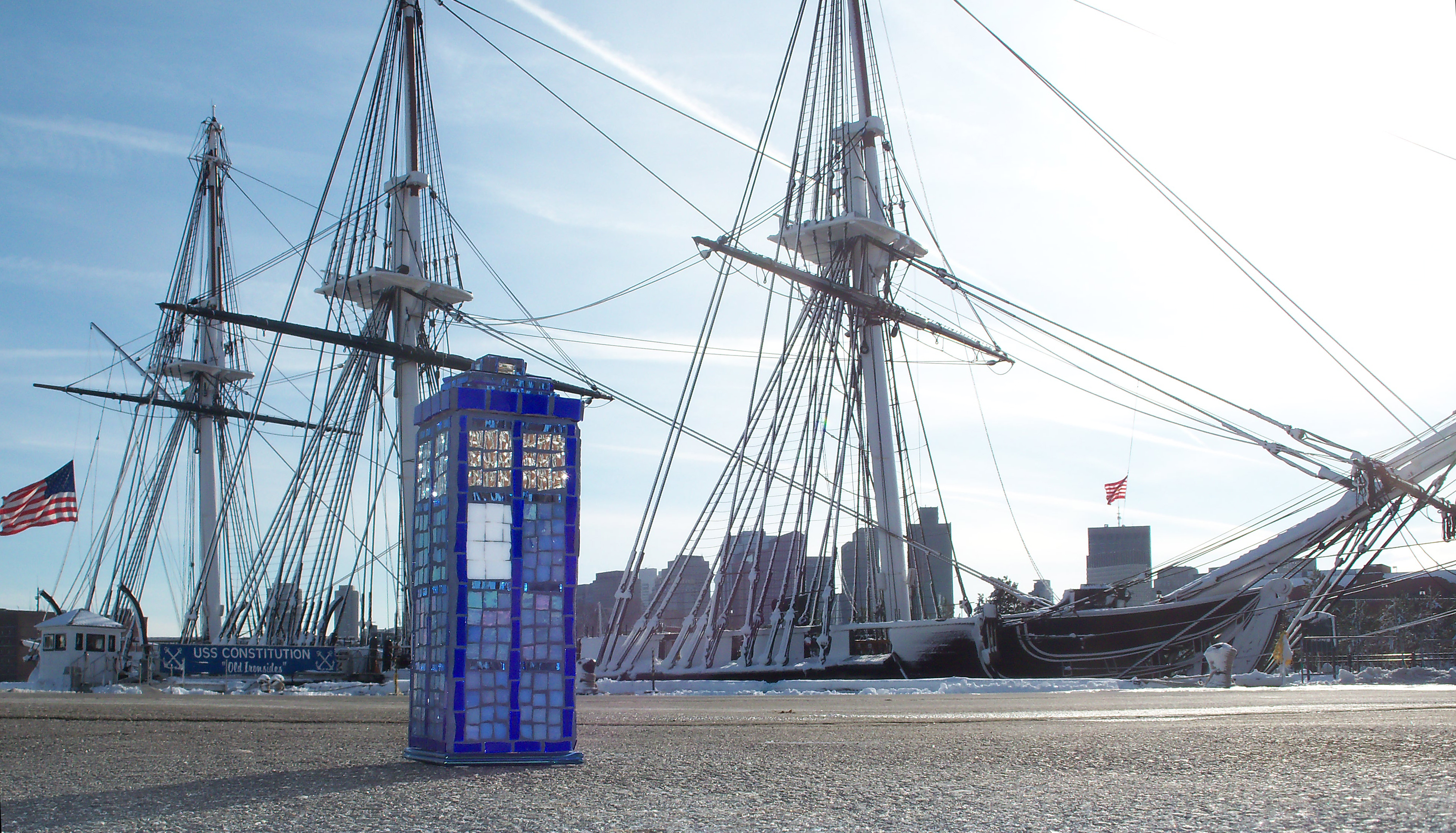
We flew The Mosaic TARDIS to an “interesting” location. Since we couldn’t lock in on the Titanic, we chose the U.S.S. Constitution.

The Mosaic TARDIS has traveled to the Charlestown, MA Navy Yard!

Then we compiled everything into a video, which you can see below and entered The Mosaic TARDIS into the www.WheresTheTardis.com contest.

Here are some photos of the Tardis as it flew around the Charlestown Navy Yard.

The Mosaic TARDIS and the U.S.S. Constitution

The sailors on board were very excited that a miniature TARDIS showed up instead of another gnome.

A nice sailor holding The Mosaic TARDIS on the U.S.S. Constitution

And HERE is the link to the contest where you can vote for The Mosaic TARDIS. Voting consists of clicking the “LIKE” button on the page for The Mosaic TARDIS.

Also, while you’re there, you might see some other inter-dimensional time traveling machines that you like. Vote for them too!

Enjoy!

Cheers,
Erin & Robin

Posted in Signal Boost, Uncategorized | Leave a comment

Review: License to Ensorcell by Katharine Kerr

Author: Katharine Kerr
Publisher: Penguin Group (USA) Incorporated
Print Date: February 01, 2011
ISBN-13: 9780756406561
Details: 336 pages | Paperback | $7.99

~

One thing is clear in License to Ensorcell, we’re not in Deverry any longer.

Katharine Kerr, bestselling author, takes on urban fantasy with her new series, featuring spunky psychic agent Nola O’Grady in License to Ensorcell. Trouble is brewing in San Francisco and Nola is on Chaos watch. However, when an international serial killer comes to town, Nola’s super secret government agency assigns her to act as the handler for Ari Nathan – an incredibly handsome and impossibly annoying Interpol agent who presents just as many challenges as the killer they are tracking. Nola soon discovers that all of the victims have something in common, they’re werewolves, and these murders may lead to new clues about her brother’s death. However, keeping her mind on the job gets increasingly more difficult as Nola’s attraction to Ari increases, the serial killer sets his sites on her, and her family is inexplicably drawn into her job – three things she is desperately trying to avoid.

With License to Ensorcell Kerr brings to life an interesting new series peppered with fascinating characters who are sure to generate some terrific Nola O’Grady Novels. As with any first novel in a series, Kerr takes a little extra time to set up the story world including the super secret government agency for which Nola works, the relationships between her very quirky family members, and the general conflict surrounding the balance of Chaos and Harmony.

The hunt for the serial killer, even with the werewolf and psychic components, keeps the story moving forward and rooted solidly in the “real world,” especially with the political references to current terrorism issues and to al-Qaeda. However, the storyline featuring Nola and her family is even more engaging. Kerr does a wonderful job of establishing the complex nature of their lives as O’Gradys and the Houlihans struggle to live with their special abilities and to cope with the mysterious disappearance of Nola’s youngest brother. Nola and her talented family are the heart of License to Ensorcell, and this is where Kerr’s work truly shines–this is where the magic happens in more than one way.

License to Ensorcell and the forthcoming Nola O’Grady Novels are something to keep your eye on if you’re looking for some “fantastic” fun with a group of quirky characters that will brighten up even the darkest storyline. This series has great potential and should mature into something that brings together readers from multiple genres.

~

I requested a signed copy of License to Ensorcell from Katharine Kerr to giveaway on Goodreads as part of this review. You can enter the contest by clicking the link below. It should be noted that the book being giveaway on Goodreads is unread since I purchased my own Kindle version of the book to read for this review.

Goodreads Book Giveaway

License to Ensorcell (Nola O'Grady, #1) by Katharine Kerr

License to Ensorcell

by Katharine Kerr

Giveaway ends April 01, 2011.

See the giveaway details
at Goodreads.

Enter to win

Posted in Books and Literature, Fantasy, Interviews, Uncategorized | 5 Comments

One Word Interview – Imagine

What would humanity be without our ability to imagine? To imagine is to look beyond the borders of our own personal here-and-now, allowing us to see new possibilities and new potential that has yet to be tapped. This month’s One Word Interview asks writers to respond to the word IMAGINE in 50 words or fewer – not an easy task because there is so much to say, so much that can be said. However, these authors brought their imaginations to the task and came up with terrific responses.

~

IMAGINE, (v), transitive. To open your eyes to what if and maybe and wow. To conjure up other people, other beings, other times. To take the impossible and, by sleight of prose, by twist of thought, give it the breath of life. To walk between worlds. Example, I can imagine…everything.
Beth Bernobich

.

When I saw “One Word Interview” I imagined something different. Like you’d ask questions and I’d answer them with one word. “What’s your favorite writing tool?” “Paragraphs.” “What are your sources of inspiration?” “Everything.” “What were the causes of the English Civil War?” “Bananas.” But this is cool too.
Charles Coleman Finlay

.

When I imagine Imagine, I imagine a blue winter afternoon with puffy white clouds sailing by and me laid out on the living room couch, staring out the window at the sky and snow covered bushes swaying erratically in the wind. Sweets, the calico, perches on my stomach imagining lunch.
Jeffrey Ford

.

Imagine there’s no humans.
It’s easy if you try.
No wizards questing.
Above us only sky.
Imagine all the goblins
Living through today.

Imagine no more slaughters.
It isn’t hard to do.
No fellowships to slay us
as they’re passing through.
Imagine all the goblins
Living life in peace.

You might say I’m–

-By Thark the Goblin Bard, who was killed in mid-verse by a band of dwarves searching for an enchanted toe ring.

Jim C. Hines

I imagine monsters and lurking things in the dark, that steal my children while I watch on the baby monitor. I imagine a future of collapse. I write to release these things from my mind, and perhaps, to force the doers in the world into action.
Sarah Langan

.

The word rushes me back to that dark day in 1980. I’d gotten a copy of “Double Fantasy” for my 11th birthday just a month and a half before and was already on my way to wearing it out, and suddenly, my idol was gone. “Imagine” was his eulogy.
Jennifer Pelland

.

Imagine is the power behind all fiction. The writer and reader together engage in that thrilling dare: to imagine. Perhaps all writing, art, music, or any expression or form of communication asks you to imagine. Imagine you have the power to change. Imagine you have the power to help.
Paul Tremblay

.

Imagine, to me, means a full and complicated kind of dreaming, the central work of making a book. It’s a combination of lucid dreaming, puzzle solving, spell casting, and actively modeling a whole spectacular /thing/ inside one’s mind. It is much harder than it seems, but that holding of a modeled object, story, world, is a highwire act that is a great pleasure and a great challenge to perform. We practice it all our lives, but the moments when we are best at it usually come with no warning but great surprise and joy.
Catherynne M. Valente

A look into windows of infinite worlds. Some worlds are good, some are not, but they all reflect the soul’s potential. If one imagines another’s imagining, it still creates soul-windows of self. And every window leads into a room, and in every room there are more windows.
Trent Zelazny

Posted in Books and Literature, One Word Interviews | Tagged , , , , , , , , , , , , , | 3 Comments

Horror Literature and the Monster Under the Bed: An Interview with Christopher Golden

Like many of the creatures that define the genre, horror refuses to die. Some might even say that it’s fighting tooth and nail from going gently into that good night. I for one am glad that horror has a seemingly endless supply of “staying power” with which it continues to creep into the literary world, finding new footholds and new ways to surprise and scare us.

Horror is arguably one of the older literary genres, spanning back to oral storytelling traditions and wicked little fairytales meant to scare naughty boys and girls into good behavior. However, it has since evolved to include literature from icons such as Mary Shelly, Edgar Allan Poe, H.P. Lovecraft, and Stephen King as well as newer, but no less talented, writers like Christopher Golden.

Christopher Golden

Golden is an award-winning, bestselling author who is well-known for his fiction, comics, and nonfiction as well as his editorial work on several anthologies.

He recently appeared at Boskone, the Boston based convention for science fiction, fantasy and horror writers, where he participated in several panels, including “Up with Monsters!” and “The Divide Between Mysteries and Fantasy-Horror.” The fast-paced and lively discussion covered a wide breadth of literary/horror topics, but the one-hour slot for each panel didn’t allow for deeper discussion on a few comments that were raised by panelists. So, Golden agreed to continue the discussion as well as to answer a few additional questions about the ever-evolving horror genre.

~

At the Boskone 2011 panel on horror literature, you mentioned that “horror” as a genre has shrunken in its pure form and that horror elements have bled widely into many other genres. How do you think this bleeding of horror elements into other genres has affected the development of horror literature in its pure form?

Charles Dickens, from dickens-online.info

CG:  Once upon a time there was no such thing as a “horror genre.”  Nathaniel Hawthorne and Charles Dickens wrote supernatural stories amongst many other kinds of tales.  There were also, of course, writers who specialized in such things, but they wrote for the story, not for the “market” or the “category.”

Only in the last few decades of the 20th century did horror become a genre, something created by publishers for marketing purposes.  The creation of the category had its pros and cons, one of the latter being that when horror was at its height, publishers wanted as much of it as they could get into bookstores.  This meant that a lot of what was published was crap.  The flooding of the market with horror of varying quality had the inevitable effect of dulling the audience’s taste for the genre, and horror started to wither.  It never really recovered.  In the past decade, there were signs of renewed vigor in the genre, but nothing compared to the height of its popularity.

What I think of as category horror exists now only in fragments.  There are the superstars, but these days they write outside the category as often as they write in it.  There are the trends, the way that zombies have become so hot in pop culture.  And then there are the mid-list and underground horror writers.  The mid-list is shrinking rapidly, month by month—case in point, the collapse of Leisure Books.  There are fewer and fewer of those books on shelves.  What I consider the underground—e-publishing and the small press—is also rapidly changing.  The small press, the collector’s market, has seen massive contraction, but e-publishing has exploded.  This is both good and bad, of course, and the reason for both is the same:  anyone can “publish” a book.  There are two potential outcomes I can see from this.  First, it may have the same chilling effect that the horror boom had, since most of what’s going to be e-published is not going to be very good.  Second, it may quickly revert us to the old model of horror, when writers wrote, and didn’t worry about category.  I think the reality is going to be somewhere in between.

Regarding your question, I think a great many arguments would be waged over the phrase “horror in its pure form,” and what that means.  But I see horror fiction everywhere.  It’s huge in the thriller market, thanks to writers like Preston & Child and John Connolly, never mind massive genre books like The Passage by Justin Cronin and The Terror by Dan Simmons, both of which are horror masquerading as mainstream fiction.  Horror has bled into so many other genres, creating paranormal romance out of romance, urban fantasy out of fantasy, and showing up in the humor of Christopher Moore, and a thousand other places.  So, while “category horror” may be an endangered species, other than online, there’s still plenty of horror—pure or spliced—to be found.

Why do you think horror blended with other genres has become increasingly popular? Do you have any examples of stories that you think do an especially good job blending genres with horror?

CG:  The first that comes to mind is the wonderful Sookie Stackhouse series by Charlaine Harris.  The books are funny, romantic and fantastical, but they’re definitely also horror novels.  I mentioned The Terror by Dan Simmons.  Tom Sniegoski’s Remy Chandler series has an angel private investigator.  Douglas Preston and Lincoln Child’s Pendergast series includes a number of books that are out and out horror, but the books are ostensibly thrillers.  There are a million examples.  For me, it echoes something Robert McCammon said many years ago in discussing the versatility of horror.  The gist was that you can write about ANYTHING in the context of a horror story—love and hate, family, work, regret, romance, sex, grief, humor, youth and old age…anything.

You also mentioned that in a mystery the answer is the solution, but in horror the answer is the problem. Could you expand a little more on the idea that “the answer is the problem” in horror?

CG:  Most horror, particularly of the supernatural variety, is also about a mystery of some kind, or at the very least revolves around some outside catalyst negatively impacting the protagonists to create the “horror” in question.  My point was that, in a mystery, when you get the answer, the story has reached its climax.  In horror, more often than not, figuring out the answer to the mystery is NOT a solution, but the next step toward confronting or surviving the horror.  In horror, the answer to the question “who or what is responsible for all of this?” leads to more horror.

A panelist mentioned that horror is emotion and that readers identify most with the person suffering the most. Following this train of thought, the antagonist within a horror story has often gone through a tremendous amount of pain and suffering to become the “monster” of the story. Do you think it’s possible for the monster to steal the sympathy of the reader or viewer? Do you have any favorite examples of how this has been done successfully?

CG:  I should first note that the monster is not always the antagonist.  I’ve edited an entire anthology of stories in which the monster is the sympathetic character, and usually the protagonist as well.  The Monster’s Corner will be out in October from St. Martin’s Press.  But if we’re strictly talking about true antagonists who end up with the audience’s sympathy, no one has ever done it as well as Mary Shelley in Frankenstein.  The novel begins with the doctor as protagonist, but by the time the story has concluded it is impossible not to think of the monster as the innocent and the true protagonist.

Regarding his own writing process, Joe Hill said, “I’ve got to hurt them in the first paragraph.” In your own work, do you hurt your characters “in the first paragraph?” How do you think this statement translates between a short story and a novel?

CG:  Maybe Joe is more of a sadist than I am.  🙂  I tend to want to spend a little time making the reader love my characters before I hurt or kill them.  Wait, maybe that makes ME more of a sadist.  In both short stories and novels, I think you want to caress the audience a little before you stab them in the heart.  *evil grin*

One of the other panelists commented that heroes are heroes because we never see the collateral damage. In a novel such as I Am Legend, where the collateral damage is seen, how does the above statement reflect upon a hero like Robert Neville? What about Buffy or Harry Potter?

CG:  I disagree with the notion entirely—at least as far as it extends to heroes in general.  I believe during the panel the reference was made specifically to comic book heroes, and was partially made in jest.  A real hero, in life or in fiction, is one who does what must be done, and needs no other reason.  Comics tend not to show us the collateral damage of a battle between Superman and some villain throwing each other through office buildings, etc., so I see where that applies.  But not all writers present Superman so simply.

A real hero will gauge the pros and cons of the situation and do his or her best.  Sometimes there WILL be collateral damage, but even greater loss is avoided by the hero’s actions…or the hero believes this will be the result of those actions.  In my own fiction, a recurring theme—almost a constant theme—is the idea that “everything costs,” that victory can’t be achieved without some loss.

Of all the evil fiends, creatures, and monsters that have been dreamt into being, which ones scare you the most and why? Do you have a favorite?

CG:  It’s not often that I’m scared by fiction, either in print or on screen.  Unnerved, perhaps, but not scared.  When I saw the first Nightmare on Elm Street, back in high school, that scared me.  The first time I saw The Exorcist…a video tape, around the same time…it unnerved me, but I wouldn’t say I was scared.  The most recent horror movie that actually scared me was probably The Descent.  In fiction, I read a lot of short stories when I was younger that scared but, but I honestly can’t remember the last thing that I read that scared me.  Wait, that’s not entirely true.  Ramsey Campbell’s The Grin of the Dark is genuinely scary.  It’s batshit crazy, too, but it creeped me the hell out.

What was the first scary book, movie, or story that you remember truly frightening you? Why do you think it succeeded so well? If you had never experienced that story, how do you think it would affect you today?

CG:  When I was seven years old, I sat on our enclosed porch and watched James Whale’s Frankenstein on a tiny black and white TV.  When the monster and the little girl are playing she-loves-me-she-loves-me-not and they run out of flower petals, and he throws her in the lake, I cried.  It terrified me to see a moment of peace and happiness turn into such tragedy and horror, and the horror was both hers AND his.  His panic when he seems to realize what he’s done, but doesn’t know what to do about it…I just rewatched the scene on YouTube and it kills me.  I couldn’t say whether I’d be different if I’d never experienced that moment, but I’d be poorer for it, both as a person and as a writer.

Given that monsters have been so successfully romanticized in contemporary literature, do you think they can ever be scary again?

CG:  Sure.  They’re scary now, if you find the right book.  Go and read Dan Simmons’ The Terror.  And there are plenty of others, if you look.

As an author, what is it that draws you into writing stories that dwell on the darker side of fiction?

CG:  It’s just how I’m wired.  Part of it, though, is pure wish fulfillment, but not in the way you think.  I want to believe in some kind of afterlife, in the survival of the spirit, and if I can believe in demons and ghosts, even just for a minute, then for that same minute, I can believe that this world is not all there is.

Dark fiction is also a fantastic way for both writer and reader to experience real catharsis, to approach our deepest fears without actually having to experience them, and examine those fears.  Sometimes, it’s also a way to work through our feelings about fears that have come true, and come to terms with the darkness.

OK, let’s get serious. What is it really that goes “bump” in the night?

CG:  It’s me, Erin.  Look under the bed.  I’m there.  🙂

Oh, boy. I think it’s time to end this interview before I find out why my closet door doesn’t like to stay closed. Thanks, Chris! Gotta go…

~

CHRISTOPHER GOLDEN is the award-winning, bestselling author of such novels as The Myth Hunters, Wildwood Road, The Boys Are Back in Town, The Ferryman, Strangewood, Of Saints and Shadows, and (with Tim Lebbon) The Map of Moments. He has also written books for teens and young adults, including Poison Ink, Soulless, and the thriller series Body of Evidence, honored by the New York Public Library and chosen as one of YALSA’s Best Books for Young Readers.

Upcoming teen novels include a new series of hardcover YA fantasy novels co-authored with Tim Lebbon and entitled The Secret Journeys of Jack London. As an editor, he has worked on the short story anthologies The New Dead and British Invasion, among others, and has also written and co-written comic books, video games, screenplays, the online animated series Ghosts of Albion (with Amber Benson) and a network television pilot.

Golden was born and raised in Massachusetts, where he still lives with his family. His original novels have been published in fourteen languages in countries around the world.

Posted in Books and Literature, Horror, Interviews, Uncategorized | Tagged , , , , , , | 5 Comments

Behind the Literary Curtain: An Interview with Five Writers’ Assistants

Catherine Asaro, Neil Gaiman, Charlaine Harris, Nancy Holder, and Stephen King have more in common than just being great writers. They all have assistants working behind the scenes to make sure that schedules are met, calls are returned, travel is arranged, balls are kept in the air and not dropped, etc., etc., etc. The question is, “Who are these mysterious assistants who keep our favorite writers sane so that our next favorite book can be written, published, and read?”

Being an assistant myself, I thought it was high time to bring together a group of my talented peers to talk about the other side of the writing world. However, bringing five assistants together in one room at one time is likely to test the laws of the Universe and risk tearing a hole in the fabric of space and time. So, we’ve done the next best thing – we’ve conducted a virtual roundtable discussion, featuring five assistants who share their experiences, thoughts, and advice.

Meet the Assistants (in alphabetical order):

  • Marsha DeFilippo, assistant to Stephen King
  • Kate Dolan, assistant to Catherine Asaro
  • Lorraine Garland, assistant to Neil Gaiman
  • Erin Underwood, assistant to Nancy Holder
  • Paula Woldan, assistant to Charlaine Harris

How did you meet your boss? How did you get such a cool job?

MARSHA: This is a 2 part answer. My first experience working with Steve was as a Kelly Girl in 1986.  My assignment was to type the manuscript for The Eyes of the Dragon and had been scheduled to take a month, working 4 hours a day.  I was so enjoying the book, along with being a fast typist, that I finished in 2 weeks!  Not very smart for a temp job, though.  🙂  Steve was impressed with the job I’d done, though, so had me stay on to type the manuscript for The Tommyknockers.

About a year and a half later I received a call from his personal assistant asking if I would like to come to work for him part-time answering fan mail.   That was November of 1988 and I’ve been with him ever since moving up to full-time hours in 1990.

ERIN: I met Nancy through the Stonecoast MFA program. Not only was she one of my mentors, but she became one of my dear friends. Several years after I graduated she was looking for someone to help send out review copies of Crusade and to help get her web site up and running. Although we live on different coasts, things clicked and we’ve been a team ever since.

PAULA: Charlaine and I have known each other a long time.  Our oldest and youngest children are close in age so we shared friends and bumped into each other at school meetings etc.  When our two youngest were born we took them to baseball games, shopping, play groups.  Trust me if you go Christmas shopping with toddlers and everyone survives, you bond for life.

A few years ago we were coming back from an interview up in Conway and Charlaine asked if I would consider being her assistant since her life was getting a bit hectic.  We both agreed we would give it a try but if it affected our friendship we would make other plans.  So far it has worked out great and we still like each other just fine.

KATE: We met through Maryland Romance Writers. Catherine had used a part time assistant for many years and when her previous assistant moved, she sent a message out to the group seeking a new one. In addition to writing fiction, I had also been writing a newspaper column for nearly ten years and I was ready to switch to something else. So it turned out to be a great fit for me.

LORRAINE: He’d had just moved to America and needed someone to put his books on shelves (in order) in his new library. I did that, then there was more to do, so I figured I would stay until it was all done. 18 years now. Still not done.

If you had to pick only one, what trait or skill do you think an assistant must possess in order to get the job done? Why that trait or skill?

PAULA: I think you have to be flexible – mentally, emotionally, and physically.  Every day is a surprise.  Some days go according to plan (surprise!) and others because they didn’t (surprise).  Anything can happen from flights being diverted to last minute interviews to car troubles.  Sometimes you have to converse with people on the other side of the world so you are up at 3 a.m. tying up those loose ends. That’s what makes this job so much fun.  You just never know what will happen next, who you will be talking with or where you might be in two weeks’ time.

KATE: For me, the most important skill is the ability to change gears quickly. Catherine and I have very little time together each week and we need to share a lot of information, ask a lot of questions and iron out a lot of details about a variety of things during that brief window. Also, I get calls from her publicist and emails about almost any subject at all hours of the day and night, so I need to be able to switch into “assistant mode” at the drop of a hat.

ERIN: The ability to either jump over, plow through, or alter obstacles is pretty important. My personal motto is “get it done.” It’s something that I picked up while working in the software industry and facing impossibly long days where not being able to solve a problem could either mean a $100,000 sale didn’t go through or you were keeping a studio from hitting their production deadlines. The ability to turn obstacles into opportunities is a golden trait that requires a lot of creative thinking both inside and outside of “the box.” When all else fails, magic wands are very handy. Alakazam!

MARSHA: The ability not to be stressed by deadlines.  The job has ebbs and flows but particularly around publication time, it can be quite hectic organizing all the details related to publicity and promotion.  Unless you can keep your perspective that you will get through it, it can be quite stressful.

LORRAINE: Seriously? One? If you are an Assistant it will never be ONE thing. You need LOTS and all the time, don’t stop and never never never give up.

What do you enjoy most about working for your boss?

KATE: Well, Catherine’s a warm, caring, creative fun person to work for, and her husband and daughter are terrific, too. The flexibility of the job is essential, too, for me because my life is always pulling me in about seven different directions at once.

ERIN: It’s a pleasure to work with someone who is not only a good friend, but someone whom you deeply admire. Plus, Nancy is a riot. She might look sweet, but she’s got a wicked sense of humor. I’m still not sure how such a nice person can come up with such scary stories! Maybe there’s a part of her that I don’t know yet.

MARSHA: He’s not just a great person to work for/with, he’s a great person.  He hasn’t let his celebrity status go to his head.

PAULA: I have certainly had a variety of jobs over the years and this really has been the best job I have ever had.  Charlaine is so funny and easy to get along with.  What you see is the way she is.  She is also incredibly hard working so it is nice to be able to lend a hand and feel you are making a difference.  I agree with Erin that having been friends for so long does make the job easier.

LORRAINE: The paycheck helps with the finer things I have become accustomed to in life, living indoors, eating.  Anyone who says the money doesn’t matter is lying. At the same time, there’re lots easier ways to make money; if you don’t love it, you’re not going to do this.

What is your favorite memory or experience on the job?

MARSHA: Maybe not exactly the question you’re asking, but my favorite part of the job is moderating Stephen’s Message Board.  It’s enabled me to make a direct connection with his fans and I believe that has helped me be a better personal assistant as I get to see both sides.

ERIN: After two months of planning, data mining, and research, it was really exciting to see Nancy’s web site go live. The second best moment was finally winning a game of Cursed Checkers against the evil autobot checkers player who rules the game. Really, it’s the little things that make me happy.

KATE: I think my favorite experience was working together to write a chapter for a textbook about the sub-genres of science fiction. We got to explore and analyze the work of so many amazing writers and trace the progression of the sub-genre from its origins in mythology through the 20th and 21st Centuries.

PAULA: Wow that is a hard question but I would have to say when we traveled in Europe last year.  We covered four countries in a couple of weeks but had such a great time and lots of adventures.  Did you know that bidets can be built into a regular toilet?  If you’re standing fully clothed in front of it and pull that handle on the wall, know what happens?……never mind.

LORRAINE: First time we hived a package. No, not a euphemism. Boss got Bees. There’s something very powerful about being covered in Bees.

Conversely, what memory or experience still makes you cringe and your toes curl?

PAULA: Are we back to the bidet story again?  All I can say is it is no fun touring Rome, during the coldest winter in 30 years, in wet clothes which are all you have because your suitcase is still in London and you just had to pull that handle.  Sigh.

ERIN: I can’t beat the bidet story. This memory doesn’t have anything to do with my job, but it still makes me want to crawl under a table. I was on a romantic date with a boyfriend and I leaned over to say something that I am sure was romantic and witty. I still remember the look of panic on his face and the awful smell that filled the restaurant when my hair went into the candle, igniting the massive amount of hairspray holding everything in place. Whoosh! Instant haircut. Luckily, I was able to put out the fire with my hand, but our white tablecloth was covered in ash and the whole place stank like burnt hair. Yeah. I’m going to go hide now.

KATE: Probably the same experience – the textbook chapter. It was a lot of work! And we kept finding new stories that we wanted to include, but of course we couldn’t include them all and so it was almost heartbreaking as we had to cut stuff out of our chapter. (We had written about enough for our own full-length textbook!)

MARSHA: Having to spend nearly half an hour with a truly delusional fan all the time wondering what would be the best escape plan if it came down to that.

LORRAINE: Hello? Being covered in Bees is really FREAKY!

What is the most important lesson that you have learned about supporting a writer? Or what is one of your biggest daily challenges?

ERIN: One of the biggest challenges is that Nancy is so nice. She wants to do everything and anything she can to help others even if that means doing an interview during a writing deadline or sending out books to charities. As she gets more and more popular, we’re having to say no more and more often, which isn’t easy for her.

MARSHA: Perhaps it’s to not take negative criticism (is that redundant?) personally.  It took a while to accept that no matter how hard you try, there are some people you will just not be able to please.

KATE: I only go into Catherine’s once a week, so the rest of the time, it can be a struggle to remember to work on some of the things I need to finish for her. For example, this last week, as soon as I got home I started focusing on a Girl Scout fundraising event that we were running.  Then once that was over, I got on other things on my to-do list. And then this morning I remembered that I haven’t looked at Catherine’s “to-do” list yet!

PAULA: I think you have to be really committed to the author and the works they create.   You are representing them interacting with readers, publicists, reporters, booksellers so it’s important that you understand the message they are trying to convey to the public through their writings.  Daily challenge…….  If I could clone Charlaine, life would be easy. Charlaine has been in the writing business for almost 30 years and is very loyal to those who helped her during the lean times.  It is especially hard for Charlaine to turn down their requests for interviews, conventions, signings, etc.  If she could, she would do them all!

LORRAINE: Well, really, HE supports me. If he couldn’t support an Assistant, I wouldn’t be one.

When you were a child, what was your answer to the question, “What do you want to be when you grow up?”

MARSHA: To be a secretary like my mom.  Obviously dating myself there as a child of the late 50s, early 60s when being a secretary, teacher, or a nurse were the primary career choices for little girls.

KATE: It depends on when you asked me. First, I wanted to be a racecar driver (with pink hair and a pink dog, if that gives you any idea how old I was) Then I wanted to be an actor so I could live in pretend worlds.  Years later I realized the best way to achieve that escapist career is to write fiction.

ERIN: When I was a kid I planned on owning a horse ranch where I would raise racehorses like the Black Stallion. I even wanted to be a jockey, but that dream disappeared inch-by-inch as I doubled in height practically overnight.

PAULA: Grow up?  Still working on that.  Let’s see, when I was a kid (that would be the Jurassic period) I wanted to be a conservation officer.  I think I may have deviated a little since then.

LORRAINE: A musician, but they told me I couldn’t do both. (grow up AND be a musician, get it?? I slay myself!!)

When you’re not hard at work making the writing world turn ’round, what do you do for fun?

PAULA: I love to read and try to find time whenever it’s possible.  What can I say?

MARSHA: Reading, gardening, and I don’t think there’s a craft I’ve discovered that I haven’t liked.  My current hobby is making jewelry since the options for gardening are extremely limited in Maine in the winter.   🙂

KATE: Most of my energy is focused on my kids these days. They’re in 7th and 9th grades, so not too much longer before they’re gone. My son is very active in sports and scouts and my daughter also does scouts and competes and performs on a jump rope team. So now I’m a part-time jump rope coach and full-time chauffeur.  Working for Catherine and writing my own stories are just things I get to do in my spare time.

When I really get to goof off, I love to read (of course), take long walks and participate in living history encampments.

ERIN: That is a hard question. I’m a work-a-holic in the truest sense, which means even when I’m relaxing I’m working. However, when I do get a real chance to relax, I love reading, watching television, and hanging out with my two dogs and my husband. In the rare case that I can actually get away from town, I love touring England and Ireland. Scotland is next on my list.

LORRAINE: Roller Derby and Dressage. And I play in a band. Skating, Riding and Rock are very relaxing for a girl  after a long hard day. Also I rescue Bengals.

What is your favorite book or story written by your boss? Why do you like that one specifically?

ERIN: I’m not sure if I’m allowed to say this since it’s not yet published, but I loved Damned, which is Book 2 of the Crusade series. It really knocked my socks off. What I love about this book is that you get into the heart of the story and the characters. Plus, I love a good action-adventure vampire story where the vamps are bad news.

PAULA: I know it is corny but I really do enjoy all of Charlaine’s series, so it would be difficult to pick just one book but there are books with attached memories.  A Bone to Pick was the first book Charlaine lent me.  It was an ARC and I didn’t even know what that was.  I was really honored to have had a chance to read the book before it was released.  Dead Until Dark would be another choice because Toni Kelner and I were at the banquet when Charlaine received her Anthony for it.

KATE: My favorite is The Ruby Dice.  It’s an almost sad story of two leaders who think the other has it made (until they finally meet at the end). It really makes you think – other people’s lives may look wonderful from the outside, but you don’t know what they’re going through.

MARSHA: Not sure that I could pick just one.  The top 5 are The Talisman, The Dark Tower series, Duma Key, The Eyes of the Dragon (because it was the first and a fantasy to boot), and the one coming out in November of 2011 titled 11/22/63.   In all of those it was the combination of the story and the characters that resonated for me.

LORRAINE: Graveyard Book. Because I’ve always felt cheated at NOT being raised in a graveyard by, er, Things.

If you could have a do-over in your life, what one thing would you change and why?

KATE: Boy it’s hard to pick just one. That’s because I have a terrible temper and so many times I’ve said things that really didn’t need to be said or at least not in the way I said them.

ERIN: I would have found a way to stay in college right out of high school rather than returning as an adult student at the age of 32 to finally get my diploma. If I had done things differently, I would never have come to Cambridge, and I would be living an alternate life. Not such a good thing since I really like this one.

MARSHA: Probably nothing, not because I did everything right but because changing that one thing could affect so many others including some times that have been good that might have been missed if I’d changed something that happened earlier.

PAULA: Not that my life has been perfect or I made all the right choices but, as Jimmy Buffet would say, “yesterday’s over my shoulder and I can’t look backwards too long there’s just too much to see waiting in front of me……..”

LORRAINE: I would have got FITTER, sooner. I was an athlete growing up, and I would have gone further at it, and I would have learned to play music BETTER, and been really good. I would have gotten My Little Pony at age 5 and been a proper rider by now, but other than that… Everything led HERE, so who’s complaining?

And a bonus question: If an author is struggling to keep up with the day to day business of writing, but doesn’t have an assistant to whip his world into shape, what assistantly advice can you give him to preserve his sanity and his writing time?

KATE: Hmmn, I think that author would be me.  I think I find the best balance when I remember to carve out separate time for writing only (that means no emails, blogs, etc.) and to do that, I often have to go to a different computer. The wireless internet connection in my house is pretty bad, so if I work on my netbook, I can’t fall prey to the temptation to check email or read someone’s blog in that moment when I pause to struggle with a phrase.  I also take my netbook to jumprope practice, baseball games, etc.  It may be too busy for me to really get into my character’s heads, but I can probably manage to write a blog or a synopsis or something useful.

ERIN: Set up a professional email address where all of your “work” related email can be directed. Something like mailforyourname@something.com would give you some amount of control over the mail flowing through your in box. That way you personal messages don’t get mixed up with fan mail, review requests, etc.

PAULA: I highly recommend Google’s calendar.  It sends you pop up and e-mail reminders, you have room for contact info, it allows you to go several years in advance, it’s quick and easy to use.  I have also found that setting up files in your e-mail account is really time saving in the long run.  I create one for each major event.  This year we are heading back to Dragoncon and I have emails and contacts from the last visit as well as maps and websites I e-mailed to myself.  I just have to click on that file and the info is waiting.  Just be sure your account has lots of storage.

MARSHA: Don’t sweat the small stuff and back up, back up, back up.  🙂

LORRAINE: WARNING: Do not attempt to pursue this profession with out an Assistant. There is no sanity in doing so.
Posted in Interviews, Uncategorized | Tagged , , , , | 17 Comments

Introducing A Discovery of Witches by Deborah Harkness

Here is something special. The publisher for debut novelist Deborah Harkness sent me a copy of a letter from Deborah along with a Q&A about her novel – both of which are printed below by permission of Viking. While these pieces weren’t created especially for UNDERWORDS, they do an excellent job of introducing Deborah Harkness and her new debut novel A Discovery of Witches.

Since I enjoyed Deborah’s letter and her Q&A so much, I wanted to share them with you. Plus, Viking sent me a copy of A Discovery of Witches to giveaway to one lucky UNDERWORDS reader. Read below to find out how you can win!

I wish you all good luck and good reading.

~

A Letter from Deborah Harkness:

Why does a history professor decide to write a novel about witches? It’s a good question!

Writing a novel is a mysterious process and many of my life experiences went into A Discovery of Witches. One of my favorite books as a child was Elizabeth George Speare’s The Witch of Blackbird Pond. The history of alchemy and magic caught my interest as an undergraduate, and I’m still fascinated by these subjects today. And, once upon a time, I discovered a lost alchemical manuscript—although it was not (so far as I know) enchanted.

A Discovery of Witches tells the tale of a reluctant witch named Diana Bishop and her discovery of a long-lost alchemical manuscript at Oxford’s Bodleian Library. There, Diana meets Matthew Clairmont: a geneticist who happens to be a very old, secretive vampire. Witches and vampires are traditional enemies, but Diana and Matthew grow closer as they try to puzzle out the manuscript’s significance. Their search for answers takes Diana and Matthew from Oxford, to his ancestral home in France, to her family’s farm in upstate New York. But they are not the only creatures who want to solve the mystery of manuscript, and their fellow daemons, vampires, and witches frown upon their unorthodox relationship. Are these just old prejudices, or is it something more?

Our culture’s renewed obsession with witches, vampires, and other things that go bump in the night has been fascinating to me as a historian. I’ve gone from needing to explain what alchemy is to having my students all nod wisely whenever Nicholas Flamel is mentioned. Parents have confessed that they’ve been staying up late to read their kids’ copy of the latest Harry Potter. Our reading habits reveal that even grownups need a little magic—with the limitless possibility, unpredictability, and even chaos that inevitably comes with it. My goal with A Discovery of Witches was to write a fairy tale that was mesmerizing but spoke to adult issues and concerns. I tried to create characters who were strange—yet strangely familiar. Many of us will recognize ourselves in Diana, who has so much power but is afraid to use it. Others will empathize with Matthew’s inability to let go of his 1500-year past—even though we have less of a past to worry about! And still more will wonder, while riding the train or sitting in a meeting, if that strange creature opposite just might be a daemon or a vampire.

If it’s magic you need this winter, I hope that you find some in A Discovery of Witches.

A CONVERSATION WITH DEBORAH HARKNESS

Q:  A DISCOVERY OF WITCHES begins with the protagonist Diana Bishop stumbling across a lost, enchanted manuscript called Ashmole 782 in Oxford’s Bodleian Library.    You had a similar experience while you were completing your dissertation.  What was the story behind your discovery?  And how did it inspire the creation of this novel?

A. I did discover a manuscript—not an enchanted one, alas—in the Bodleian Library. It was a manuscript owned by Queen Elizabeth’s astrologer, a mathematician and alchemist named John Dee. In the 1570s and 1580s he became interested in using a crystal ball to talk to angels. In those conversations, he asked the angels about a mysterious book in his library called “the Book of Soyga” or “Aldaraia.” No one had ever been able to find it, even though many of Dee’s other books survive in libraries throughout the world. In the summer of 1994 I was spending time in Oxford between finishing my doctorate and starting my first job. It was a wonderfully creative time, since I had no deadlines to worry about and my dissertation on Dee’s angel conversations was complete. As with most discoveries, this discovery of a “lost” manuscript was entirely accidental. I was looking for something else in the Bodleian’s catalogue and in the upper corner of the page was a reference to a book called “Aldaraia.” I knew it couldn’t be Dee’s book, but I called it up anyway. And it turned out it WAS the book (or at least a copy of it). With the help of the Bodleian’s Keeper of Rare Books, I located another copy in the British Library.

Q: Are there other lost books like this in the world?

A. Absolutely! Entire books have been written about famous lost volumes—including works by Plato, Aristotle, and Shakespeare to name just a few. Libraries are full of such treasures, some of them unrecognized and others simply misfiled or mislabeled. And we find lost books outside of libraries, too. In January 2006, a completely unknown manuscript belonging to onne of the 17th century’s most prominent scientists, Robert Hooke, was discovered when someone was having the contents of their house valued for auction. The manuscript included minutes of early Royal Society meetings that we presumed were lost forever.

Q: This is your debut novel, but you’ve written previous books about science in Elizabethan England and have received numerous awards and fellowships for your work in the field of history.  Was it difficult to transition from writing scholarly nonfiction to work of fiction?  How did your background as a historian find its way into A DISCOVERY OF WITCHES?

A. It was a challenge in some ways, but I’ve never been happier than when writing A DISCOVERY OF WITCHES. The challenge for a historian, especially when covering subjects we know a lot about, is to remember to keep the story and the characters front and center. In my historical work, I’m expected to include everything I know about a given subject down to the last detail. In a work of fiction, you can lose the plot pretty quickly if you take this approach. That said, I couldn’t shut off my historian’s voice completely, and the twenty-five years I’ve spent researching and teaching the history of science certainly informed what I wrote and the stories I could tell about magic, alchemy, and evolution. Being steeped in the literature of alchemy was crucial to the story of Ashmole 782 and why Diana and Matthew would be interested in its discovery.

Q: Unlike Twilight’s Bella and Edward—hormonal teenagers who meet in the halls of a high school—your leading characters Matthew and Diana are established academics who meet in the library of one of the most prestigious academic institutions in the world.  This is a world where vampires and witches drink wine together, practice yoga and discuss philosophy.   Are these characters based on something you found missing in the fantasy genre?

A. There are a lot of adults reading children’s fantasy books, and for good reason. Children’s’ authors and Young Adult authors are writing original, compelling stories that can make even the most cynical grownups believe in magic. In writing A DISCOVERY OF WITCHES, I wanted to give adult readers a world no less magical, no less surprising and delightful, but one that included grown-up concerns and activities. These are not your children’s vampires and witches.

Q: A DISCOVERY OF WITCHES is set in the winding lanes of Oxford, a gargantuan castle in the south of France and a creaky old house with “a mind of its own” in upstate New York.  Were all of these places inspired by locations in your own life?

A. With the exception of the castle, the locations are all known to me. I spent many happy years in Oxford as a graduate student researching my dissertation and rowing on the river. It’s a special city, one that makes a deep impression on most people. As for the creaky old house in upstate New York, I owned a similar house. It was not quite as old, but it definitely had its own personality, ancient floorboards, a drafty staircase, and all the other perfect elements of a house in a ghost story.

Q: The world that Matthew and Diana inhabit contains more than just vampires and witches.  What is the third category of supernatural creature?  And what figures from history might have belonged to their ranks?

A. When I began A DISCOVERY OF WITCHES I wanted to create a whole world with its own logic and order. Vampires and witches can’t be the only strange creatures sharing the world with humans. I drew on Greek mythology for inspiration, and added daemons into the mix. Daemons were believed to be half-mortal and half-divine creatures who guided humans, much like the Roman genius. They were thought to be emotionally volatile and creative, and prone to torment and deception. Like vampires and witches, daemons are “creatures between,” and as time passed they became associated more with evil than protection and divine knowledge. Historically speaking, I imagine that the ranks of daemons included all the passionate, tormented, unusual misfits who created great works of art and literature and caused trouble while they did so. Mozart and Michelangelo come immediately to mind.

Q: You are an established, award-winning wine blogger, so it’s no surprise that your leading vampire is a wine aficionado.  What wines would you suggest readers savor while reading A DISCOVERY OF WITCHES?

A. A hearty red wine from the Rhône. It’s what all the vampires are drinking!

Q: This is the first book in a trilogy.  Can you give us a hint as to what happens next?

A. Readers of the next book can expect to find more history and alchemy in the next book. There will be some familiar places and faces, but there will also be new friends (and enemies) as their journey unfolds. Most importantly, Diana and Matthew will really get to know each other as the story continues. They are still relative strangers when A DISCOVERY OF WITCHES comes to its end–and vampires are secretive creatures.

Goodreads Book Giveaway

A Discovery of Witches (Hardcover) by Deborah Harkness

A Discovery of Witches

by Deborah Harkness

Giveaway ends March 20, 2011.

See the giveaway details
at Goodreads.

Enter to win

Posted in Books and Literature, Fantasy, Signal Boost, Uncategorized | Tagged , | 2 Comments

New Writer Spotlight: Kat Howard

Kat Howard

Continuing the New Writer Spotlight series, Underwords is pleased to present Kat Howard. With some impressive sales in her first year of publication, Howard is attracting quite a bit of attention. You can find her online at strangeink.blogspot.com and @KatWithSword on Twitter.

Her first professional sale was in 2010, which places her in her first year of eligibility for the Campbell Award.

~

What was your first piece of published fiction and where was it published?

My first piece of published fiction was a short story, “A Life in Fictions,” and it was published in the anthology Stories, edited by Neil Gaiman and Al Sarrantonio.

When did you find out that you sold the story? What was happening at the time? How did you react?

I was on a panel for the anthology’s release this past summer, and Neil mentioned that he had no idea this was my first sale until he read the bios, because I had been so calm in my email. All I could think when I heard him say that was, “Thank God I wasn’t on video chat,” because I literally fell out of my chair when I read his email offering to buy the story. Then I called my Mom and burst into tears. I was ridiculously happy.

What other stories have you sold since?

“Beauty and Disappearance” was in issue #356 of Weird Tales. “The Speaking Bone” will appear in the March issue of Apex (that should go live for subscribers, Monday the 7th) and “Choose Your Own Adventure” will appear in April in Fantasy Magazine.

How would you describe the type of fiction that you write?

I’m pretty firmly on the fantastic end of things, and usually with some sort of dark or weird element in there. I like to use the possibilities of the strange in my writing.

Do you have a mentor or another writer who helped to guide you through a difficult point within your writing career?

I went to Clarion in 2008, and my instructors and my classmates have remained one of the biggest sources of advice and support in my writing career. There’s always been someone there who has known what to say when I’ve asked for help.

It’s funny – the reason I sent Neil “A Life in Fictions” was because I had been stuck, both on the novel I was working on and on my dissertation, for a length of time that in retrospect wasn’t that bad, but at the time was making me wonder if I wasn’t irreparably broken. I sent him this panicked email, and he sent back advice that was pretty much: put everything in the drawer until it learns how to behave. And while my works in progress were on time out, I wrote “A Life in Fictions.” It also fixed whatever wasn’t working in my head.

It is said that learning to write well is like experiencing a series of never ending writing related epiphanies. If you had to pick one, what is the most important lesson you have learned, so far?

If by “learned” you mean “is something I try very hard to remember, because this one is hard for me,” I’d say I’ve learned that a draft is just a draft. Anything is revisable, but you have to get the draft zero stuff – no matter how crazy, or how bad – on paper before you get to the point of revision.

Which authors, stories, or novels most affected your development as a writer?

Oh, wow. It’s hard to choose, because I feel there have been so many influences that it’s hard to pick specific ones. After I read Madeleine L’Engle’s A Switfly Tilting Planet in second grade I wrote so many unicorn stories. So. Many. Stephen King’s The Eyes of the Dragon was the first book that made me want to tell stories of my own. Jane Yolen’s works got me back into reading fantasy after those bad two years when I tried to be cool and read nothing but Sweet Valley High and Babysitter’s Club. Susan Cooper’s The Dark is Rising series began my fascination with Arthuriana, and Shakespeare taught me to play with language. The fairy tale collections Terri Windling and Ellen Datlow edited gave my heart a home.

What do you do for a living beyond writing fiction? How do you fit “writing time” into your schedule?

Right now, I am an ACLS New Faculty Fellow in the English Department at Stony Brook University. I teach classes in medieval and speculative literature, and I’m fortunate to be in a department that is enthusiastically supportive of my creative work. An academic schedule has a great deal of flexibility, and so is very friendly to the writing life, and my academic and creative interests overlap, which also makes things easier.

But writing is a job, and I work every day. I am more an owl than a lark, so rather than getting up early to make wordcount, I don’t go to bed until my goals are met.

When did you first know that you wanted to write? What inspired you to tell stories?

When I was a kid, I told myself stories all the time. Some of them, I even wrote down. (So. Many. Unicorn. Stories.) I had problems sleeping, bad nightmares and things like that, and my Mom told me that when I couldn’t sleep, I should tell myself stories, and that would keep the nightmares away. It worked often enough that I kept doing it.

I didn’t really think about writing as a career until fairly recently, the fall of 2007. A variety of events had conspired to turn my life inside out, and I read about Clarion, and I thought, you know what, I used to be good at this. I wonder if I still am? So I decided to apply, and in the process, realized I loved telling stories, that doing so made me feel like a whole person again. The application process made me a writer.

Did you receive any writing related training or attend any workshops? If yes, how do you think they helped you? If no, are there any that you are considering?

I attended Clarion at UCSD in 2008. It was the best thing I could have done for myself as a writer, because it taught me to take myself seriously.

Which of your published stories would you most recommend to someone who hasn’t yet read your work?

This is a tricky question, because I love them all. I guess “A Life in Fictions” because it’s the one where I didn’t have a secondary “I wonder if I could do x” floating around in my head when I wrote it. I just opened the notebook, and tried to tell a story.

Posted in Interviews, Writing | Tagged , , , , , , , , | Leave a comment