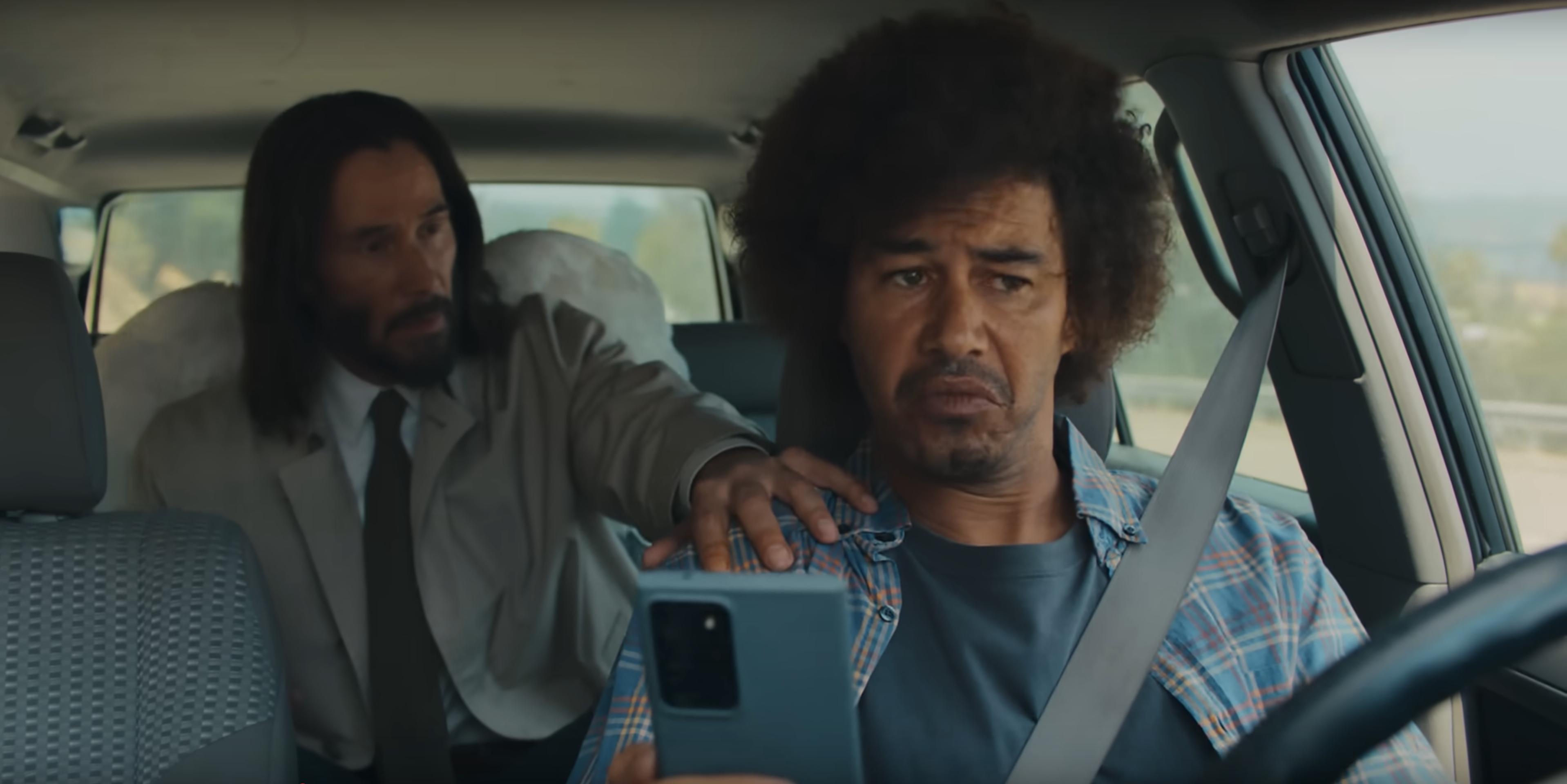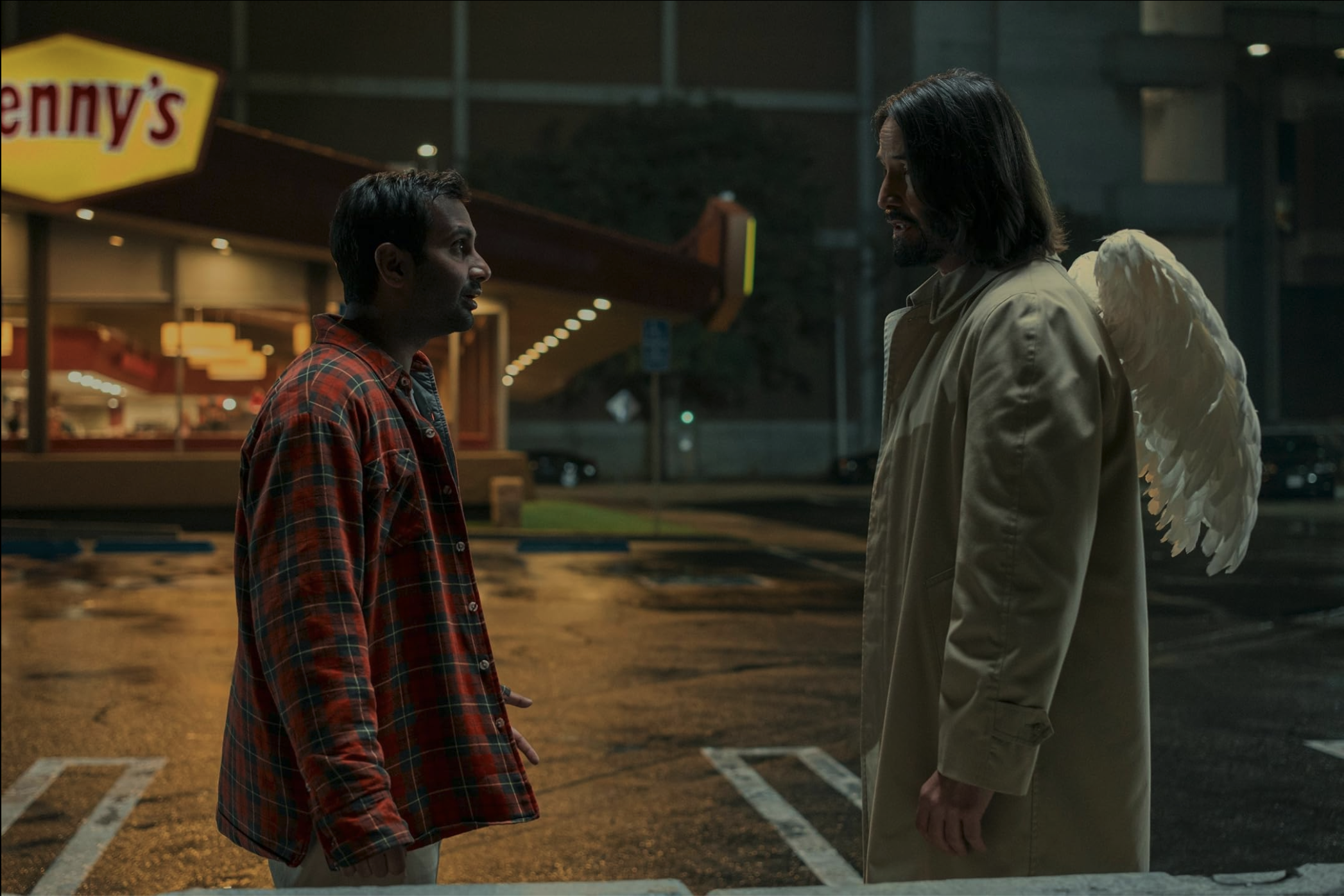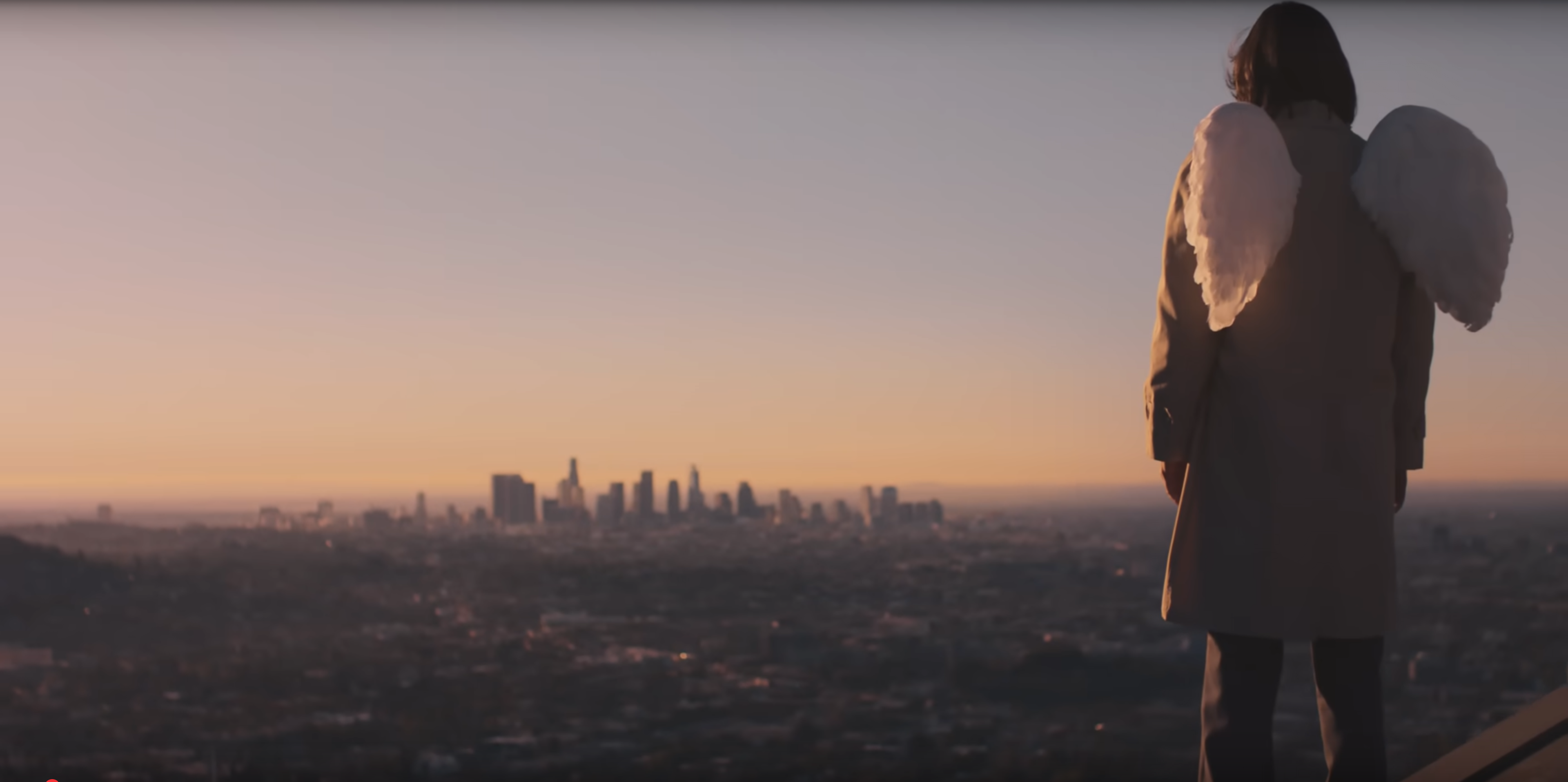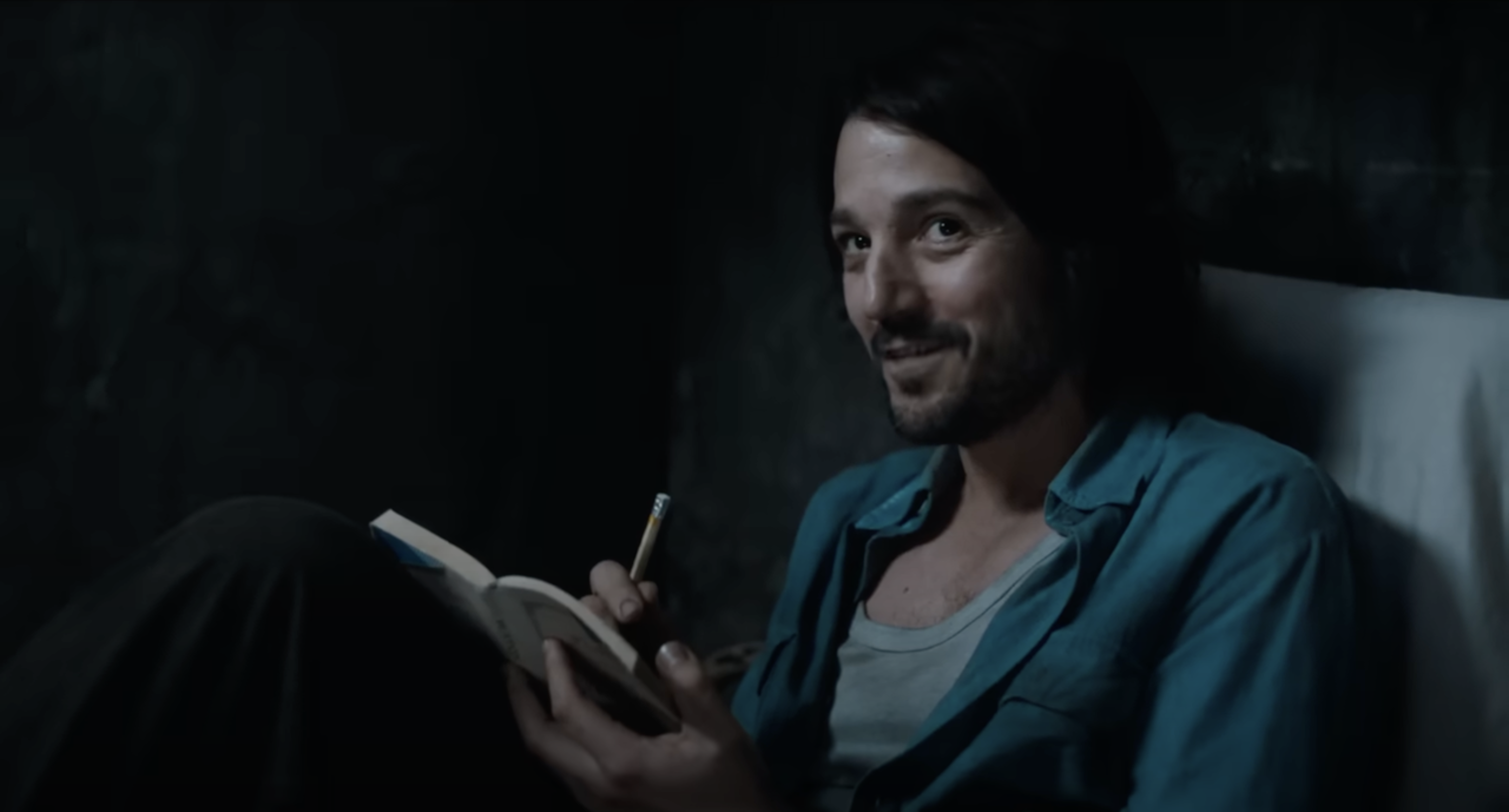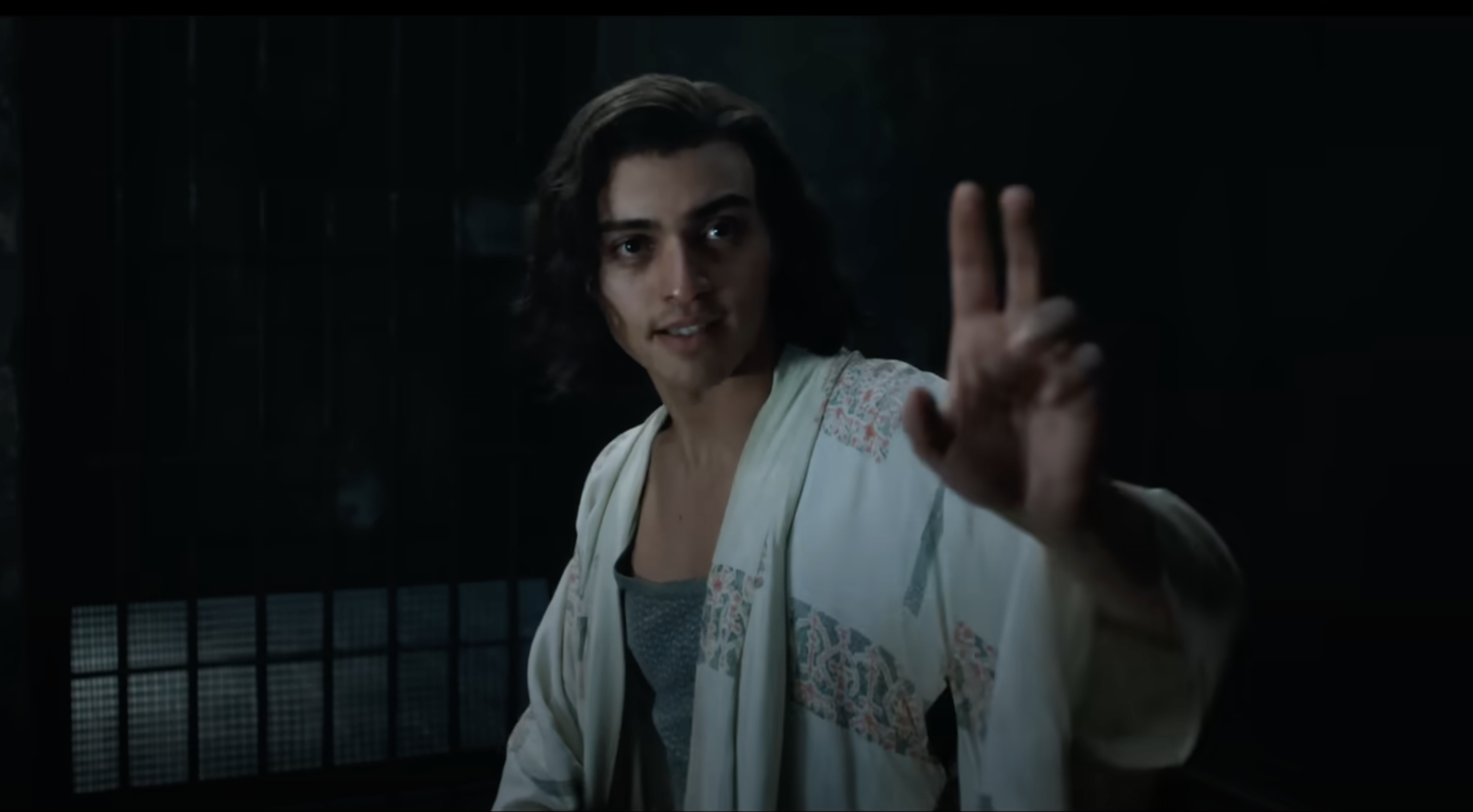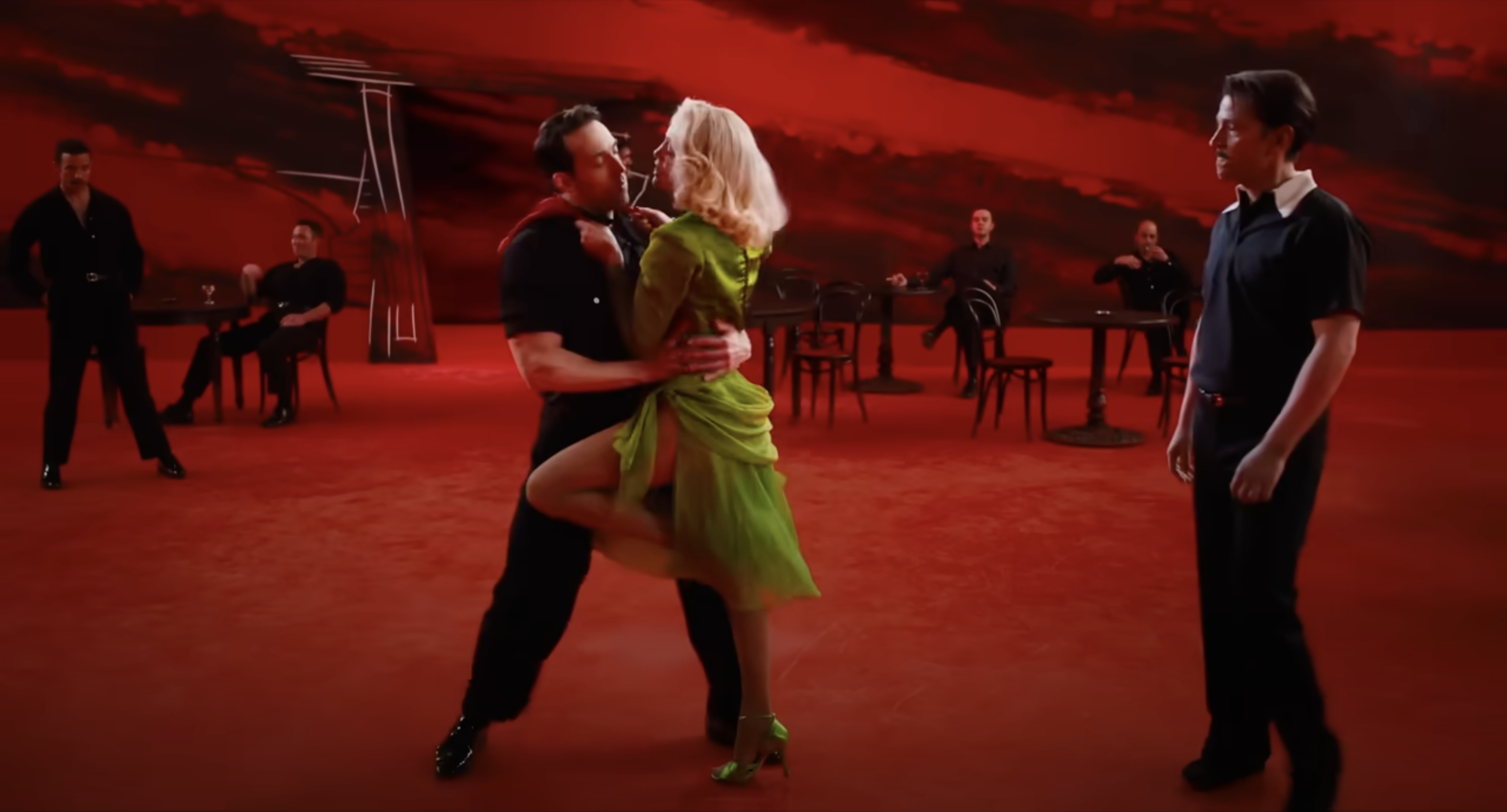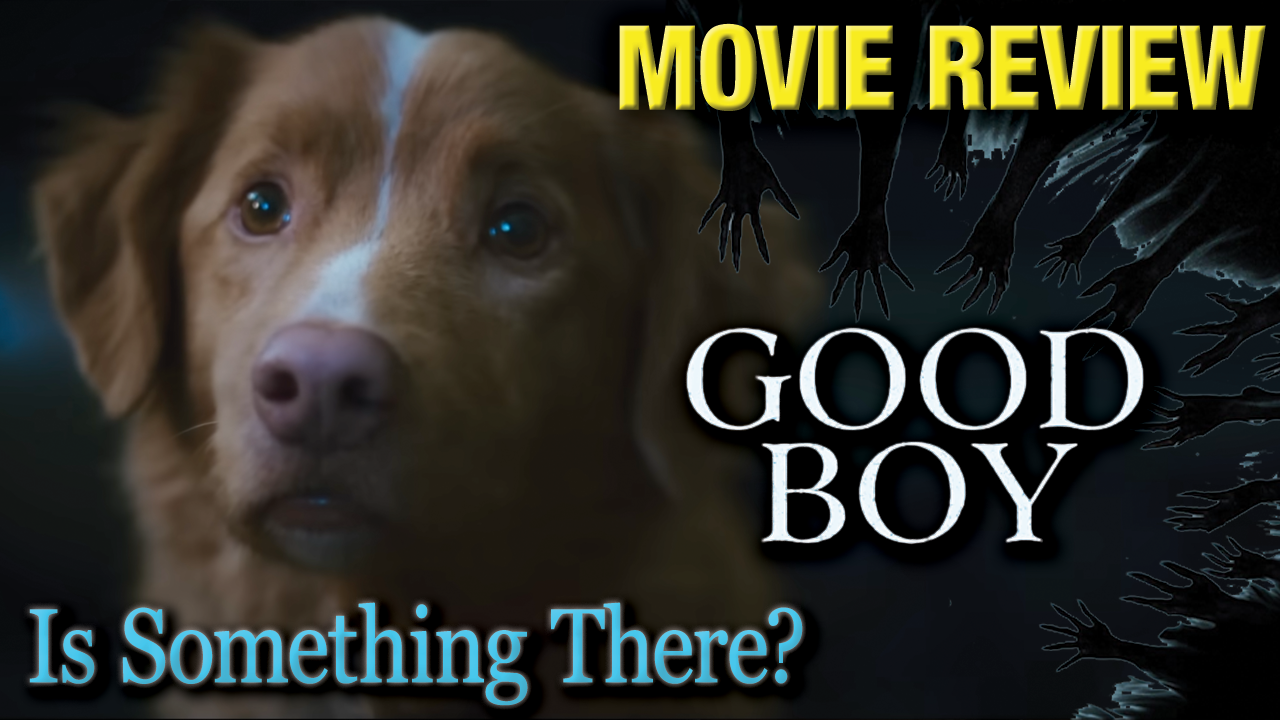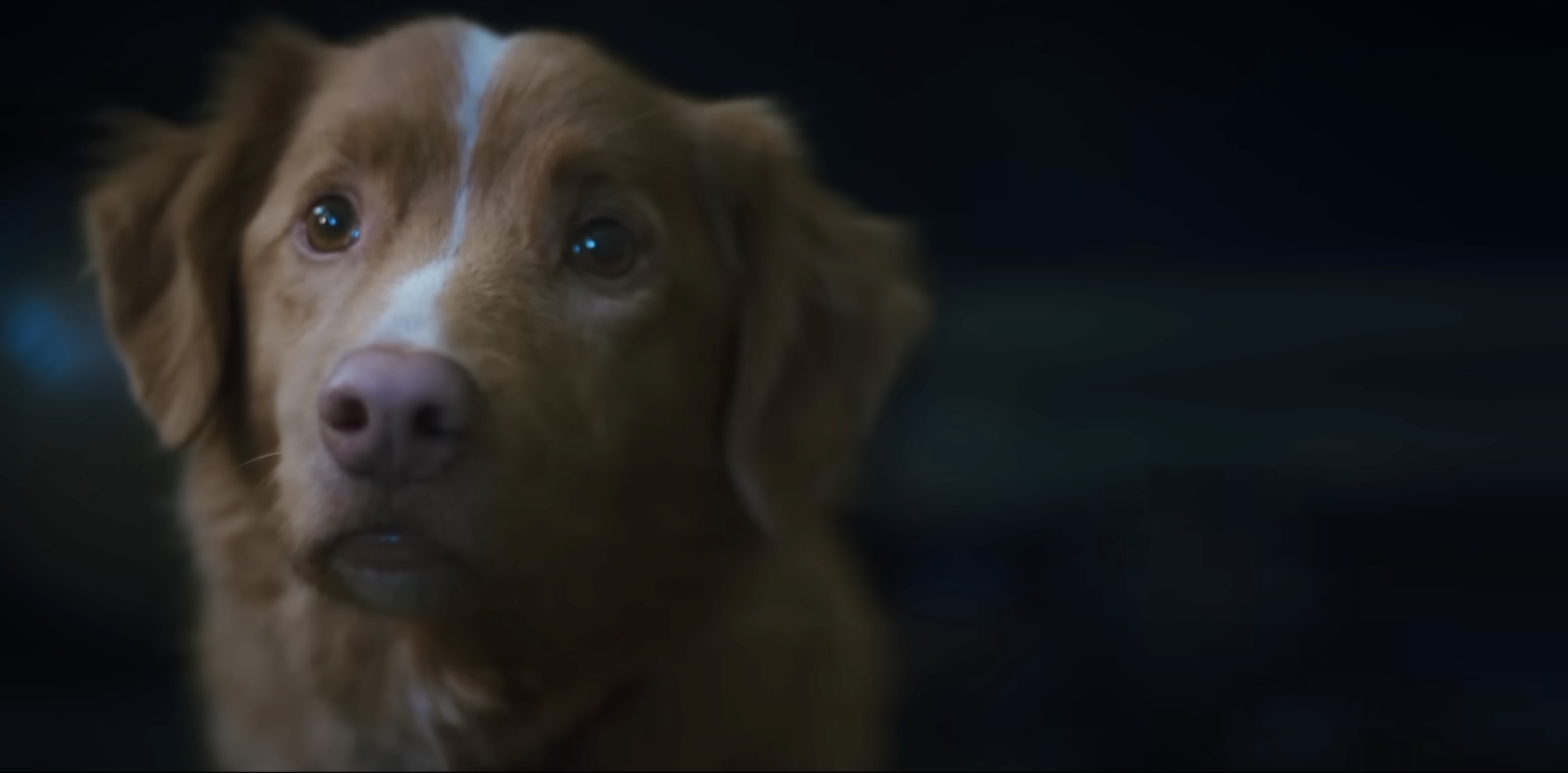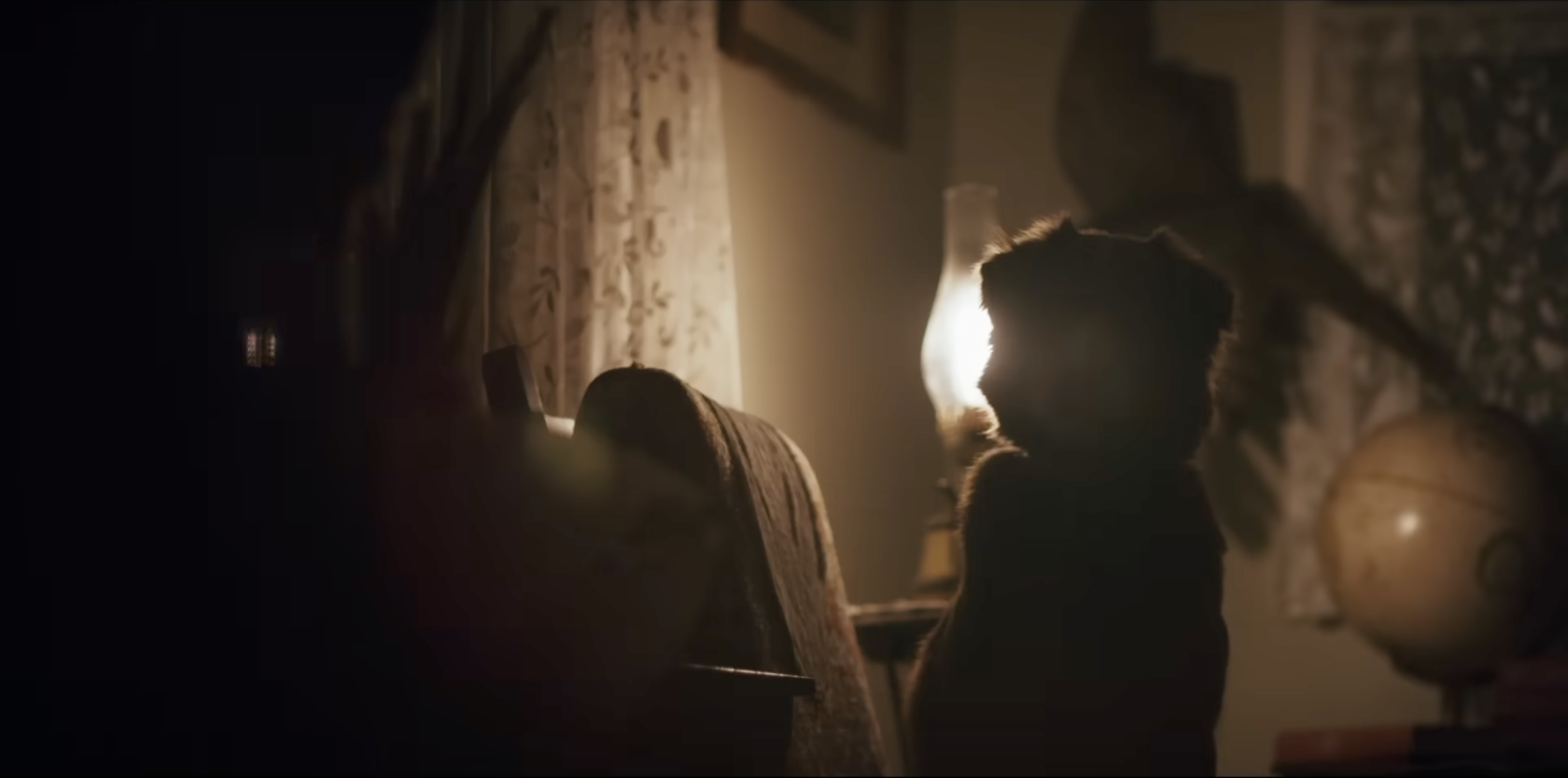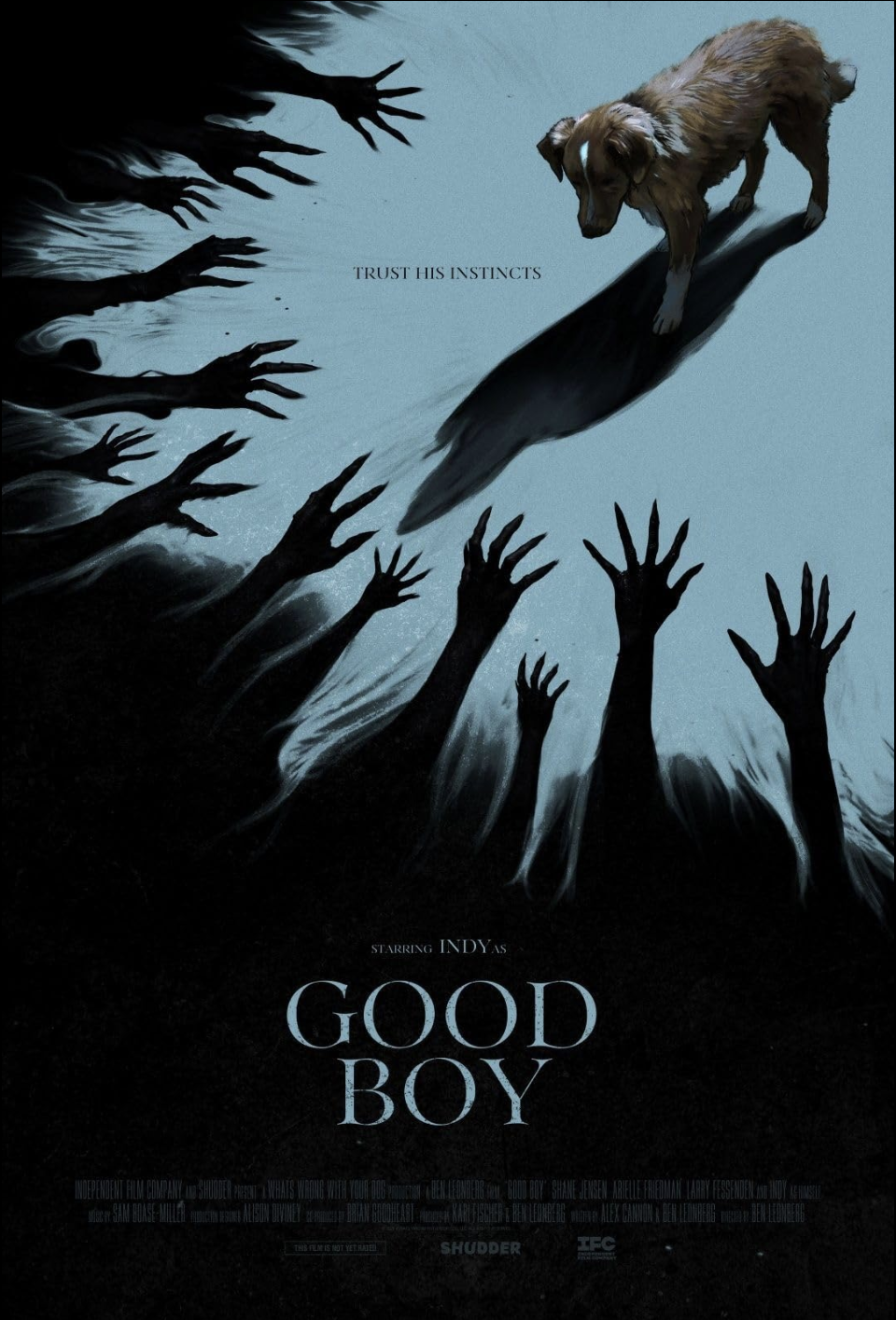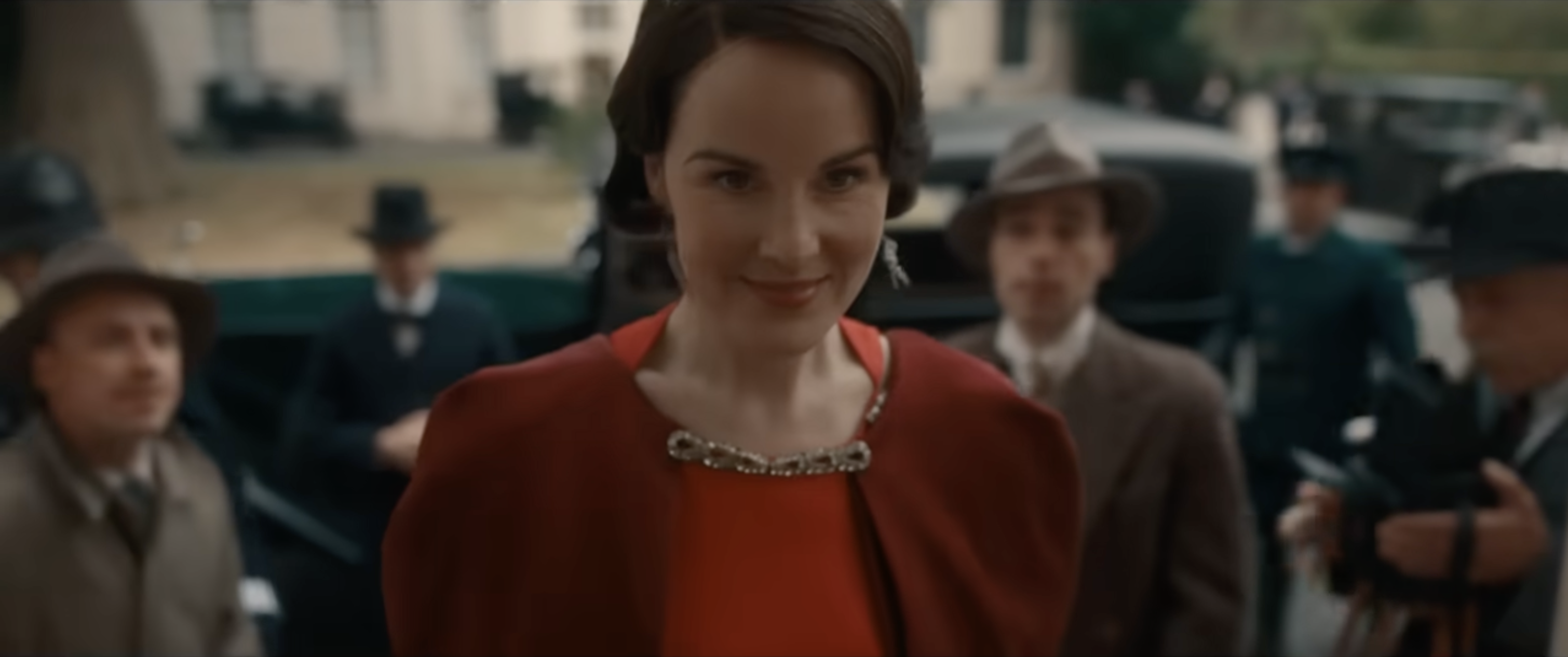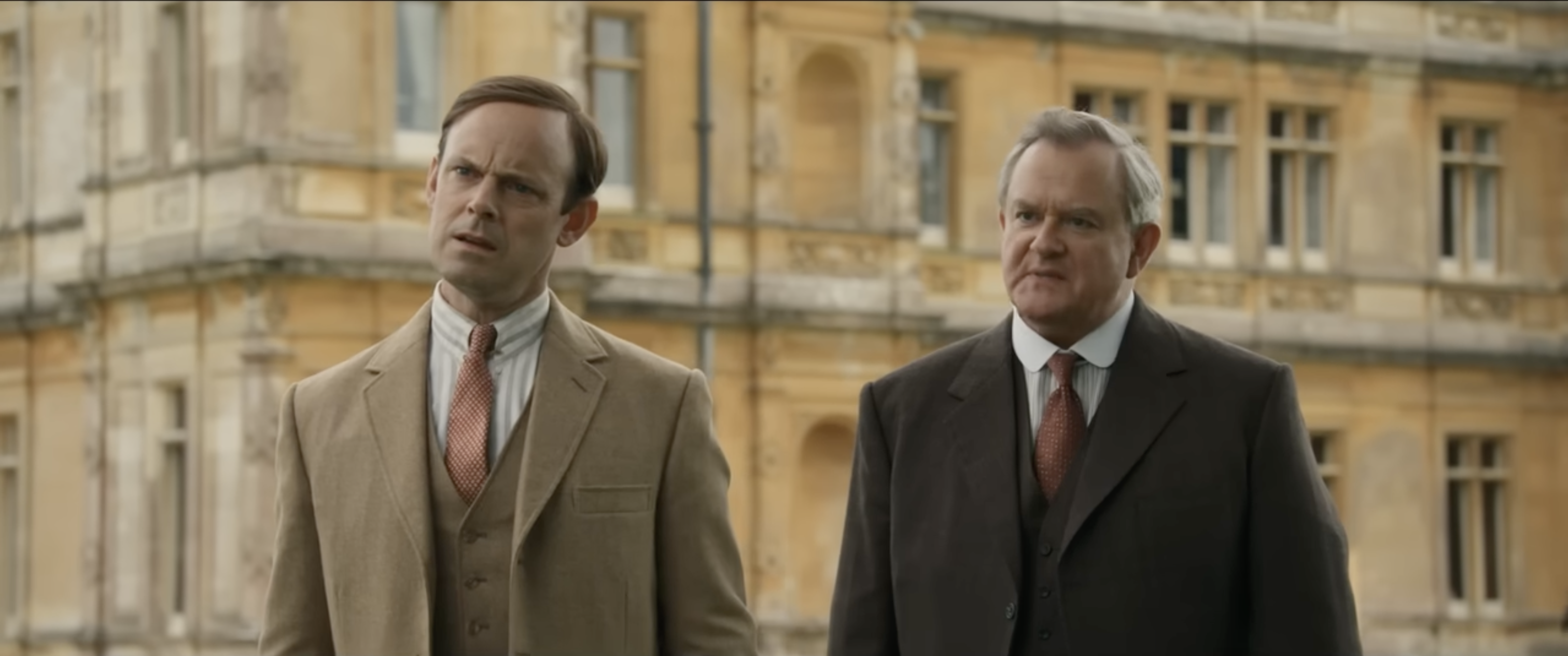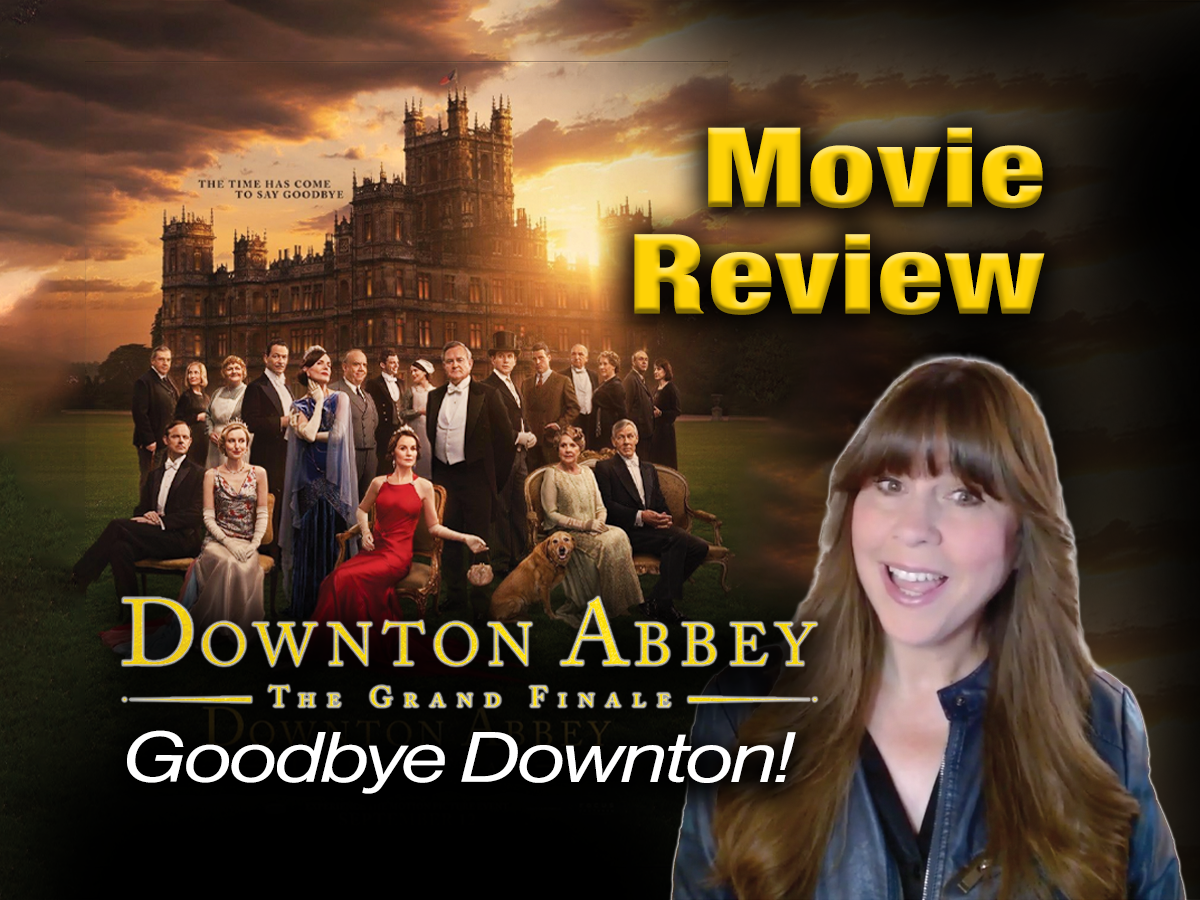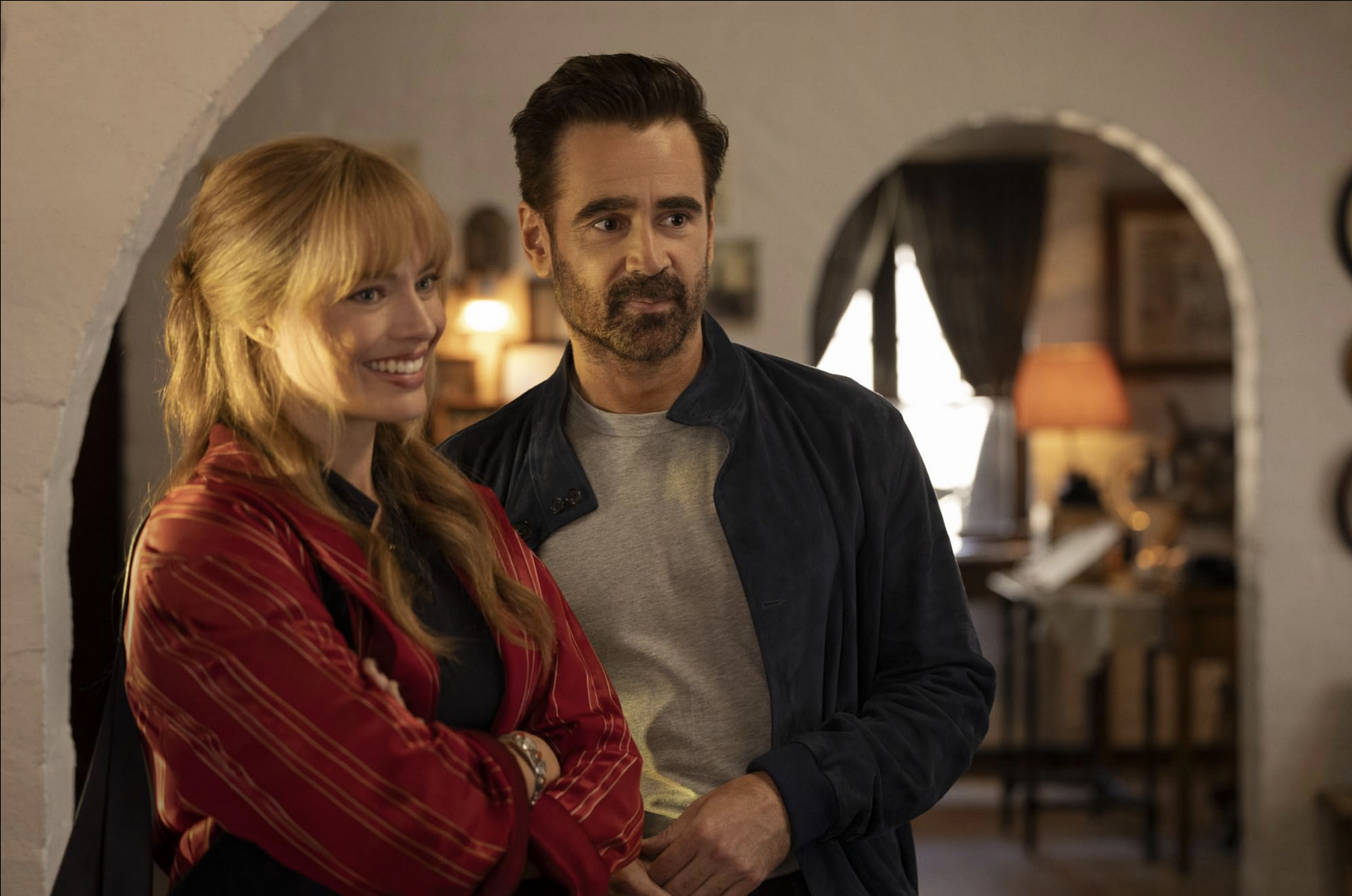
Are you a dog person? Are you a horror fan? Now imagine being caught in your dog’s horror story. That’s exactly what the new film Good Boy explores … and it’s unlike anything I’ve seen before. It stars a dog named Indy (yes, the dog is named Indy in the film, too), but this isn’t your typical horror movie. Picture a loyal dog, a possibly haunted house, and some deeply unsettling things that shouldn’t be happening. What would your dog do? Good Boy tells that story entirely through Indy’s experience.
You can read the review below or watch the video review on YouTube:
Indy and his human, Todd, move into a family home deep in the woods. Todd’s sister Vera makes an offhand joke that the house is haunted, and right away, that puts us on alert as viewers. As human viewers, we naturally start looking for the usual signs of paranormal activity like shadows, sounds, and things that move when they shouldn’t. However, we are also seeing everything through Indy’s senses, which are so much more sensitive than a human’s. His canine perception of smells, sounds, and motion clashes with our human expectations, keeping us guessing as he and Todd settle in. What begins as ordinary quickly turns strange, and before long, even the quiet moments start to feel uneasy. That’s the basic setup, and I don’t want to spoil anything beyond that.
First Impressions
Since so much of the film is filtered through what Indy senses, the lines between real life, dreams, and sensory perception start to blur. Sometimes we see what Indy is hearing or smelling brought to life on screen. Other times, we’re inside his dreams. Those worlds overlap in strange and disorienting ways, but it works. Plus, it puts us squarely inside the dog’s point of view.
It’s a gutsy move to make a film like this, and that’s the beauty of independent horror studios like Shudder. They have the freedom to experiment. In so many horror films, everything is spelled out for the viewer so that we know how to “feel” during the film, and we can see every scare, every twist, and every clue telegraphed from a mile away. Good Boy does the opposite. It leaves space for uncertainty, letting us question what’s real, what’s imagined by us as viewers, and what’s just normal dog stuff.
Now, it’s really hard to scare me. However, I really love dogs … maybe even more than people … so I wasn’t surprised that I was invested in Indy from the very first scene. There were moments when I felt genuine anxiety, not because of jump scares, though there are a few, but because I cared about Indy. You can tell that what he’s sensing isn’t normal, and that made me feel the extra tension for him. Even though the horror itself wasn’t scary, I was still pulled into Indy’s story.
Cast & Character Development
It feels a little strange to talk about the cast and characters in this film. Todd, played by Shane Jensen, is Indy’s human, but he’s the secondary character in the story. In many ways, he’s treated the same way a dog would usually be treated in a film where the human is the lead. We get just enough background about the family, the house, and the situation to understand the story’s arc, but Todd always stays in the background and often just out of focus.
That puts Indy front and center as the true protagonist. The film actually gives him a character arc that we can follow through nonverbal cues such as facial expressions, body language, tilts of the head, barks, and all those subtle behaviors dogs use to communicate. It’s fascinating to watch. Whoever trained and handled Indy deserves serious credit, because that level of performance couldn’t have been easy to train for in a canine actor. However, if you’ve ever lived with dogs, you’ll immediately recognize the emotions he’s expressing and the things he’s communicating. It’s just really well done.
Visuals, Sound & Technique
One of the most striking things about Good Boy is its visual and sensory design. The use of color, light and shadow as well as the added elements of reflections and weather create a very creepy feel to the film that is deliberate and meaningful, with each creative choice enhancing the storytelling. There are moments when the imagery reinforces the psychological and possibly supernatural elements of the film.
Good Boy is a great example of how important sound design is to storytelling and it’s something that is often overlooked by audiences. However, since we’re experiencing the world through a dog’s perspective, we naturally become more attuned to Indy senses from creaking floors to rustling wind or splashing rain. The film makes us hyper-aware of ambient sounds that we’d normally ignore, drawing us deeper into Indy’s heightened sensory world. When we hear a noise or see him catch a scent, that intersection of sound, motion, and instinct grounds us in his experience.
The cinematography adds another layer to this effect. The camera often stays close to Indy or captures the world from his point of view. The low angles, tight shots, and moments when something slips just out of sight help us see the world as he does. It’s a subtle and effective way to keep us inside his story.
The Challenge of Blurred Worlds
One of the few criticisms I have is that the three layers of the story (real life, sensory, and the dream world) sometimes get tangled on screen. That confusion feels intentional and can be an effective creative choice for enhancing the feeling of disorientation, but it happens several times, and in a few of those moments you’re not entirely sure whether what you’re seeing is a dream or reality. Again, this is fine, but when it’s done multiple times, it can create a narrative sense of confusion.
I think that ambiguity is part of what the film is trying to explore. Do dogs really know the difference between dreaming and waking life? Maybe for them, those boundaries don’t exist. Presenting them as separate worlds and then blurring the lines feels like a natural storytelling choice. I just wish a few of the transitions were a little clearer.
Ultimately, it comes down to personal preference. Some viewers will find the ambiguity intriguing, while others might see it as a bit too vague.
Recommendation
So, is Good Boy worth seeing in a theater? At just an hour and fifteen minutes, it’s short and to the point, which is a nice change in this era of overlong, overstuffed films. Whether it’s worth the price of a ticket while it’s in theaters really depends on what you want out of the experience.
If you love horror but you’re tired of formulaic storytelling and you’re open to something slower, more atmospheric, and experimental, Good Boy is genuinely different. You might not be “scared” in the traditional sense, but you’ll definitely feel like you’ve seen something different.
If you’re looking for jump scares, big monsters, or a neatly wrapped explanation, this probably isn’t your movie. If you don’t like dogs or worry about their safety in horror films, this one might not be for you. I’ll include a note under my pinned comment about whether Indy is okay at the end … just in case that’s something you need to know before watching.
So, Good Boy — have you seen it, or are you planning to check it out? If you do, I’m really curious to know if this format worked for you. Did it feel clever and new, or not quite your thing? I’d love to hear your thoughts on the film and on Indy. Let me know in the comments. Let’s talk.
If you enjoyed this review, please give it a like and subscribe for more. You can also visit my YouTube channel at @ErinUnderwood for more videos.
***
If you’d like to watch GOOD BOY on Amazon Prime, you can use my Amazon Associate links:
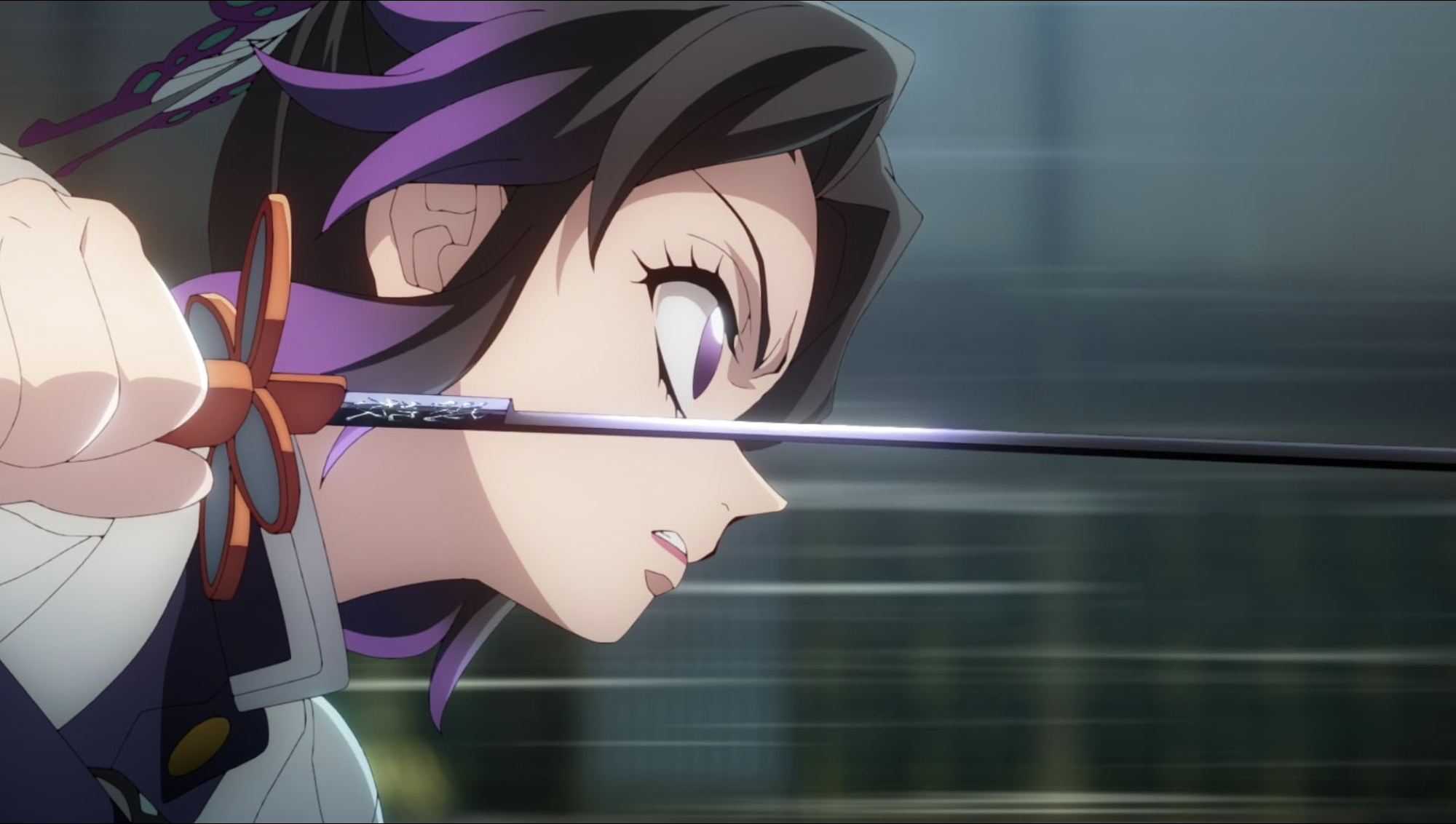
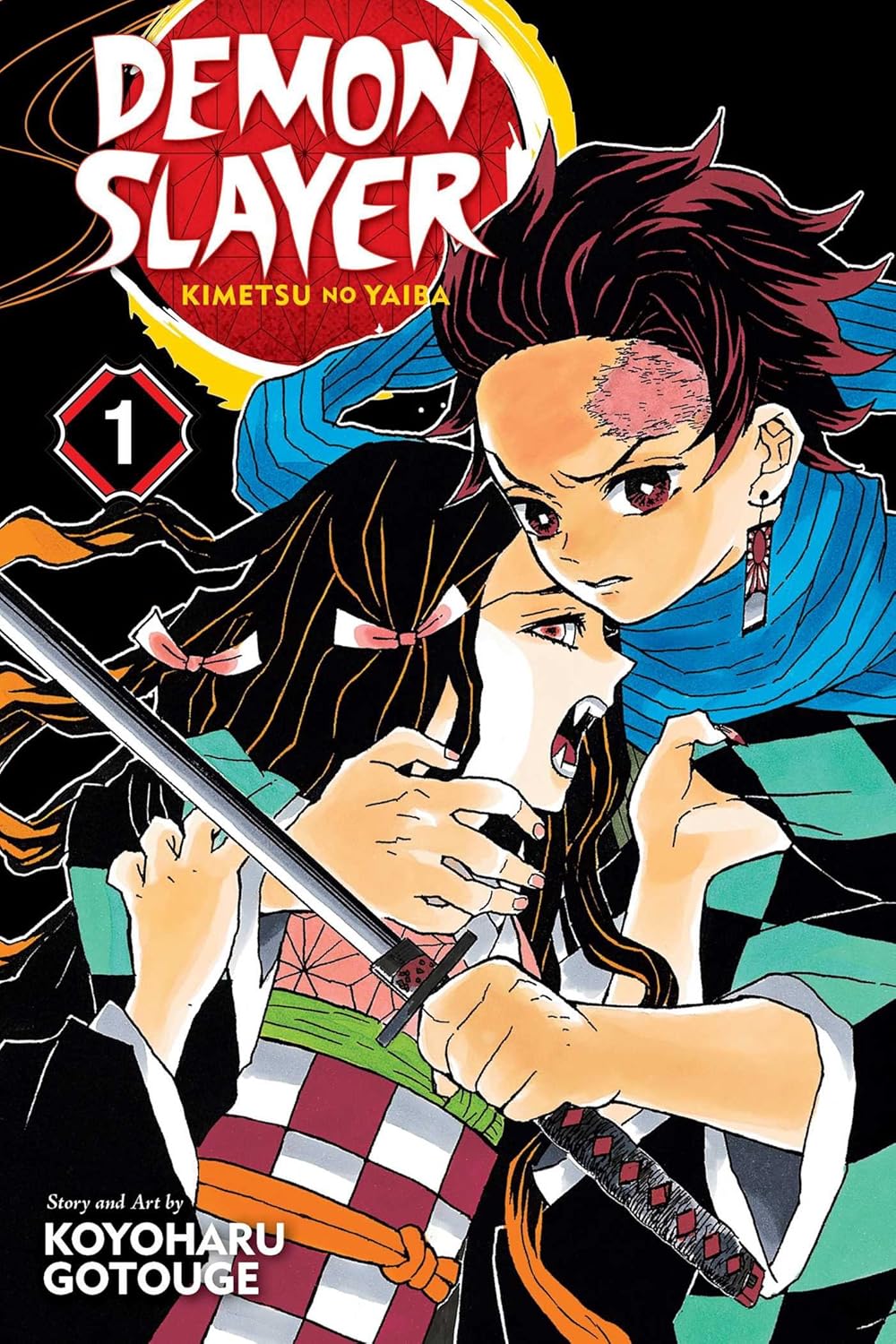
This was my very first experience with Demon Slayer, so you’re getting a complete newbie’s perspective on Infinity Castle. For context, the franchise started as a manga written by Koyoharu Gotouge. It then became an anime series in 2019, followed by some films. Now, it’s back in theaters with Demon Slayer: Kimetsu no Yaiba — Infinity Castle, the first film in a trilogy adapting the manga’s final story arc. So, it does seem like a tough entry point for a new viewer and that’s what got me curious about this film.
After watching Ne Zha 2 as my entry point into that story world, I wanted to see what Demon Slayer would be like for a new viewer coming in cold. So, the real question for me was: if I haven’t read the manga or watched the anime, can I still follow and enjoy this movie? Is this a potential entry point for new fans or is it really made for longtime fans? That is the perspective I am bringing here. I also want to hear from you, whether you are new to the series or you’ve been following it from the start. What am I getting right? What do I have to look forward to in the future films or catching up on the series itself? And what did you think of Infinity Castle?
All right, let’s get into it, and please forgive any errors! I’m doing my best as a newcomer. I promise.
You can read the review below or watch the video review on YouTube:
The Demon Slayer Corps are drawn into the Infinity Castle, the domain of the master demon Muzan Kibutsuji, for a final showdown against him and the Upper Rank demons. The Demon Slayers’ leader, Kagaya Ubuyashiki, is on the brink of death, and he decides to use himself as bait to lure Muzan, giving the slayers one night to infiltrate the castle, navigate its constantly shifting layout, defeat the powerful demons inside, and reach Muzan before time runs out.
Once inside, the Demon Slayer Corps split into smaller teams to cover more ground as they search for Muzan. While many slayers are present in the film, Infinity Castle focuses on three primary battles:
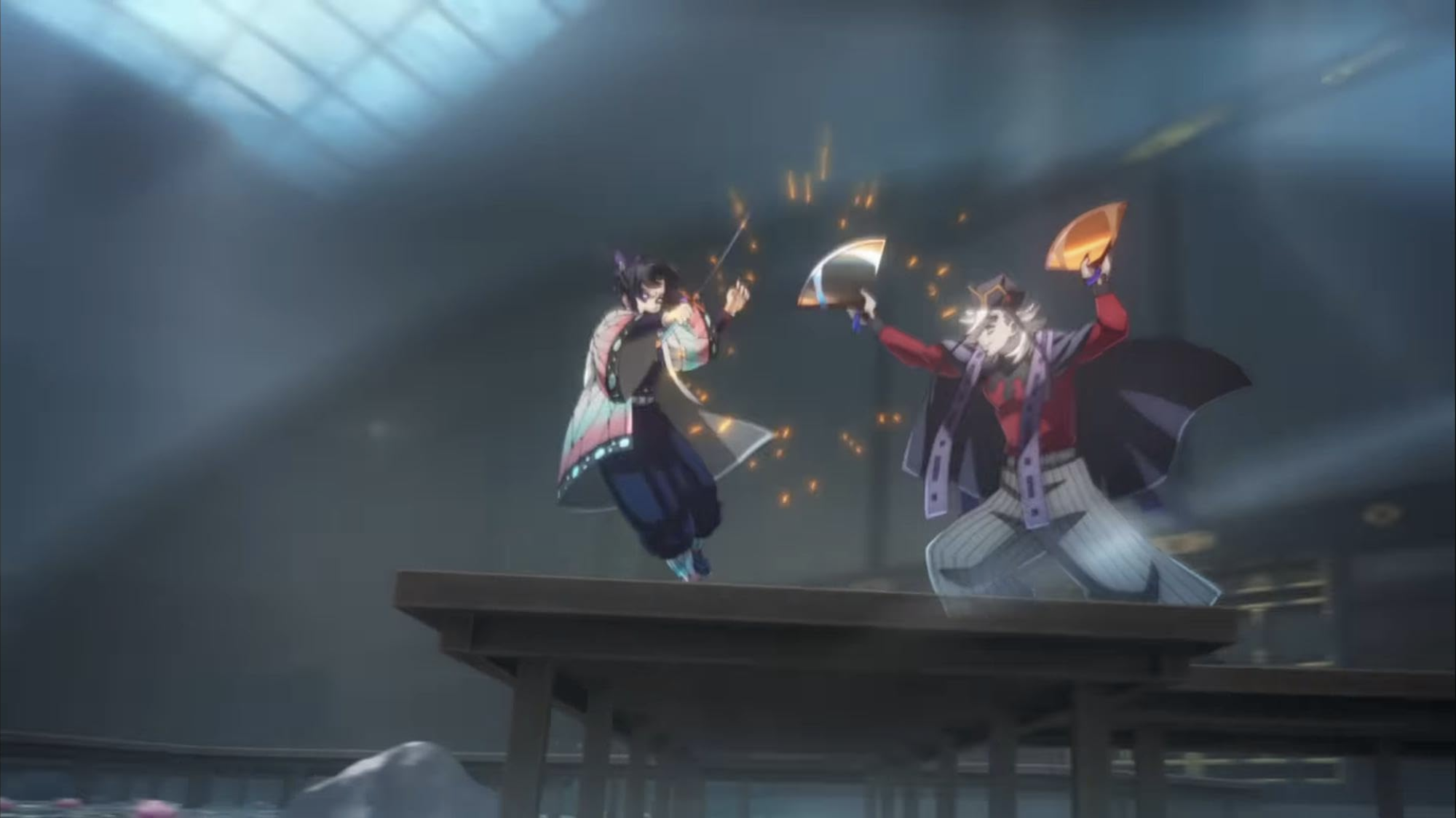
Shinobu Kocho who takes on Doma, in a fight fueled by memories of her sister Kanae. The battle with Doma doesn’t end there, and leaves you wondering what comes next.
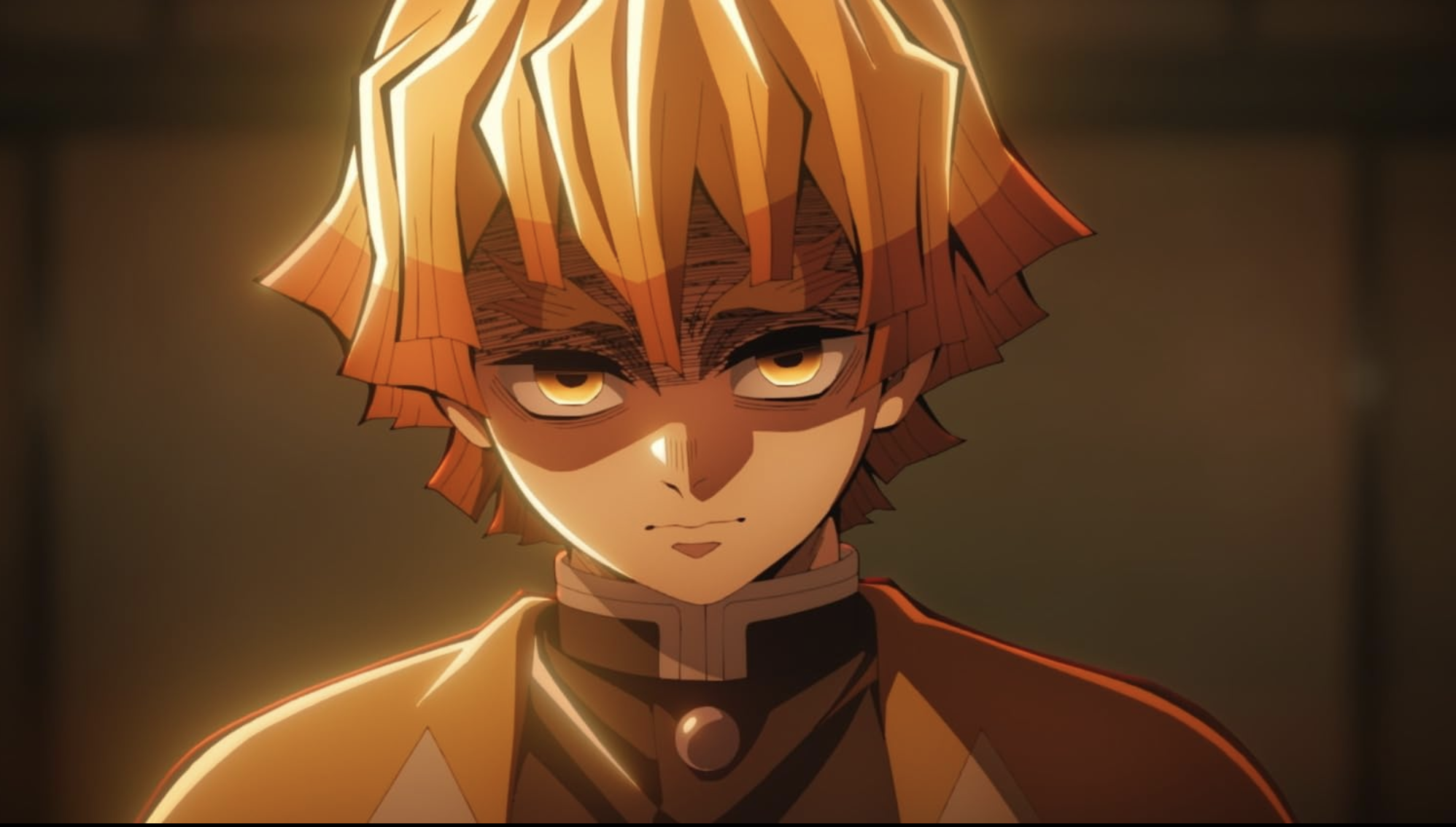
Zenitsu Agatsuma who faces his former brother-in-training, Kaigaku, who betrayed the Demon Slayers by becoming a demon and whose actions led to the death of their master, Jigoro Kuwajima.
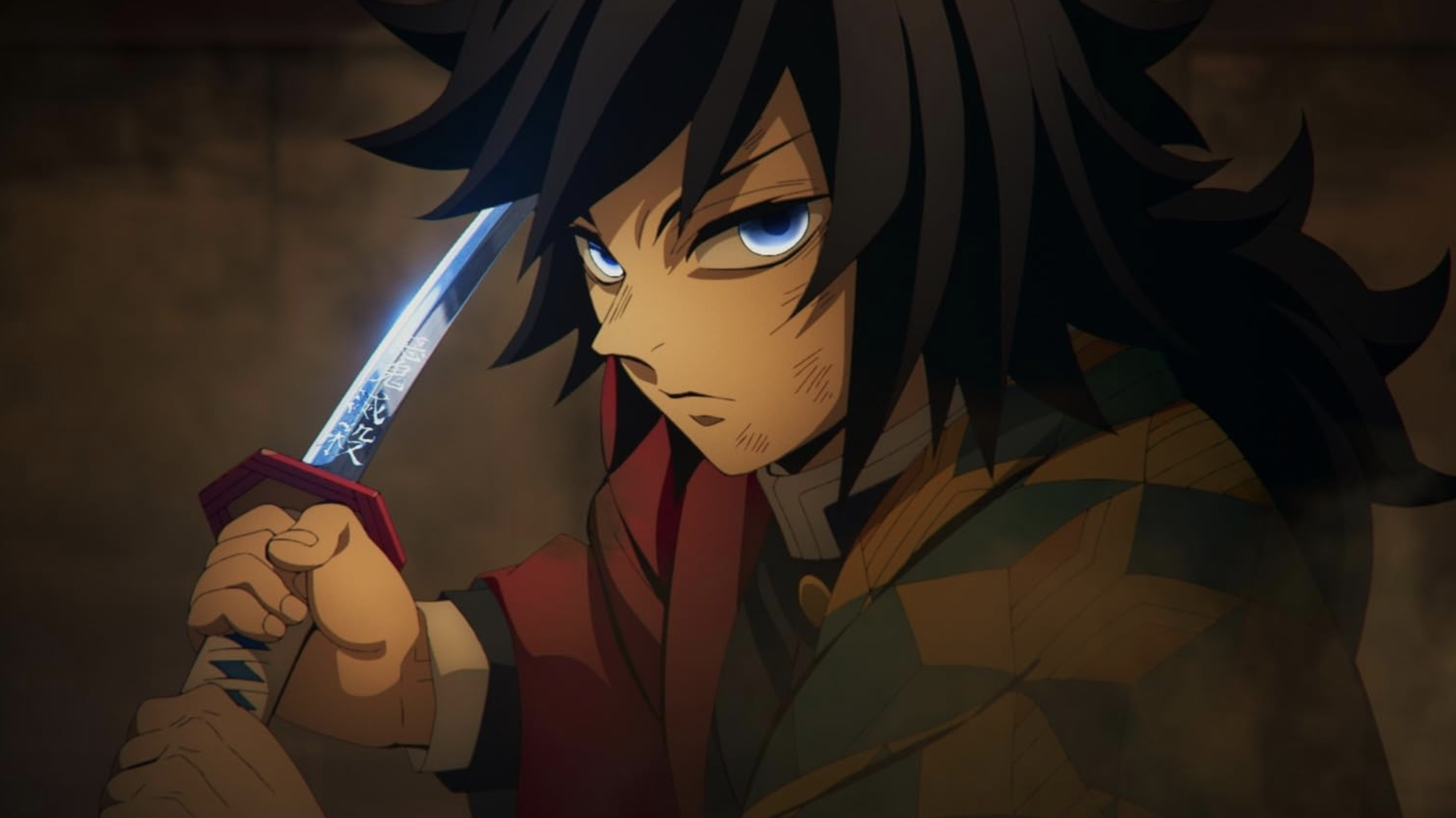
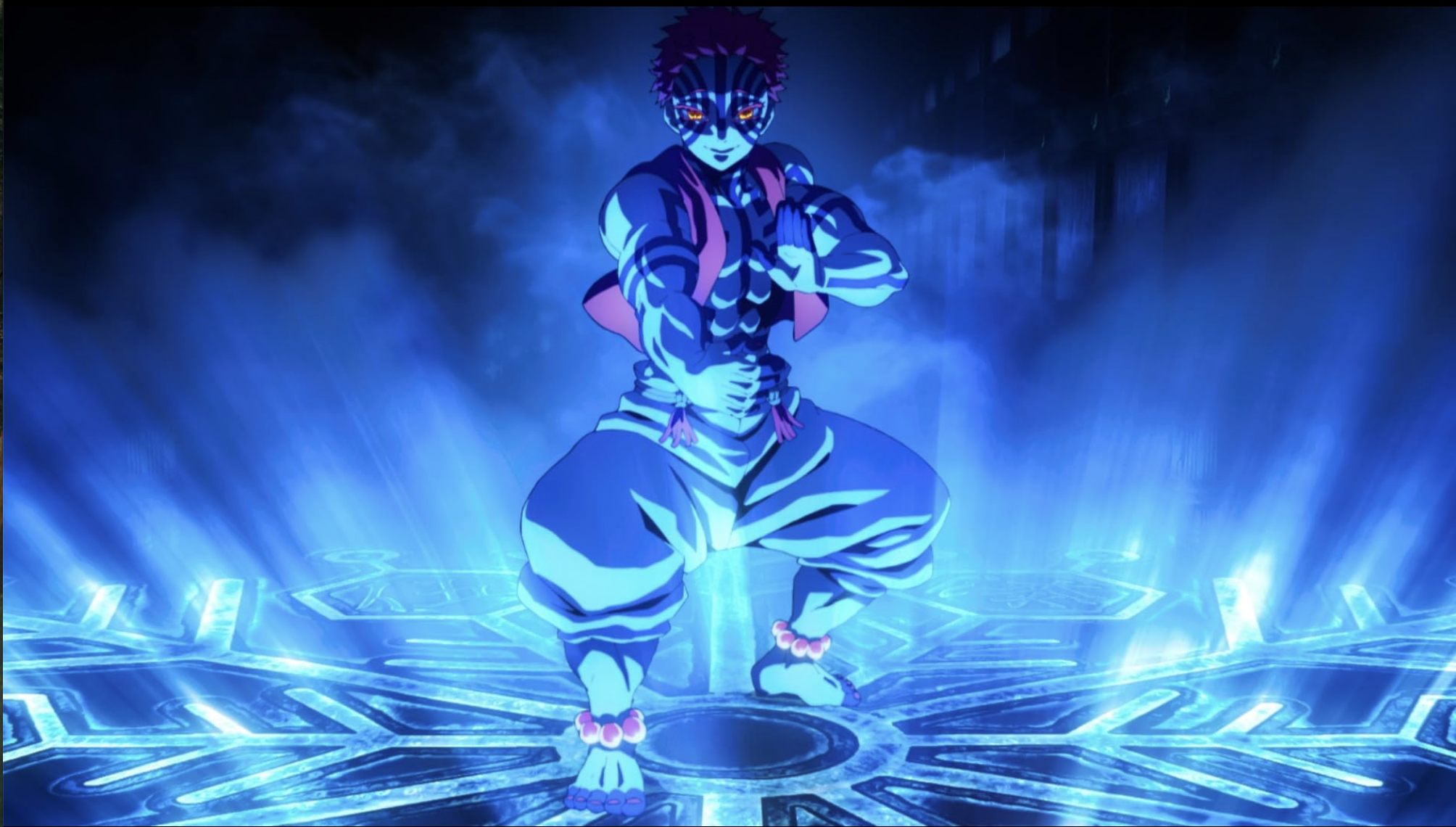
Tanjiro Kamado and Giyu Tomioka who join forces against Akaza, one of the most dangerous Upper Rank demons.
Muzan commands the Upper Rank demons, and while we see plenty of side battles with lower demons throughout the castle, the film focuses on the three major Upper Rank battles. Each new confrontation includes flashbacks that reveal the demons’ human pasts, their ties to the slayers, and the emotional losses on both sides. We also see the unique combat skills the slayers bring to battle that draw upon elemental techniques like water, fire, and insect styles.
We also see more of the Hashira, the elite warriors within the Demon Slayer Corps, and how their group functions in battle. Since this is the first film of the trilogy that is completing the series, it jumps in the middle of the action and doesn’t have a neatly wrapped ending, but the final battle in the film is the most emotional and serves as a strong jumping-off point for the next film.
First Impressions / Watching Demon Slayer for the First Time
Going into those battles, the structure of Infinity Castle feels a lot like a video game. The Hashira have to track down the lead demon inside this sprawling maze of buildings, battling through hordes of lower demons, and then facing off against upper-rank demons before they can finally closing in on Muzan. The shifting castle walls, the boss-level battles, and the sense of characters powering up as they fight all reinforce that feeling.
If you already know the manga or anime, you’ll have no trouble following who’s who and how their powers work. But if you’re brand-new like me, expect a little confusion at first. Still, if you have even a basic sense of gaming or fantasy storytelling with magic and demon lore, I think you’ll actually pick it up pretty quickly.
The Japanese Version (i.s. The Sub vs Dub Experience)
I decided to watch the film in IMAX because I wanted the best visual experience possible. That also meant I would be watching the Japanese language version with subtitles. It’s always a little more challenging, but there’s something special about foreign-made films when you can hear the native language as part of the experience. It adds a level of authenticity that I love.
That said, I always have trouble with subtitles, especially during fast action scenes where I want to watch what’s happening, and in rapid-fire dialogue that doesn’t leave much time to absorb the story visually. So much of this film is about the visuals, and the story is told as much through imagery as through dialog or subtitles, which is helpful since you can still understand the basic flow of what’s happening even if you miss some of the subtitles.
The Art, Animation, & Visuals
Visually, Infinity Castle is stunning. The film feels like a work of moving art, with textures, colors, and cultural imagery that make it seem as though the manga has come alive and leapt straight onto the screen. The film feels like everything Disney and Pixar are not, and I don’t mean that in a bad way. It’s just different. The artistic style is firmly rooted in the traditions of anime, blending flat, stylized artwork with dimension, shape, and form while still preserving its manga origins and feeling dynamic and alive on screen.
There’s a fluidity and fierceness to the artwork as it builds, flows, and explodes on screen. Then, when the action pauses, there are moments that pull us right back to the manga that inspired the story and its characters.
The story shifts quickly, picking up the pace, moving through new locations, introducing more Hashira and demons. It’s all done in a storytelling rhythm that pulls you deeper into the film without ever letting up on the action. The result is an immersive world that swallows you whole.
Action & Pacing
Even with the near non-stop action, the film runs two and a half hours, and it did feel like they could have trimmed 15–20 minutes without losing any context.
The battles are intense and relentless, often accompanied by the characters’ internal monologues that explain how they’re feeling and why they’re fighting the way they are, layered over their verbal exchanges in combat. Combined with the many flashbacks needed to provide context, this added bulk to the story and slowed the pacing at times. Still, those moments were really important for viewers like me who would have been lost without that emotional grounding woven into the battles with the upper-level demons.
Emotional Moments & Character Drama
Because of the backstory in those flashbacks, including family members lost, comrades betrayed, and demons who still remember their human pasts, there is a lot of emotion woven into each battle. Scenes with Shinobu and her feelings about her sister, Zenitsu reflecting on his master’s teachings, Tanjiro recalling his family, and Akaza confronting his own grief all build together to give the film the emotional weight it needed to carry the story, even if some of it was hard to follow or could have used a little more fleshing out. The film ends on an emotional beat that absolutely leaves you wanting more.
Cast and Character Development
Because I’m a newcomer to the story, I judged the characters based on what the film gives us, especially in flashbacks and in battle. A few stood out for me:
Tanjiro is all heart. His character is at his best in the moments when someone else’s life is in danger. His fight with Akaza is emotionally powerful because of what he remembers, what he learned from his father, and how he sees other demon slayers like Giyu.
Giyu, who is teamed up with Tanjiro, is a pinnacle of strength and experience. The way he unlocks his mark shows a master-level talent that is surprising. When he and Tanjiro fight together, you see their connection shift as they both grow in the battle, forced to reach new levels of their talent or die trying.
Shinobu carries the weight of her sister Kanae, and her fight with Doma is shaped by that grief. While she feels a little flatter than Tanjiro as a character, there is a deeper emotional pull because her battle is fueled by love and loss, which makes her dangerous in a way that Doma finds fascinating.
Zenitsu and Kaigaku share one of the most personal fights. Zenitsu’s journey, layered with competitiveness, betrayal, and guilt, gives him more depth than just being the anxious comedic relief. When he fights Kaigaku, he taps into something sadder and angrier that fuels his strength because this battle is personal in every way.
Upper Rank demons are given backstories that show they were once human. This makes it easier to understand what they became and what motivates them. Akaza’s story, in particular, is given room to breathe, which is important since his battle is the emotional anchor of the film. So, by the end you see both the demon and the human he once was, as well as the choices that made him who he is now.
Overall, some characters feel thinner, especially if their flashbacks are brief or their role in a battle is less central. Even so, the film does enough to show motivations and stakes so that we understand why the battles matter.
Recommendation / Is Demon Slayer Infinity Castle Worth Watching?
So, Demon Slayer: Kimetsu no Yaiba — Infinity Castle. Is it ticket worthy, even for someone who is unfamiliar with the series?
If you are a fan of manga, if you enjoy anime films, if you’re already familiar with Demon Slayer, I think you are going to love this movie. So, yes. I think it’s ticket worthy if you are a fan. Everything about it seems built for you. The visuals, the stakes, the battles, the emotional arcs — they all land more strongly if you know at least some of the world.
If you’re new, like me, there is a learning curve. Whether you choose the subtitled or dubbed version, you may still struggle at first because there are a lot of names, a lot of new terminology, and a lot to learn about how the Hashira’s powers work. It can be confusing. I do think it helps to watch at least a few episodes of the series first, but it isn’t essential. From a visual and storytelling perspective, there’s still so much to enjoy. For that reason, I think Demon Slayer: Infinity Castle is worth the price of admission, even for a first-time viewer but you will likely struggle a bit. Just be ready for the length, the violence, and the fast-moving action.
Final Thoughts
So, Demon Slayer fans, what did you think of Infinity Castle? Have you seen it yet, or are you planning to go soon? And for those of you who have never watched the series, is this something you’re willing to give a try? If you did see it, I’d love to hear what you thought.
And how did I do as a newbie? Did I miss anything? I feel like I may have gotten a few details wrong, and I definitely need to check out the full series for myself.
If you enjoyed this review, please give it a like, subscribe for more, and share with a friend.
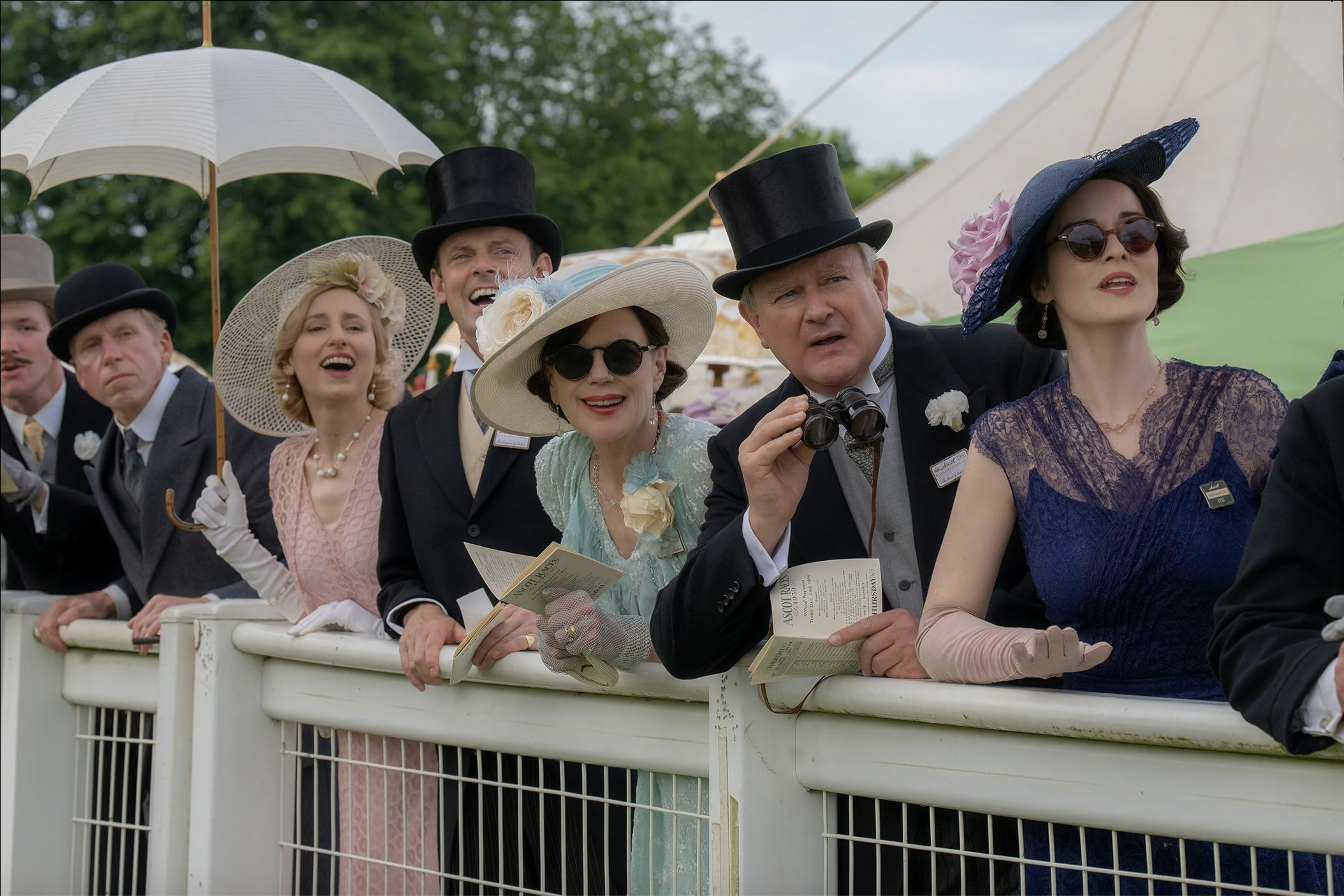
Downton Abbey: The Grand Finale isn’t just a farewell to fans as the Crawley family steps into the next phase of their lives. It’s also the close of an era told through small stories designed to have a big impact. It’s got grand designs for sure, but does the film deliver the ending fans have been waiting for all these years?
You can read the review below or watch the video review on YouTube:
Downton Abbey: The Grand Finale is set in 1930, as the Crawleys face a world that is reeling from both the impacts of the Great Depression as well as the shifting social expectations that are resetting social norms. During the summer season in London, Lady Mary’s divorce is splashed across the newspapers as public gossip It sparks scandal at a time when such things were unthinkable for the upper classes. She returns home to Downton where she navigates her damaged reputation and the cold judgment of her neighbors who’ve known her all her life.
Cora’s brother Harold arrives from America, bringing more financial troubles, along with his advisor Gus Sambrook whose new connection to Mary complicates matters. Meanwhile, Robert wrestles with stepping back from his role as head of the estate and passing more responsibility to Mary, while the servants face their own transitions as retirements loom.
Around them, Daisy Mason, Tom Branson, and Isobel Crawley all push against tradition within society, highlighting how social classes themselves are changing. At its heart, this film is about adaptation and change as some characters move forward while others have to let go and step back, and what each person is willing to sacrifice as part of their transition.
First Impressions & Overall Feel What stands out most is how beautifully crafted the film is as a period piece. The pacing at times feels a little slow, despite the story juggling several big and small events, interactions, and complications. You can sense the weight of nearly every main character and their histories being honored, as Downton Abbey brings back everyone to say goodbye. Some moments feel a bit indulgent and others are too brief or overly emotional, but most of the time these directorial choices work. It allows the goodbyes room to breathe while also giving us time to sit with these characters before they go.
Characters & Performances One of the strongest parts of The Grand Finale is its character development. After years of storytelling, the film shows how each character is stepping into the future and how those changes affect them. Lady Edith has completed her transformation from the timid younger sister into a confident woman who is not to be underestimated, especially where her family is concerned. She is sure of herself, aware of her strength, and knows how to use her place in society. She has earned that authority, and you can see it clearly in a scene that I can’t share because it would be a spoiler.
At the center of the story is Lady Mary. Her transformation is the heart of the film, and her arc feels unusually mature and elegant for modern storytelling. She is aging, yes, but she’s also rising in power as the heir to Downton. Her personal life, however, pits her against the very social structure that has defined and supported her. The way the film handles her divorce thrusts her into public disgrace at a time when that kind of scandal was devastating for a woman of her standing. This gives her a whole new set of challenges that test her beliefs and her courage, revealing the growing gap between the young and the old. Rather than letting the scandal define her, Mary learns to live under constant judgment without losing herself.
What makes Mary’s arc work so well is that it doesn’t ignore the weight of her past. She carries the echoes of earlier losses and triumphs, yet here she finds the strength to move forward. For all the romance and scandal, her story is ultimately about accepting herself in a changing world. By doing that, she shows us how a woman seizes her own power to reshape her identity, and in doing so, shows how individual choices ripple into society itself. The Grand Finale succeeds because it gives Mary the room to complete her evolution into a wise and emotionally scarred woman who has learned how to lean on and protect those she trusts.
The Old Guard vs. The New While Mary’s arc anchors the film, it also reflects the broader theme of generational change, as the old guard yields to a younger generation stepping into new roles. The Grand Finale highlights this shift through a series of character pairs, including Mary inheriting leadership from Robert, Parker taking over as butler from Carson, and Mrs. Patmore preparing to retire and hand her kitchen to Daisy.
We see the tension of letting go most clearly in Robert and Carson. For both men, their identity has long been tied to their roles, and stepping aside feels like surrendering part of themselves. Carson in particular cannot resist returning to Downton, checking in as though leaving would erase his purpose. Mrs. Patmore’s story takes a gentler path. She embraces her marriage and future away from the estate, showing a readiness that contrasts with the men’s reluctance.
Together, these transitions mirror the broader societal upheaval of the 1930s. The Depression, the fading of old traditions, and the rise of industrial modernity all unsettled the balance of class and power. The film captures that uncertainty through its characters’ personal farewells. In the quiet moments of Robert, Carson, and Mrs. Patmore stepping back, you can feel the old world slipping away and a new one struggling to take shape.
Art, Cinematography, & Music The film doesn’t rely on story and dialogue alone to show a world in transition. The art and cinematography are visually striking, and the music feels rooted in the early 1900s, while carrying the brighter energy of the decades to come. The camera captures sweeping countryside views, the grand halls of Downton, and the intimate glow of candlelit dinners. We also get views of electric streetcars in London and standard modern conveniences like movie houses and typewriters, creating a contrast that shows how the old and new are colliding.
From the fabrics of the dresses to the more modern designs of the jewelry, every detail feels deliberate. Even the portrait of Violet Crawley hanging on the wall reinforces the sense of legacy. It’s clear the crew was careful to ensure that every shot, costume, and musical cue supported the themes of farewell and transition.
The music mostly complements the period and deepens the story’s emotional weight, though at times it drifts into being a little too cutesy for the drama, giving a “made for TV” feel to a few scenes. These moments usually appear in exchanges between Mary and Edith or Mary and Cora, where their knowing smiles tip toward campiness. Still, those instances are brief and not enough to pull you out of the story.
History & Social Change in 1930s England This is a story that steps firmly into the age of modernity, when social class, wealth, education, and gender roles were all shifting. Class stratification is evolving from being just background detail and that change is shaping every interaction. We see it in how Americans are regarded by the English, how divorce alters someone’s standing, how estates struggle for funds, how neighbors gossip, and how society judges.
The setting captures these changes beautifully. 1930s England, London society, country houses, the estate, and the servants’ halls are all rendered in tangible and relatable details that today’s audience can recognize, even across time from the Crawleys’ era to our own. The fashions, jewels, and fabrics feel deliberate, showing the decline of old traditions in small gestures while new ideas begin to take root: debates about leadership, women’s roles, and what power looks like when it isn’t tied to birth or money.
The film ends on a hopeful note, with characters stepping into new roles and futures full of possibility. Still, we can’t help but see their hope through the lens of history. Less than a decade after the events of Downton Abbey: The Grand Finale, World War II will begin. London will be bombed during the Blitz by the Luftwaffe, and England will come under relentless attack. The Crawleys’ lives will change in ways they cannot yet imagine. They have no idea what is coming, but we do. That knowledge gives the farewell its poignancy, reminding us that while their story may be complete on screen, history will not leave them untouched.
Recommendation — Should You Watch It? Is Downton Abbey: The Grand Finale ticket worthy? If you’ve followed this story, if you’re a fan who has invested in these characters over the years, or if you enjoy period pieces that feel authentic, then yes, it’s worth the price of admission. It delivers the sense of completion you’d hope for without tying everything up in a neat bow. The storylines come together, each character is given a moment, and the entire ensemble is honored in a way that feels earned.
If you’re not into period dramas or never connected with Downton Abbey, this film isn’t likely to change your mind. Not every film is for everyone. If you’ve never connected with stories about the English aristocracy, the middle class, or the servant class, this isn’t likely to win you over either.
If you’ve ever felt even a little invested in the Crawleys and the people around them, you’ll likely find something here to enjoy. It’s a film that works for families, friends, date nights, or solo viewing. In my theater, the audience was full of people of every age, and it struck me how rare it is these days to see such a wide mix all gathered for the same movie. That’s not something you’d expect at Superman or any superhero release. What it shows is that we need diverse films not just racially diverse, but diverse in the kinds of stories that bring different people together. Not everyone will love Downton Abbey, but for many in that theater, it was their first time back to the movies in years. I know, because I heard more than one person say so as they walked out. And that says something important about the power of movies.
Final Thoughts & Takeaway What we need are films that speak to us, stories that help us understand where we’ve come from, what our society has been, and what we may be stepping into.
As I left the theater, the lobby was full of people of every age, lining up for all kinds of films. Some were there for Downton Abbey, others for The Conjuring, The Long Walk, or Demon Hunter. Everyone was laughing, smiling, and enjoying the experience of being at the movies together. That’s what I’ve missed. Stories like these bring us together and remind us why it all matters, and why we matter to each other.
So, The Grand Finale. What did you think of it? Are you a Downton Abbey fan? Will you see it in theaters or wait for streaming?
If you enjoyed this review, please give it a like, subscribe for more, and share with a friend.
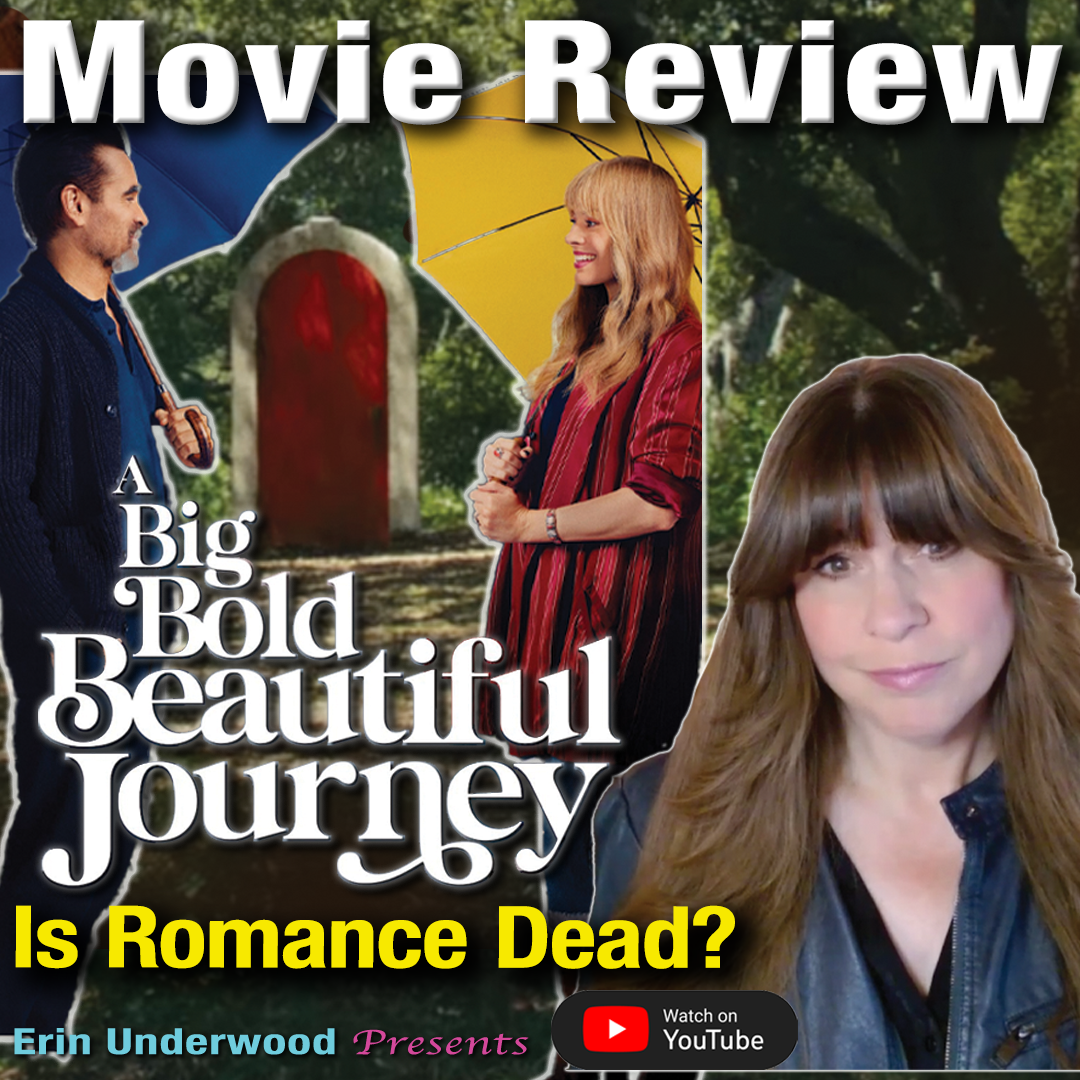
The film A Big Bold Beautiful Journey, starring Colin Farrell and Margot Robbie, had every opportunity to succeed at being the romantic film of the year. So, what went wrong?
A Big Bold Beautiful Journey has all the right ingredients. Two talented actors who know how to do their jobs, a straightforward premise with room for emotional depth, and the promise of beautiful, cinematic film making. On paper, that’s a strong recipe for a great romance. However, the final product just doesn’t live up to its potential, and that’s where things get interesting, especially if you love pulling stories apart to look at why they work or fail. So, let’s dig into A Big Bold Beautiful Journey to figure out where this film took a wrong turn.
You can read the review below or watch the video review on YouTube:
The setup is simple. David and Sarah are two strangers heading to a mutual friend’s wedding. They meet briefly at the event, but nothing comes of it. On their way home they each tell their GPS that they want a “big bold beautiful journey,” which results in them both ending up at the same rest stop, and they end up driving back to the city together.
As they drive, they encounter a series of mysterious doors along the way. Each one is unique and transports them into either David’s or Sarah’s past, giving them an up close and personal look at each other’s childhood memories, painful high school experiences, and defining moments of family trauma. Through these shared experiences, they learn about each other’s lives. What starts as a road trip becomes a therapy-like exploration of their histories as they work through issues that have kept them both single for years. The film frames this as a “will they, won’t they” romance, though by the end, the relationship feels more like a deep friendship than anything else.
Colin Farrell & Margo Robbie – What actors can and can’t do
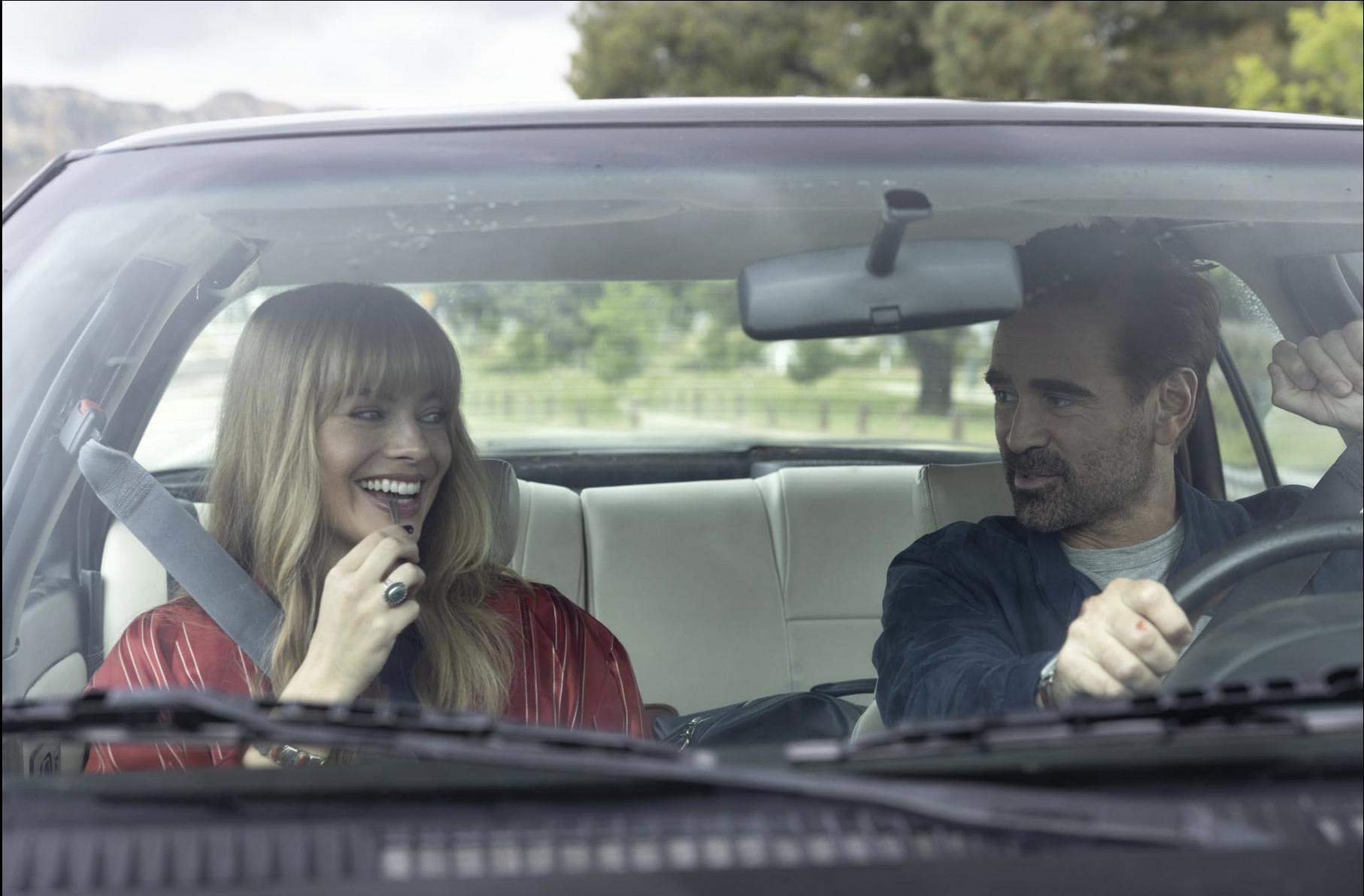
Colin Farrell as David and Margot Robbie as Sarah do everything they can with the material they are given. They’re funny, bright, and charming. Their emotional scenes show their skill as actors, and these two are at the top of their game.
The problem is the writing. There’s no real tension between David and Sarah. They’re honest, forthcoming, and endlessly supportive of each other from the start. That may sound nice, but it doesn’t feel like real life, especially for two people with so many emotional rough edges. Relationships are messy and they are hard. They come with misunderstandings, awkward moments, and friction. You have to earn the emotional connection that worms its way into your heart and brain. This film skips the struggle, jumping straight to mutual understanding, which immediately reads as friendship, not romance.
The result feels like watching two people go through therapy sessions rather than falling in love, and it just doesn’t resonate as romance. Farrell and Robbie make this a watchable film, but it misses that deeper connection that you expect with a romantic comedy/drama. And why does every romance lately have to be a comedy/drama? Pick a lane people!
Cinematography – Why it works
One of the strongest aspects of this film is its visual artistry. Kogonada’s direction is cinematic, with sweeping landscapes, close-ups that linger on faces, carefully composed colors, and lighting choices that elevate the emotional beats. The production design, costume work, and hair styling all fit beautifully into the overall tone.
This is not a cheaply shot streaming romance that looks made for Netflix or Prime. It looks and feels like something made for the big screen. The artistry and vision is there. Unfortunately, even the most stunning visuals can’t compensate for a script that lacks tension and surprise.
The Problematic Story Structure
A simple story can be a gift in a film like this. It allows space to deepen characters and conflict without diverging into a dozen subplots. Here, the simplicity becomes the problem. The plot is predictable to the point of being flat and the only surprise is that there are no surprises.
It plays out like a checklist: their cars break down, they each rent a car, they meet at a wedding, they end up driving home together, they stop at doors, they revisit memories, they share insights, they don’t get together, and then they do get together … and then they walk through one final door. There’s no fighting, no twists, no personality miss match (which should have been a given because of the one somewhat “twisty” reveal at the end). Watching it feels like hearing two people recount their day. We went to the store, went to lunch, went to the gas station, had dinner, and then went to bed. It’s not dramatic, it’s not romantic, and it’s not memorable. It’s just safe and bland.
As the film progresses, it started to feel like the the idea for the movie was inspired by a road trip with friends who passed the time by sharing a bunch of stories that felt like walking through doors into each others’ pasts. Voila! The idea of a romantic film about magical doors was born! I have no idea if this is actually how the writer Seth Reiss came up with the idea for the film, but this is exactly what it feels like. While it’s a clever idea, there is far too much focus on the doors and not enough on the creation of drama and friction between the characters. As a result, the film missed opportunity after opportunity to turn up the romantic heat for David and Sarah.
The Fantastical Tropes
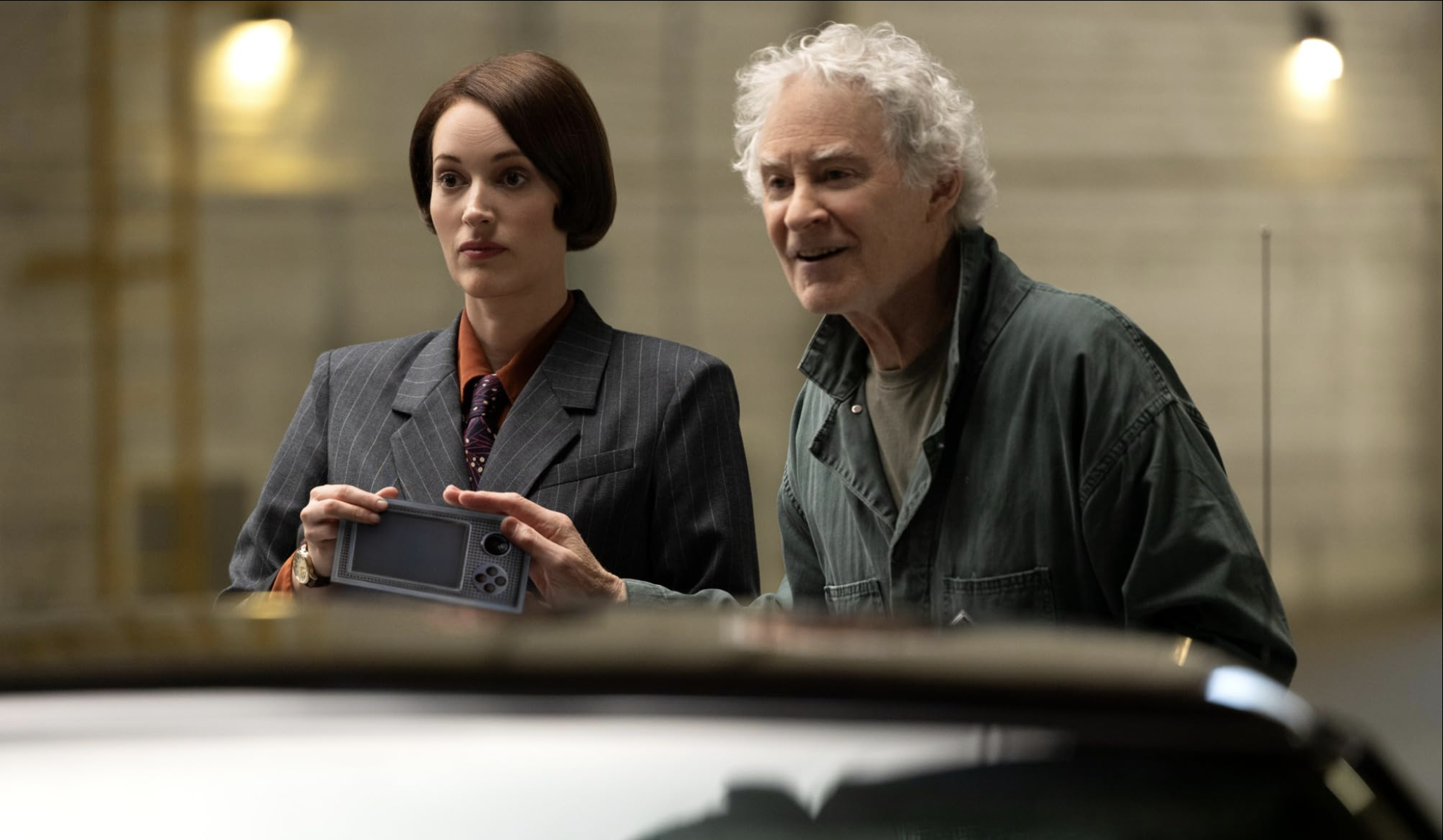
The most unique element in the film is the fantastical GPS and the car rental agency, which plays out like the evolution of modern-day Cupid … if the Greek god of love became a car rental agency. Again, it feels like and idea that could have worked, but didn’t. Phoebe Waller-Bridge and Kevin Kline bring some wit and charm to their small roles. However, the concept that drives the story, pun intended, feels forced and neither Waller-Bridge or Kline really look comfortable in their roles.
Then there are the agency’s doors, which are the magical center of the film. They don’t actually take Sarah and David into the past. Instead, it all happens in their heads as a shared mental experience. It’s a clever idea on paper, but the execution makes it feel contrived at best, without stakes for either of them. The setup is too neatly arranged by this match-making supernatural agency that has created a formulaic set of events that never really cost either character anything to experience and have no real consequence for success or failure.
The story could have been so much better if only it had pushed David’s and Sarah’s emotional connection future. Or maybe their experiences could have been more than memories. Maybe they could have actually altered the past, or maybe the whole trip was only ever in their minds and they never left that roadside rest stop. Instead, the rules are too clear and too safe, making the result predictable rather than magical, and eliminating any real chance for a dynamic romantic arc to emerge.
Missed Opportunities that the Romance Genre Needs
I am sure that I am not the only one that has been on a road trip from hell that turned into a fantastic bonding experience. When you are stuck in a car with someone you don’t really know, you expect moments of conflict with arguments over music, snacks, or bad jokes. Those small things are what creates opportunity for romantic chemistry and personal connections. None of that happens here. They never fight, never misunderstand each other, never even rub each other the wrong way. Without that friction, there’s nothing to balance the warmth, so the romance never feels earned.
Imagine if David and Sarah had clashed over music choices before discovering a guilty pleasure song they both secretly loved. Yeah, we’ve seen that a million times, but something like that would have made this film better.
What about snacks? Snacks are practically their own character on any road trip. Have one of them eat the last cookie, or argue about whether beef jerky is acceptable car food because it stinks up the car. Maybe someone spills soda in the cup holder and then they keep getting sticky crap all over their hands. Those details sound silly, but they create tension, humor, and chemistry.
Or maybe David cracks a bad joke that pisses Sarah off, which would give him the chance to realize he doesn’t want to make her angry because he likes her. That’s human, that’s messy, and that’s where relationships start to feel real and where you start to realize where your emotional edges connect or clash with someone else.
Romance thrives on that push and pull that creates drama laced laughter, annoyance, and vulnerability. Without it, what you get is companionship, not love, which actually fits with the closing thematic lesson learned by Sarah that she should just settle for contentment, which leads her back to David. I’m sorry, but that’s not romantic. A Big Bold Beautiful Journey treats romance as steady predictability rather than something to be cherished and earned, and that’s its biggest flaw.
Recommendation – Should you watch it?
So, is Big Bold Beautiful Journey ticket-worthy? For most audiences, I don’t think so. Farrell and Robbie give strong performances, but the writing never lets David and Sarah’s relationship grow into something authentically romantic. That failure undercuts the entire premise of the film.
Despite gorgeous cinematography, thoughtful production design, and a premise that seems ripe for conflict, the story remains predictable, emotionally shallow, and ultimately unsatisfying. What should feel like two people falling madly in love instead plays out like watching friends share therapy sessions.
That said, I do think there are people who will enjoy this film. It is safe and predictable. However, if you’re a die-hard fan of Colin Farrell or Margot Robbie, or if you love romantic stories no matter how flat, you may find enough here to make the theater experience worthwhile.
I don’t really drink much, but I had the distinct impression that if I did, this film would have been better with some red wine and ice cream, while scrolling through my social media and posting photos of my dachshund Mabel.
Final Thoughts
So, A Big Bold Beautiful Journey wasn’t worth the price of admission for me. I’d still love to hear from you. Did I miss something? Am I wrong? And what do you think about reviewers who review films they don’t really enjoy? Let me know in the comments below.
If you enjoyed this review, please give it a like, subscribe for more, and share with a friend.
The new film Black Bag stars Cate Blanchett and Michael Fassbender. This spy drama has more twists than a pretzel, but does it deliver on the espionage thrills we’ve come to expect or does it fizzle under the weight of its own seriousness?
You can read the review below or watch the video review on YouTube:
Black Bag follows George Woodhouse and Kathryn St. Jean, a married couple working as British intelligence agents inside MI6, whose carefully balanced relationship of secrets and loyalty begins to unravel when George receives a list of five potential traitors tied to the theft of Severus (a classified system capable of shutting down nuclear reactors and causing mass casualties) and one of those names is Kathryn. What unfolds is less of a race-against-the-clock thriller and more a tense, strategic game of chess built on paranoia, power, and the fragility of trust.
As George hosts a dinner party to quietly interrogate each suspect, emotional pressure builds between husband and wife, blurring the line between national security and personal betrayal, leading to a seductive, suspenseful series of twists that keep you guessing even as the truth comes into focus. From there this story takes off in a sexy, strategic set of events that keep you guessing even as you become more certain about who did what … and why!
First Impressions Black Bag is a sleek, sexy, slow-burn game of cat-and-mouse that trades explosive action for razor-sharp dialogue and high-stakes strategy, which fuels the deeply personal tension that focuses on the emotional complexity of George and Kathryn’s relationship. It’s more of a character portrait than a traditional spy thriller given the lack of action scenes that you might expect in an espionage thriller.
Instead, the story explores whether love and suspicion can coexist within a relationship, and the film draws its power from the contradiction of two people who trust each other completely—until put to the test. It’s a psychological pressure cooker that feels like watching a marriage unravel … and then re-form … under the strain of a potentially catastrophic political betrayal. With the moody intensity of a James Bond flick, Black Bag smolders with quiet confidence in every glance and calculated move between George, Kathryn, and the other players on the board.
Direction & Performances Director Steven Soderbergh and writer David Koepp keep things tight and stylish. The cinematography is sleek without being cold. The editing is crisp, but it lets key moments linger. This isn’t a movie that’s afraid of silence either because it wants you to lean in to understand that action doesn’t always mean explosions. While the story stays personal, with its focus on George and Kathryn, it also subtly echoes modern anxieties about government overreach, digital warfare, and the blurred lines between patriotism, survival, and personal ambition.
The entire cast does a wonderful job, but it is Michael Fassbender and Cate Blanchett who not only steal the show but absolutely disappear into their roles as George Woodhouse and Kathryn St. Jean. They’re so comfortable within their characters that you don’t question a single moment between them. It’s honestly the kind of on-screen chemistry that we rarely see lately as they slip into the comfort of shadows and lies with an understated elegance.
What Makes This Film Different What really sets Black Bag apart is its focus on the inner workings of an agency. You’re not just seeing agents in the field, you’re inside the rooms where decisions get made, where people maneuver for power, and where suspicion grows. The inter-office politics are just as tense as a covert operation, and that’s honestly refreshing.
Most spy films tend to detach characters from their support systems, putting them out in the cold. Here, you see the mechanics of how these people work together—or against each other. It makes the potential for betrayal hit harder, and the personal stakes feel even more intimate. Without giving anything away, the emotional climax lands with just the right mix of closure and ambiguity while leaving you thinking about what loyalty really costs and provides in a job where truth is a luxury.
Anything That Didn’t Work? If I’m nitpicking—and honestly, that’s what this part is for—there were a couple scenes that lingered just a little longer than they needed to, which slowed down the pace a little too much. However, the lingering was always on something interesting: a facial reaction, a line of dialogue that had layers to unpack, a glance that told you more than words could, or just an image that didn’t need dialog to convey emotion. So, while the pace slows down at times, it feels deliberate and that’s important.
I think this leads into the criticism that we will see from most people that there isn’t a lot of action. And, yes, it could have used more action, but then it would have been a different kind of film. This is a drama first, a spy thriller second, and an unconventional love story third. There are moments of action peppered into the story, but this is not a film that sprints. It’s a methodical, slow burn that earns every beat through character development and precision. I think that whether this works for a person is a personal preference, but it is something you should know about so that you don’t walk into the theater expecting a different type of film because that will absolutely lead to disappointment.
Recommendation So, would I recommend Black Bag? This is a grown-up, sophisticated, sexy spy thriller that doesn’t need to shout to get your attention. It whispers, and that whisper gets under your skin. If you’re a fan of Tinker Tailor Soldier Spy or The Constant Gardener, this is going to hit a sweet spot for you. If you like your espionage laced with emotional complexity and just the right amount of seductive intensity, this one’s for you. And honestly, even if spy thrillers aren’t normally your thing, the relationship dynamics here might pull you in anyway. So, yes, if that’s your “bag” when it comes to films, I definitely think Black Bag is ticket worthy.
Final Thoughts Black Bag feels like an exhilarating breath of fresh air—full of tension, intimacy, and that quiet kind of action that comes from watching two people try to outmaneuver everyone and each other without losing their connection. Somehow, it all works. It’s clever, it’s tight, and it doesn’t spoon-feed you anything. You’re just pulled into the story and allowed to feel your way through it complexities. Personally, I think this is a great night-out film for adults of any age. It’s not a high-action popcorn flick, and little kids are going to miss the nuance and probably get bored. However, for most people, I think you’ll find something to enjoy because it is incredibly well written, well directed, and well acted – which is always a win in the theater.
So, what did you think of Black Bag? Have you seen it yet? Does this kind of spy thriller hit home for you or do you prefer the Mission Impossible thrills? Let me know in the comments below. Thanks so much! If you enjoyed this review, please give it a clap, subscribe for more, and share with a friend.
Snow White is finally out in theaters after what feels like months of drama, hot takes, and online social media contortions that twisted people into knots. Everyone had an opinion on Rachel Zegler, on Disney, on what this movie was going to be … and what it wasn’t. The buildup became so bloated with backlash and assumptions that it’s still hard to separate the film from the frenzy, but at least we have a movie to actually review and talk about. So, I’m going to do my best to review the actual movie that was released, not the one people were speculating about online.
Just a heads-up: there is a lot to talk about with this film, both good and bad, and to do that there will be spoilers in this review, because I want to talk about the story honestly and clearly. This is one of those films that needs to be dissected to really understand what it’s doing to see where it succeeds and where it stumbles. You may not agree with everything I say, or maybe you do, but I hope you’ll hear me out.
You can read the review below or watch the video review on YouTube:
Story Summary
Snow White is Disney’s latest live-action remake, and it’s a remake of the most important film in Disney’s library since the animated classic that essentially launched Walt Disney Studios and revolutionized cinema. This version is directed by Marc Webb, written by Erin Cressida Wilson, and stars Rachel Zegler as Snow White, Andrew Burnap as Jonathan, and Gal Gadot as the Evil Queen. Inspired by fairy tales by the Brothers Grimm, Snow White tells the story of a young princess’s struggle against her evil stepmother whose jealousy and desire for power not only puts her life at risk but the lives of her people as well.
The film opens with a traditional Disney-style song titled “Where the Good Things Grow,” which sets the tone for the kingdom and the royal family’s close connection with their people. It introduces us to young Snow White, her parents, who are the queen and the king if the realm. The royal family has a tradition of sharing apple pies with their people as a sign of love and unity, and there’s a strong sense of community between the royals and the people, right from the beginning.
Then the queen dies, and the king remarries a mysterious, strikingly beautiful woman from a far-off land. The kingdom and Snow White’s life is never the same after that as her father rides off to battle and never returns, and the new queen, wary of the pretty little princess cuts her hair short in an ugly bob and dresses her in scullery rags and hides Snow White away from her people, setting the stage for the Evil Queen to eventually try to destroy the princess and secure her own power.
Throughout most of the film, the live action adaptation does hold fairly close to the animated classic, with some significant story elements that depart from the original while still holding true to the ideals of the original – which I didn’t expect due to Rachel Zegler’s early comments to the press.
First Impressions and Structure
For anyone familiar with the original or who really understands how stories are written and structured, one of the first things you’ll notice is a strange patchwork feeling in the middle of the film. I don’t think everyone will automatically notice this or if they do, they may not be able to put a finger on the oddness that they experience with the story. It’s like you can still see the cutout silhouette of an earlier version of the story that has been stripped away and patched.
Specifically, Jonathan who is the leaders of a group of bandits who live in the woods is caught in the palace stealing food and he challenges Snow White to join them in fighting the Evil Queen, and it feels like there are shadows of a former story in which Snow White escaped the castle and immediately joined up with the bandits, who essentially were meant to replace the dwarfs. Prior to the release, someone at Disney must have realized that Snow White without the Seven Dwarfs just doesn’t work. And they’re right. So, they inserted CGI dwarfs, and honestly, it shows because the dwarfs feel like an afterthought.
The Problem with the Dwarfs
The seven dwarfs are hyper realistic CGI characters who feel jarring in a live-action film. It’s not the same as CGI animals—which, fine, the animated forest creatures work. However, making human characters who are supposed to be integral, emotional parts of the story into fake non-human beings creates a disconnect between the viewer, the actors, and the story itself. Plus, it doesn’t help that their heads are disproportionately large for their bodies, accentuating their photo-realistic eyes within slightly unrealistic faces, which makes these characters feel uncanny. Dopey stands out for a different reason. Every time I saw him, I couldn’t stop thinking about the Mad Magazine kid. I just couldn’t unsee the resemblance.
And yet, the kids in my theater clearly didn’t care. The little girl sitting next to me was absolutely delighted by the dwarfs, giggling as they danced around the cottage with Snow White. In that moment, I realized I realized that maybe it’s us adults who are hung up on the CGI. Maybe the kids don’t have all of our cinematic baggage to react to when watching the film.
That said, I think that they didn’t execute this choice very well. If you’re doing a live-action adaptation, you need actual human beings in these roles. Talented little people actors exist, and their presence would have grounded the story in a more believable world.
Echoes of the Original Grimm’s Fairy Tale
However, I really appreciated how the film enhanced the dwarves’ intrinsic connection to the natural world that allowed them to make special minerals glow in the mines, highlighting their fairytale-esque connection to the earth. It feels like a thoughtful nod to the original Grimm fairy tales, especially Snow White and Rose Red, where the dwarfs weren’t just comic relief or helpers. They were elemental beings, guardians of nature and hidden wealth, deeply connected to the land itself. In this version, their glowing hands, which are connected to their mining magic is not just a CGI gimmick. Instead, it actively restores some of that deeper folkloric essence to the film.
The same goes for the rose metaphor used by the Evil Queen. She crushes a beautiful rose in her hand and calls it weak, something that fades and turns to ash, in comparison to the strength of a diamond. However, in the Grimm tales, the rose isn’t a symbol of fragility, and this reveals the Queen’s lack of understanding when it comes to the power of beauty and goodness. The rose is a counterpart to Snow White herself. So, when the Queen uses it as a metaphor for beauty and how she destroys it, that action has ripples throughout the story that are layered, if not a little too overt. It ties Snow White and Rose Red back together in spirit within this film, even if Rose Red isn’t physically in this version of the fairy tale. It’s a quiet but meaningful connection to the original story from the Brothers Grimm. This is an overly simplistic explanation that I am making for the sake of time in this review, but I really wanted to bring this up since I haven’t heard many people making connections to the original stories that inspired Snow White and the Seven Dwarfs.
Artistic Direction and CGI Choices
Visually, there are highs and lows within the film, and Disney is without a doubt a master of animated cinematography. The transformation scene from the beautiful Evil Queen to the ugly Old Crone is gorgeously styled, but it loses its impact due to an over reliance on CGI for Gal Gadot. Her voice remains light and young, and her facial expressions and lip movements don’t quite match the emotions in her voice that could have been captured by using better physical effects. Her transformation also lacks the creepiness associated with the ritualistic magic of the animated original when the Evil Queen was rummaging around her apothecary for things like “mummy dust and a scream of fright” as she recited the spell. That’s gone, and its absence is felt, even if you can’t identify “why” it feels flat in the moment.
Gal Gadot herself (look, she’s not terrible), but she’s miscast. She’s stiff, awkward, and doesn’t bring the presence this role demands as the iconic OG of Evil Queens in the Disney universe. Worse, the way she’s styled with her robes, jewels, headdress, and her crown flatten out her appearance. She looks like a nun, with shiny makeup who is wearing costume jewelry. She’s supposed to be the fairest of them all, but the design choices just don’t work in her favor and are disappointing. Worse, her singing is decent, but she simply can’t match Rachel Zegler’s voice. And in a Disney musical, especially one where the Evil Queen needs to exude power and strength, her voice must be part of that package and Gadot can’t compete.
Rachel Zegler, on the other hand, is spectacular. I never thought I would say that because of how much she has annoyed me lately. Say what you want about the pre-release interviews and her utterly naive and clueless commentary, but she can act. More than that, she can sing, and she understands musical theater in a way that out classes Gal Gadot in every way. The most unfortunate thing about her performance is that Rachel Zegler never fully fades away into her character, not because of her acting but because of her off-screen presence and the months long drama she created. It’s a real case study for future actors to learn how their off-screen actions can impact their on-screen performance in the eyes of the audience.
Characters and Chemistry
When it comes to Jonathan, played by Andrew Burnap, he’s not a prince in this version. Instead, he’s the leader of a group of bandits, and despite what Rachel Zegler led us all to believe about his role, he actually plays an incredibly important part in the story. In fact, the character of Jonathan is so much more important and integral to this version of Snow White than the Prince was to the original version of Snow White and the Seven Dwarfs. He challenges Snow White who had basically given up and resigned herself to the life of a scullery maid.
This story and her transformation happened because of him. He wakes her up, figuratively, before he ever kisses her. He’s the reason she starts questioning her place and what happened to her father. It’s because of him that she begins to care about her people again and rises to confront the Evil Queen. Plus, there’s real chemistry between them, and their relationship feels earned since there is a constant exchange of values and understanding between them. They literally save each other even as they start to realize that there is something more than friendship between them.
That’s what makes “true love’s kiss” work so well. When Jonathan finds her lifeless body laid out beneath a canopy of flowers, he doesn’t kiss her because he thinks it will save her. He kisses her because he never got a chance to tell her that he loved her while she was alive. In that kiss, he gave a bit of himself to her. That sincere, unselfish love, that is what breaks even the strongest curses in fairy tales, and this story solves that age old problem of the original animated classic of the random prince who fell in love with Snow White’s physical beauty. Instead, Jonathan falls in love with the woman, and that is hella romantic.
It also makes Zegler’s early press comments about not needing a prince totally wrong. Whether she misunderstood the character, or whether Disney rewrote the film afterward to fix the problem, I can’t say. The final version of the film is romantic , featuring a reciprocal relationship between Snow White and Jonathan. He really is the hero of this story in many unexpected ways.
Plot Holes and Pacing
This leads into the biggest flaw of the film. The Evil Queen knows Jonathan loves Snow White, and she even says it to him, but she still chooses a curse that can be broken by true love’s kiss. How does that make sense? There’s no logical reason for her to use that spell if she knows someone loves Snow White and she is stupid enough to leave him alive in the dungeon. She’s ordering deaths right and left. So, why leave him alive to break the curse?
This could have been fixed so easily by having the Evil Queen poison Snow White before realizing Jonathan loves her. This would create more realistic tension and raise our hopes that he will escape and undo the spell before the Queen realizes her error. But no. The film skips right over this, and it’s a frustrating missed opportunity.
The other major issue is the bandits. They feel awkward in the story even though we understand they are symbolic of the people of the kingdom. They serve a valid story purpose, but the actors and characters just don’t mesh. Jonathan fits in, but they don’t. I think part of the problem is that they all played their parts like they were caricatures of the dwarves. I think on paper, Disney thought the bandits could stand in for the dwarfs while also representing the people of the kingdom, but they just weren’t strong enough or well defined enough to serve two purposes within the story that are so very different. My guess is that when the film was reviewed, Disney realized that the bandits just didn’t work and that was why they added the CGI dwarves into the film. If this is what happened, I actually think they did an amazing job of repairing the story despite the flaws and problems that it created.
Thematic Direction and Modern Touches
There are some themes and modern touches that work really well in the film. The most important of these is the apple, which becomes a motif throughout the movie. From the opening in which the royal family shares apple pies with the people to the Evil Queen ordering the Huntsman to kill Snow White while apple picking in the forest and her use of the poisoned apple—it becomes symbolic of family, of love, and of Snow White’s ties to her people. This is why, when the Evil Queen offers it to her as “sustenance for the road,” it’s not just a snack. It’s a connection from someone she sees as one of her people who is actively giving her a connection back to who she used to be as a princess, and that narrative thread works really well. In fact, it works better than it did in the original animated film.
After all the drama from Rachel Zegler’s comments, I had assumed that Snow White would lead a violent fight against the Evil Queen, but that’s not at all what happens. She never raises a weapon. She doesn’t fight. And, she’s not a she-ro in this film. In fact, Snow White is very feminine and girly in this movie, and she even refuses to kill the Evil Queen. Instead, she breaks the Queen’s power with kindness and by helping others to remember who they are and to stand with the Princess and Jonathan. The Queen’s downfall comes with the realization that her power is tied to her beauty and her beauty is only skin deep, while Snow White’s beauty is physical as well as emotional. That’s a powerful truth that the Evil Queen can’t counter.
And the theme of beauty and power is threaded throughout the film. The Queen’s magic is literally tied to her physical appearance. It’s her beauty that seduced the King, it’s her beauty that ensorcelled the men around her to do her bidding, it’s her physical beauty that the mirror validates, and it’s her beauty that sustains her magic. Her obsession with surface-level strength is what leads to her undoing. Snow White’s beauty isn’t just in her face. Her power is in her hope, her compassion, and her connection to others. In the end, when the Queen realizes she can’t match that inner strength, she shatters her mirror in anger and her own magic destroys her in the blow back of her rage, which is a far more fitting death than how the Evil Queen (as the Old Crone) fell off a cliff while running away from the dwarfs.
The Music – Old and New
Finally, with any Disney musical, the music has got to be strong. Snow White is a blend of songs from the original animated classic as well as some new ones clearly designed to enhance the story and fill in a few of the emotional gaps. One notable omission is “Someday My Prince Will Come,” which was replaced by a different song that focuses more on the importance of knowing yourself and those around you, rather than sitting around waiting for love to find you.
This is a poignant change in Snow White’s character, and I actually watched the original animated classic right after watching the live action film, and I was struck by how much more interesting Snow White is as a person in the live action film. In the cartoon, her defining values as a human are her looks, her cooking skills, and her ability to clean. I absolutely support women in any role they want to play in society and in family, but even the most wonderful housewives who I know have so much more to offer to their husbands and family’s than domestic service.
This is an intentional shift within the story and the music, and they give Snow White more agency while also giving the other characters like Jonathan more agency. He’s not just a man looking for a pretty wife, he’s a man looking for a partner who is also his friend and who is someone who truly sees his value as well. And isn’t that the whole point of a relationship … to be seen and to be loved by the person you see and love?
I also really enjoyed the update to the dwarves “Hi Ho” song, which was a highlight because their singing voices were lovely. Sadly, it didn’t feel like the dwarves themselves were singing because of the CGI limitations, but the song still managed to bring a moment of nostalgia and fun into the film. It’s one of those rare times when the musical update strikes the right balance between honoring the original and adapting to the tone of the remake.
Final Thoughts and Recommendation
So, should you see Snow White? Is it ticket worthy? Well, it depends. If you’re already anti-Disney, anti-remake, or can’t stand CGI or Rachel Zegler, this film won’t change your mind. However, if you can get past some of that or if you’re curious, open to musicals, and willing to view it as a modern fairy tale …. I think you may actually find parts of it enjoyable despite its flaws because the dreaded “messaging” that we kept hearing about in all of the internet hand-wringing is not nearly as present as we were led to believe.
The songs aren’t showstoppers, but Rachel Zegler’s signing is impressive. It’s a romantic film that was not represented well in the comments made by Zegler, and I think that actually makes it a decent date night or friends film if you are looking for something to do that is decent. If you have kids, I think they will enjoy it. They won’t be coming at this film with all of our preconceived notions and expectations. They are just going to see a Disney Princess, the man she falls in love with, and the Evil Queen who has to be defeated; and if the kids in my theater are any indication for how other kids will respond to Snow White, I think this movie will resonate with them.
In fact, the little girl next to me was in tears when Snow White died. She actually crawled into her mom’s lap and sobbed. Then when Jonathan kissed Snow White, the little girl made this gurgling laughing gasp that made my eyes water because of how she responded to the story. So, after the film ended, I had to ask her what part was her favorite, and without flinching she said: “I liked when the evil queen blew up and died.” And I left the theater laughing. So, yes, Snow White was ticket worthy for me.
Maybe it was because there were some good parts of the film; maybe it was the little girl sitting next to me in the theater who showed me that there was some magic in the film that I would have otherwise missed seeing. Really, I’m glad I saw it even if it was flawed.
Post-Release PR and Rachel Zegler
So, I can’t end this without talking about Disney and the Rachel Zegler PR mess. Look, yes, she said those words that created an internet firestorm, and she must take responsibility for them. However, Disney absolutely failed her. She is young, excited, and inexperienced with the press – even though this isn’t her first merry-go-round. Disney sent her out to promote their MOST IMPORTANT film with no media training on what to expect and how to anticipate reporters who are looking for a soundbite that will go viral. That’s on them, and she got baited. Disney said nothing. Gal Gadot said nothing. And Zegler just kept talking and digging herself deeper. It’s a sad case study of the impact of social media and how everything we say in the past is always current and never forgotten, and that sometimes you just need to stop talking.
It’s a hard lesson, and I hope she’s learned from it. But I also hope Disney has, too, because very little of that drama reflected the movie that I actually saw, and it really exposed just how disposable Disney sees its actors and properties … and maybe even its fans.
So, Snow White, are you going to see it? Or did you see it already? Was it what you expected? Did it surprise you? Let me know in the comments – even if you absolutely disagree with me, and that’s okay too because I know this film will not be something everyone will enjoy.
If you’d like to watch the original animated classic film Snow White, here is my Amazon Associate link:
What if your first job out of law school threw you straight into the CIA and the world of international espionage? That’s exactly what happens to Owen Hendricks in The Recruit, but does this mix of legal drama and high-stakes spy action create a thrilling ride, or does it push the limits of believability?
With season two now streaming on Netflix, let’s break down what makes this Netflix series unique, where it delivers, and where it might lose you. If you love spy thrillers with a twist, stick around to find out if this is your next binge-worthy series.
You can read the review below or watch the video review on YouTube:
Owen Hendricks (Noah Centineo), a rookie CIA lawyer, is assigned to sift through gray mail — letters from people claiming to have classified agency secrets. Most are nonsense, but one from Max Meladze, a Russian woman, stands out. Something about her intel feels different, so Owen pushes to investigate.
When they meet, it’s clear Max isn’t bluffing — she knows things she shouldn’t, posing a real threat to national security. From there, Owen is pulled into a world of agency politics, field ops, and dangerous international entanglements — far beyond what a lawyer should handle, yet oddly suited to his skill set.
Season two expands the scope, introducing new characters — none as compelling as Max but still well-developed. While season one is U.S.-based, this time Owen heads to South Korea to assist a local spy in rescuing his kidnapped wife, facing fresh challenges in unfamiliar territory.
However, some of Owen’s scrapes stretch believability. A first-year lawyer surviving situations that could take out a senior agent? The show justifies it well enough with his legal skills, quick thinking, and negotiation tactics, though some moments feel far-fetched.
Similarly, his ability to move across borders and into high-stakes operations with minimal hassle is eyebrow-raising — but that’s standard for spy thrillers. At least the show keeps him human: Owen takes hits, makes mistakes, and faces real consequences, keeping the tension grounded even when reality bends a bit.
First Impressions
So, what makes The Recruit stand out from other shows like The Night Agent, which is a similar but much more predictable spy thriller? Really, it’s Owen Hendricks who sets the show apart because he isn’t a typical super slick spy. He’s just an incredibly likable, average guy who is good at his job, which basically means he doesn’t do stupid things for the sole purpose of moving the plot forward. This shouldn’t be such a big deal, but it is! And it’s so refreshing! Even though he’s pretty much always out of his depth as the “new guy,” he has a knack for talking his way into (and out of) trouble. He feels like an ordinary, smart guy, who you would want to hang out with in real life.
Sure, you get what you’d expect from a spy thriller, but The Recruit avoids falling into predictable patterns. Instead of relying on nonstop shootouts and explosions, the show leans into the legal side of the CIA and the political navigation needed to survive inter office drama on Capitol Hill, which is something you don’t often see in espionage dramas. That legal framework is what makes this show different, offering a fresh perspective on the spy genre while still delivering plenty of action and suspense.
What’s especially fun is how The Recruit blends legal drama, espionage, and comedy. It takes itself seriously enough to deliver high-stakes intrigue but knows when to lighten the mood. The humor comes from awkward situations, office politics, and Owen’s own ability to get into trouble in just about every way possible. That balance of tension and levity makes the show engaging from start to finish.
How The Recruit Stands Out
One of the show’s biggest strengths is how well it captures the absurdity of office politics in a place where everyone is trying to maintain plausible deniability while dealing with national security issues. Unlike the high-adrenaline, globe-trotting action of Jack Ryan or the clandestine Night Agent, The Recruit grounds its story in the legal and bureaucratic side of intelligence work. It’s less about elite field agents with endless resources and more about what it’s like to be the new guy who is trying to survive an agency where knowing the law doesn’t always mean you or your job are safe.
What Works?
The CIA doesn’t operate in a vacuum, and Owen quickly finds himself navigating conflicts between other US agencies, foreign governments, and various political players. That realistic tension keeps things compelling, without over-rotating toward the unrealistic or melodramatic story lines that we often see when a series tries to be taking seriously.
It’s also refreshing that the series leans into the corporate style work ethic in an honest way, showing he good and the bad, which allows the legal office drama to keep the high-stakes world of intelligence feeling grounded. There’s also an intense DC vibe that gives a sense of what it must be like to live and work in the area with everyone knowing “someone” important and how they are constantly having to think about how everything they do will be perceived by others. It really does feel like Office Space and meets Law & Order while doing a quick lunch date with The Bourne Identity. It just feels so different from everything else we see on TV, which is why it works so well.
Recommendation
So, is The Recruit worth watching? Absolutely. It’s fun, smart, and engaging. Whether you like action, legal drama, office politics, or spy thrillers, this show offers a bit of everything. I started watching it just for some “noise” in my house, an within 20 minutes, The Recruit had me focused on the TV rather than the things I was trying to work on in the house. That’s a sign of really good writing and production work. The fact that season two holds up just as well as season one is a testament to the show’s solid storytelling, making it easy to recommend as watch-worthy!
Final Thoughts
However, I just learned that Netflix hasn’t renewed The Recruit for a third season. So, Netflix, you suck. This is a good show and you should have renewed it and not released it opposite of Reacher and The Night Agent. It just got lost in the shuffle. Anyway …
So, what do you think? Do you like spy drama or legal thrillers? Have you seen The Recruit? Did you like it? Let me know in the comments below. I’d love to hear your thoughts!
Mickey 17 is the latest film from director Bong Joon-ho, known for Parasite, and it stars Robert Pattinson in a futuristic, thought-provoking story about cloning, identity, and human survival. This film takes us to a starship where humanity is attempting to establish a colony on a far-off ice planet, and in doing so, it raises some fascinating questions about what it truly means to be human.
You can read the review below or watch the video review on YouTube:
Mickey 17 follows the story of Mickey Barnes, a down on his luck guy who is desperate to escape his life on Earth after racking up an unpayable debt with a loan shark. So, he signs up to become an “expendable” to get a spot on the next ship going off planet. In this future world, expendables are workers who sign up for high-risk space missions, and whenever they die, their consciousness and memories are transferred into a newly printed body. Essentially, they’re clones with a large amount of continuity from life to life, with each iteration preserving most of the thoughts and experiences of the previous one.
As the title suggests, Mickey is now on his 17th iteration. The twist? Well, he doesn’t die as expected during a mission, yet an 18th version of him is printed because the company thinks he is dead. Now there are two Mickeys, which is a serious problem because the rules dictate that only one instance of a person can exist at a time. If duplicates are discovered, they must both be destroyed. As Mickey 17 and Mickey 18 look for ways to survive, they find themselves caught in a web of existential dilemmas, political intrigue, and a clever love triangle – all against the backdrop of harsh realities of life on a frozen, unwelcoming planet.
First Impressions
Right off the bat, Mickey 17 is a mix of comedy, existential drama, and hard science fiction. It explores everything from futuristic 3D printing processes to advanced neural networks capable of preserving consciousness and memories, to space travel, alien species, and even the politics of colonization. There’s so much packed into this film that it easily could have become an incoherent mess, but somehow, Bong Joon-ho pulls it all together into a cohesive and interesting movie.
What makes it work is that it doesn’t focus solely on one element of the story. Instead, it leans into its nature as a science fiction film and juggles multiple “what-if” scenarios: What if we could print living bodies? What if we could transfer the data in our head into a neural net? What if we encountered an alien species? What if society followed a single cult-like leader to another planet? This interconnected web of questions is what makes Mickey 17 such a strong example of thought-provoking science fiction at its best. The thing is, great science fiction isn’t always perfect storytelling. It’s storytelling that makes you think and breaks you out of today so that you can image tomorrow.
Artistic Direction and Technology
I love when films tackled technology in ways that could be realistic in the future. So, I was actually pretty impressed with how Mickey 17 visualizes its futuristic tech. The process of “printing” a new human uses this massive, MRI-like machine that takes waste material and bioprints a fully-formed, living human body – including functional muscles, bones, and skin, along with everything else a living body needs. A lot of this technology actually exists today giving us the ability to bioprint parts of human bodies from functioning muscles to bioceramics for bones and 3D printed skin grafts. The movie is clearly building on these real-world medical advances, but takes a leap in being able to print an entire body and implant the memory data into the body’s brain. What’s different about this film, is that it feels weirdly realistic in how they do it.
They also do a good job of mimicking a neural scanning process that can capture a human’s personality by copying the data in their brains. Mickey’s consciousness is uploaded weekly, so when he dies, the new version of himself can pick up right where he left off. But there’s a catch—each version of Mickey is just slightly different, suggesting that the printing process isn’t perfect. Are these differences caused by flaws in the neural transfer? A slight misalignment in the printing? Or does each iteration naturally diverge over time, introducing tiny mutations of personality and behavior?
The Philosophical Side of the Story
The film raises some really interesting psychological and biological questions. There’s this one moment in the film, during the printing of Mickey 1, when a technician briefly unplugs and then reconnects a cord. Was this small interruption what caused the glitch in Mickey’s printing, leading to slight divergences in personality for each future iteration? Or is the concept of an exact copy inherently flawed? This raises deeper questions about bioprinting human duplicates, or expendables. If a printed Mickey isn’t a perfect replica, is he really the same person? And if two Mickeys exist at the same time and have different experiences, does this make them distinct individuals rather than copies?
This reminds me of the philosophical and ethical dilemmas explored in Star Wars: The Clone Wars, where genetically identical clones develop unique identities based on their personal experiences. The film takes a similar approach, questioning whether nature, memory, and identity are shaped more by lived experience than by genetic or technological replication.
This imperfection is what makes Mickey 17 such a compelling exploration of identity. At what point does Mickey stop being “Mickey”? And if he never truly remembers his death experiences, because that part of his experience never gets saved to his neural net, how does that affect each copy’s identity as a Mickey? Worse, what must it be like to never remember what death feels like, despite having everyone around you watch you die repeatedly, and would the repetitive birthing process create any kind of mental trauma? These are the kinds of philosophical questions that elevate Mickey 17 beyond being just another sci-fi adventure.
Pacing and Structure Issues
While the film delivers a fascinating story, it suffers from pacing issues. At 2 hours and 17 minutes, Mickey 17 could have easily been trimmed down by 30 minutes without losing any of its impact. Certain scenes overstay their welcome, with humor and absurdity stretching beyond what was necessary. The dinner scene with Mickey and Congressman Marshall, for instance, drags on too long, as do some of the relationship scenes with Nasha and other scenes between Mark Ruffalo and Toni Collette. The result is lots of side characters who only serve as tools for exposition, comedic effect, or to amplify the film’s surreal tone. While this isn’t a huge complaint of mine, a tighter script would have allowed the film to maintain its intellectual weight with a punch.
Robert Pattinson’s Performance
What truly makes this film work is the cast. Robert Pattinson carries this film. In Mickey 17, his performance goes beyond playing twins or people who look like each other. He’s not just playing one character, he’s playing multiple versions of himself, who are each subtly different. It’s when he is in a scene with himself that you see how well he holds the same character in his head, presenting different personality traits and ticks that convey the nuanced personality shifts between the different Mickeys. This film pushes his range as an actor, and he may be on his way toward quietly becoming one of the great character actors of our time. If another actor had taken this role, I don’t think the movie would have had the same impact.
Performances: Naomi Ackie & Steven Yeun
Beyond Pattinson, the supporting cast is strong. Naomi Ackie, who plays Nasha, brings warmth and energy to the film. She helps ground Mickey’s character, making him more relatable and sympathetic. Steven Yeun plays Timo (Mickey’s highly questionable friend), and though he’s not in the movie as much as I expected, he still delivers a solid performance. However, guys, please remember that if you ever find yourself in a friendship with a guy like Timo, you might want to find a new friend.
Performances: Toni Collette & Mark Ruffalo
Then we have Toni Collette, who plays Ilfa, the over-the-top wife of former congressman Kenneth Marshal. She’s a calculating leader who controls her husband to a large degree and has a really weird obsession with food that borders on the absurd. She becomes a foil for almost every other character, heightening the film’s comedic level of absurdity. And finally, Mark Ruffalo plays Kenneth Marshal the failed, power-hungry bureaucratic whose fanbase follows him like a cult leader, and honestly, his performance is frustrating. He is so off-the-chart that his character stretches his credibility making him look weak and insane at the same time. I honestly can’t tell if he’s a great actor or a horrible actor in this film because his character is so grating.
Final Thoughts and Recommendation
So, is Mickey 17, is it worth the price of admission? Absolutely. If you love thought-provoking science fiction, this film definitely delivers. It’s a little absurd, a little serious, and a little technologically wacky, but it’s also an intellectual journey that will leave you thinking long after the credits roll.
That being said, the film isn’t perfect. It’s a bit too long, with some scenes that could have been trimmed to tighten the pacing. There are moments where it leans too heavily into visual spectacle rather than storytelling, and some characters who could have either been developed more or cut. While these are minor issues compared to what the film achieves overall, if you don’t like smart, absurdist sci-fi, you might not like this film.
So, Mickey 17? Have you seen it? Are you planning to? If you have seen it, what are some of the biggest questions this film left you with? Let me know in the comments!
While you’re here, be sure to like and subscribe for more reviews. Thanks for reading. That’s it for now, see you next time! Bye.
If you’d like to read the MICKEY 17 novel by Edward Ashton, here are my Amazon Associate links:
The film Last Breath is based on a real-life underwater catastrophe for deep-sea divers off the shores of Scotland. This is one of those movies that already has a built-in advantage since the story is already there, intact. The challenge for Alex Parkinson, the film’s director, was to figure out how to shape it into something compelling enough for a theatrical audience while staying true to the original events. So, without giving away any spoilers, how does Last Breath handle that challenge?
You can read the review below or watch the video review on YouTube:
This is a heart-pounding film about deep-sea divers battling the elements to rescue their crew mate. It’s in that vein that Last Breath tells a story of teamwork and resilience against the backdrop of a countdown clock for when the rescue would turn into a recovery operation. Based on a true story, it follows a team of saturation divers working on the North Sea pipeline, an essential piece of infrastructure for delivering gas to Scotland.
Duncan Allcock (played by Woody Harrelson), also known as the “SAT Daddy” (short for Saturation Tank Daddy), leads the three-man crew, which includes himself plus Diver 1, Dave Yuasa (played by Simu Liu), and Diver 2, Chris Lemons (played by Finn Cole). When a brutal North Sea storm knocks out their ship’s positioning system, it begins to drift with while the divers are already positioned hundreds of feet below the surface. Their captain, first officer, and the bridge crew work feverishly above water to fix the problem are forced to make some life altering choices. This turns what was a dangerous, but routine dive into a life-or-death crisis as they fight to get their men back to safety.
First Impressions
Immediately, Last Breath gives you a sense of who these men are and why they do this work. They love their jobs, and the film makes sure you feel that connection to their work and to each other before plunging into the conflict. The chemistry among the cast is great. Woody Harrelson and Simu Liu bring a grounded, experienced energy to their roles while Finn Cole, playing Chris (known as Diver 2), feels a bit less experienced as an actor, but in this case, that actually works for his role. His character is newer to the job, and that sense of relative inexperience makes his performance feel more authentic.
One of the strongest aspects of Last Breath is how closely it aligns with the documentary and the real-life events. After I saw the film, I went and watched the documentary because I was curious how dramatized the events actually were in the theatrical release, and I was not only surprised by impressed by how accurate it was to the documentary. Last Breath didn’t need to exaggerate its events or the tension above and below the water because everything happened is already thrilling enough.
A Story for Everyone
One of the things that stood out to me about Last Breath was how well the script was written to engage both audiences who were already familiar with the real-life tragedy and those who had never heard of it before. For those who knew the story, the film builds tension by emphasizing the step-by-step decisions, human factors, and challenges that shaped the outcome. And for newcomers, it carefully lays the groundwork so that each moment of danger lands with full impact. It strikes the right balance, never feeling like it over-explains for those in the know, but also never leaving first-time viewers behind. That’s a tough thing to pull off, and Last Breath does it well.
The Portrayal of Deep-Sea Diving
One of my biggest frustrations with movies set underwater is how often they dumb things down or rely on generic tension. But Last Breath takes the time to explain just enough of what’s happening to make you understand the stakes. The film naturally integrates explanations about saturation diving and why the divers have to spend days acclimating in pressurized tanks before their dives as well as how their umbilical cords work to supply them with life support and why the ship’s thrusters are crucial for maintaining position.
The way they handled the exposition felt like a light touch. They never stopped the story to explain things to the audience, the film lets the characters talk as they normally would which makes the exposition feel seamless. Even if you’ve never heard of a saturation tank before or SAT diving, the film makes sure you understand just enough to grasp why things go so catastrophically wrong when the ship starts to drift during the storm.
The film also does a great job of showing how hard it is to navigate underwater. The disorientation, the darkness, and the struggle to see what’s in front of you all play into the tension. It never feels like the divers have an easy out. Every decision is difficult, and every moment underwater feels like a calculated risk.
Cinematography & Atmosphere
Visually, Last Breath is striking, but not in the usual, overly polished way we often see in underwater films. A lot of underwater movies make everything look too clean, too blue, too perfectly illuminated. But here, the filmmakers understood that real underwater environments are often murky, eerie, and disorienting.
The way light behaves in deep water is captured logically, showing how light bends, gets swallowed by the darkness, or creates a “fog” by reflecting particles stirred by from the seabed. Some moments are almost hypnotic, while others are downright claustrophobic. When things go wrong, you feel how difficult it is to navigate in this space. The disorientation is real, and that adds to the dramatic tension in a way that no made-up sea monster or over-the-top CGI can match.
Truth is Stranger Than Fiction
Now, I’ll admit — there were moments in the film where I thought, “That doesn’t look real. That wouldn’t happen.” But after watching the documentary, I was shocked to see that the things I thought were exaggerated or unrealistic were actually true. That surprised me.
For example, would all of the automatic thrusters really go down at precisely the wrong moment during a horrible storm on the North Sea? Apparently, yes, they can. Murphy’s Law doesn’t care if something like this sounds like a “made for Hollywood” moment.
Also, the international mix of the crew initially felt like a casting checklist with the American guy, the Scottish guy, the Asian guy, etc. But it turns out, that’s actually how it was. These offshore crews are highly diverse because they pull from the best talent worldwide. While the first officer in the film is played by a woman (despite the real first officer being a man), that’s a minor change that still feels true to the spirit of these operations since women do work on these ships, and under these conditions. Plus, she was a fine actor who didn’t overplay her part.
What Doesn’t Work?
If I had to nitpick, maybe the film runs a little long in some spots. There are moments where I wondered if they could have tightened the pacing. But honestly? It didn’t feel too long because it held my attention the entire time. Even if they shaved off 10 minutes, it wouldn’t have changed much. The film stays gripping throughout, and any minor flaws are easily forgiven because of how engaging the overall experience is as a film.
However, I do think it’s worth noting that in the film, Dave gives Chris a command that helped explain to us why Chris made a certain decision. In real life Chris made that decision on his own (and I am trying to avoid spoilers here). I don’t think that substantially changes anything for either of their characters, but it did show to me that the real life Chris was a very smart guy who knew what he was doing down there on the seabed and not just some inexperienced, new diver who gets himself in trouble.
Woody Harrelson’s Performance
I have to give a special mention to Woody Harrelson. When I first saw that he was in the film, I wasn’t sure what to expect since we haven’t seen much from him lately. Was this a late-career comeback? If so, he nails this role as the dive team’s SAT Daddy. He fully embodies the grizzled old diver who has seen it all, training up the younger guys while carrying the weight of responsibility. His performance felt real, like someone who truly understands the stakes of every single dive.
Final Thoughts & Recommendation
If you’re looking for something a little different from the usual big-screen offerings, Last Breath is absolutely worth the ticket price. It’s thrilling, emotional, and genuinely gripping. Whether you know how the real-life story ends or not, the journey to that ending is what makes it compelling. It’s a great film to see with friends, family, or even as a date night pick.
So, Last Breath, have you seen it? Are you familiar with the documentary or the real event? Also, if you have any experience in maritime work or deep-sea diving, I’d love to hear what you think. How realistic did the film feel for you? Were there moments that rang especially true or parts that missed the mark? Let me know in the comments!
Thanks so much! If you enjoyed this review, please give it a clap, subscribe for more, and share with a friend.
Hang onto your hats. This is going to be a long one because we have a lot to talk about. We’re doing a deep dive reaction to the two new trailers for the upcoming Jurassic World: Rebirth film, and I have to ask: Do we really need another Jurassic Park or Jurassic World movie? I think this is the kind of question that every trailer must answer for any film, but it’s an especially important question for a film that is the seventh film in a franchise.
Has this jurassic story line run its course or is there still something worth watching beyond the spectacle of dinosaurs tearing through jungles or cities and eating humans who have no business being there in the first place? What can they give us that we haven’t seen before? That is the question of the day.
Before we jump into this reaction to the Jurassic World: Rebirth trailers, remember these discussions are always more fun when you are a part of them, let me know what you are thinking in the comments! Specifically, are you excited for this film or do you think it’s time for Hollywood to move on and dig up a new dinosaur story? That’s the question that these two trailers have to answer. So, let’s break it down.
You can read the discussion below or watch the video on YouTube:
I’ve only seen the trailers, not the full film. So, I’m going to make some educated guesses based purely on what we see in the trailers and what we know about the director Gareth Edwards who is best known for Rogue One and The Creator, as well as the screenwriter David Koepp who wrote the original two Jurassic Park films. If any of my predictions and assumptions are right, this video may have some spoilers, but since no one has seen the movie yet, it’s anyone’s guess. Right now, this is all speculation.
Here’s what we know: The plot revolves around a mission to retrieve dinosaur DNA, which is supposedly necessary for a medical breakthrough that could save countless human lives. Of course, this DNA must come from the largest and most dangerous dinosaurs on a remote island, which turns out to be the secret former Jurassic Park research facility. And naturally, raptors are involved because why wouldn’t they be?
In addition to the writer and director, the cast will include Scarlett Johansson as Zora Bennett (who is the snarky badass mission leader), Jonathan Bailey as Dr. Henry Loomis (the nerdy scientist seeking dinosaur DNA), Mahershala Ali as Duncan Kincaid (the team’s transporter/smuggler who is supposed to get them on and off the island), and Audrina Miranda as a mysterious child character who is with the team on the island (for no other discernible reason than to be able to market this film to children).
First Impressions
My first impressions of the trailers bring up a couple key issues. First, there is one immediate red flag in the story. Why does the mission specifically requires DNA from the biggest and most lethal dinosaurs. Why those dinosaurs? So, the choice of dinosaur DNA suggests there’s more at play than a simple medical breakthrough. Could this be another corporate scheme disguised as science? Is there a darker, hidden agenda behind the mission?
My other first impression is related to Gareth Edwards’ directing style because we can easily make some predictions based upon his past films and preferences. He tends to build stories around a strong ‘what if?’ premise, such as in The Creator where he explored the idea of “What if AI was truly sentient?” and in Rogue One he dug into the question of “What if a rebellion started with ordinary people?” His “what if?” questions tend to be more about perspective shifts that uncover hidden layers beneath what we think we know and what we don’t know to address the larger social ramifications. So, I think what he’ll be going after here is the question of “What if Jurassic Park was never about dinosaurs at all?”
He also trusts his audience, avoiding excessive exposition. Instead, he allows the story to unfold naturally. That means he’s unlikely to spend much time rehashing old Jurassic Park lore despite having the writer from the original film on this project. He’ll pick up where the last film left off and move forward.
Artistic Direction Within the Trailers
Gareth Edwards is also known for prioritizing realism and relationships that focus on strong character dynamics that place story over spectacle, but with dinosaurs, we will likely have a healthy dose of spectacle in this film. So, I’m guessing that we will end up with a fair mixture of both story and spectacle that can lean into the elements that drive the tension, horror, and suspense.
The most critical factor, however, is that Gareth Edwards has a history of preferring real-world locations over CGI-heavy environments, which could give this film a more tactile, immersive feel compared to the previous Jurassic World movies. In the trailers, we can already confirm several things. First, Edwards has embraced the real-world locations, which are featured in the scenes with the characters on the island, walking through overgrown and untamed flora, reinforcing the idea that nature has reclaimed the land.
What We Know About the Dinosaurs
While there are three dinosaurs that they are after, only the Quetzalcoatlus is identified as one of them, which was named after Quetzalcoatl, the feathered serpent god from Aztec mythology. It’s the dinosaur that is describes as being “the size of an F-15” with an estimated wingspan of nearly 40 feet and is as tall as a giraffe when standing. Yes, I had to google that!
There are also indications that the dinosaurs are evolving, possibly forming cooperative hunting strategies with other species, which could imply a learned communication style between these creatures. This makes me think about Jeff Goldbum’s character in the first film, Dr. Ian Malcolm, who warned that nature always finds a way and that humanity never truly has control. So, if these dinosaurs are now hunting in coordinated packs, how might they have evolved in ways that the human expedition haven’t anticipated?
This idea is underscored by another line of dialog that “the data about these creatures has been erased,” suggesting a cover-up about what was really happening on this island. Why was it shut down? What was their real goal? Were they attempting to push the boundaries of evolution with genetic engineering that went beyond a desire to bring back the dinosaurs? If not, why delete the records?
Hubris and Spoilers
This question leads to a potential “red hulk sized” spoiler from the trailer since there is a mention and visual that both indicate the island isn’t just inhabited by dinosaurs, but by monsters. The trailer includes the line of dialog, “Before they wanted to bring dinosaurs back to life … they wanted monsters.”
Monsters? Well, that’s exciting and different! But don’t put it in the trailer! Surprise us with that! Dear studios, please stop spoiling the movies!
It’s frustrating that the trailer reveals the possible presence of a “monster” twist right up front. If they wanted to build suspense, this should have been held back as a shocking revelation in the film itself. Instead, this feels like the studio was afraid that dinosaurs weren’t enough to sell the film. So, they had to throw the surprise twist into the trailer like Marvel did with Captain America: Brave New World when they put the Red Hulk front and center to grab our attention. It makes me feel like either they don’t believe in the draw of the Jurassic Park franchise, or they don’t trust the audience. Either way, that’s annoying because we are so tired of trailers that spoil the film, and I hope this isn’t one of those examples.
However, this reference really does serve as an outright indication that there was a deeper genetic experiment happening on this island that what anyone knew about. Thus, the deleted data. Wouldn’t it have been more effective to let audiences piece it together on their own? Now, rather than speculating about what’s lurking on the island, we’re waiting to see exactly how extreme these experiments got, which takes away some of the tension.
What Did John Hammond Know?
So, I have to ask, what did John Hammond really know about the experiments on this island, if anything? He sold Jurassic Park as a “family friendly” theme park in a way that only a somewhat naïve idealist can manage. However, these trailers for Jurassic World: Rebirth underscore the idea that the science, which made Jurassic Park possible, may have never been about simply bringing dinosaurs back to life. The family friendly face of the park may have just been a front for something much deeper and darker that InGen Technologies was doing either with or without John Hammond’s knowledge, but as the founder, it would be hard to believe that he didn’t know about the experimentation that is alluded to in the trailers for Jurassic World: Rebirth.
So, this film really does need to address the question of how much John Hammond knew about these experiments and if he was involved with shutting down or setting up this island’s research. And if Hammond was aware of early hybrid or monster experimentation happening at the “original” Jurassic Park research facility on this island, then the entire premise of the original film shifts, and that is a big change to the lore for the franchise because it potentially changes his character, making him complicit in a deeper and more insidious scientific endeavor than we thought.
Additionally, it could reveal that the events of the first film weren’t an isolated accident, but rather the inevitable and predictable consequence of decades of unchecked genetic manipulation — just like Ian Malcolm the cautions in the first film. If Hammond or others at InGen were involved in more extreme experiments than the ones we saw in Jurassic Park, then this franchise may be heading toward an entirely new revelation: Jurassic Park was never about dinosaurs. It was always about pushing the boundaries of life itself.
Ethical & Scientific Questions
So, what are those “medical advances” that are so revolutionary that it is worth sending a team to this island to capture the DNA of three special dinosaurs? This opens a whole new set of questions that could breathe life into a set of new films within the franchise. However, it also brings up a bunch of ethical and scientific questions that this or future films will need to address. Jurassic World: Rebirth is likely just the first salvo into this conversation on ethics, but we’ll have to see the film to know how they address these ideas. While the purpose of retrieving these DNA samples is for “lifesaving” medical advancements, the film should explore whether this is just a convenient justification for something more dangerous.
With modern biotech advances like CRISPR and AI-driven genetic engineering already pushing these boundaries in real life, the idea of repurposing prehistoric dinosaur DNA in any way that is related to human DNA raises major ethical questions. Could this research be leading toward weaponized genetics, bioengineered super-creatures, or something far worse? If history has shown us anything, it’s that whenever scientific breakthroughs occur, there are those who want to exploit them for profit or power.
If Jurassic World: Rebirth leans into this question or even just teases them for future films, it could add a deeper layer to the film’s narrative that raise issues related to corporate greed, military applications of genetics, and the unintended consequences of tampering with nature … all of which are socially relevant today and for years to come.
Where’s The Government?
One glaring issue from the trailers is how weak the government response seems to be regarding this island. Duncan Kincaid, the smuggler, makes an offhand comment about how government patrols are weak because “no one is dumb enough to go there.” But that doesn’t hold up to scrutiny.
If history has shown us anything, it’s that humans are absolutely dumb enough to go places they shouldn’t. People climb deadly mountains despite clear warnings, they explore abandoned nuclear zones, and they trespass into off-limits areas for everything from corporate greed to thrill-seeking. The idea that a site containing the most dangerous dinosaurs ever created would be left lightly guarded at best strains credibility. Even if governments weren’t concerned about protecting reckless intruders, they would at least want to ensure that nothing gets off the island. Wouldn’t that at least warrant 24-hour satellite surveillance of the island and waters around it?
This problem is eerily similar to the security failures in Alien: Romulus. In that film, a derelict space station was somehow left unguarded, despite being home to a deadly alien species. There is more to it than that, of course, which I get into in my review of that film. However, the basic narrative failure is the same. If the government (or any authority) knows a location is too dangerous for human presence, why aren’t there better containment measures? The answer is often “incompetence of convenience,” which is a flimsy excuse that makes the narrative possible but weakens the world-building.
Now, there’s another possibility — the security wasn’t just neglected; it was deliberately sabotaged. If someone on the inside wanted this group to get in (and more importantly, get back out unseen), that would be a compelling twist. This would parallel the original Jurassic Park, where Dennis Nedry took down the park’s security systems to smuggle out embryos, only to be eaten by raptors for his trouble. A similar inside job in Jurassic World: Rebirth would not only make more sense but would also reinforce the franchise’s recurring theme that human greed and arrogance always lead to disaster or, again as Dr. Ian Malcolm put it, nature always wins.
If Jurassic World: Rebirth wants to be taken seriously, it needs to answer this security question in a way that fits the logic of the world rather than just using it as an excuse to move the plot forward.
Final Thoughts on the Trailers
Jurassic World: Rebirth is clearly leaning into nostalgia, but the real question is whether the narrative is just a nostalgia play or something truly fresh. The trailers leave this question up for debate, which is nice because that’s what will get the audience into the theater.
I like that it’s moving away from the global-scale chaos of Jurassic World:Fallen Kingdom and Dominion and back to a contained survival horror story. Isolation breeds fear, and this remote island setting looks primed to do just that.
If this film is going to succeed, it’s going to have to address three key questions that the trailers raise to make it a meaningful addition that could extend the life of the franchise:
First: What was the true purpose of this research facility?
Second: Who deleted the data, and why?
Third: Are the dinosaurs on this island the same ones from Jurassic Park, or have they evolved into something more dangerous?
I believe that Gareth Edwards is the right director to bring suspense, realism, and deeper themes to this franchise. If Jurassic World: Rebirth manages to capture the wonder and the terror, as well as the ethical dilemmas, of the original Jurassic Park, I think this could be a win for the franchise and for fans.
But what do you think? Are you in or out? Are you tired of the Jurassic story lines? Let me know what you think of the Jurassic World: Rebirth trailers and your impressions of the film in the comments. Or do you just love seeing dinosaurs on the big screen? Let me know!
Thanks so much! If you enjoyed this review, please give it a clap, subscribe for more, and share with a friend.