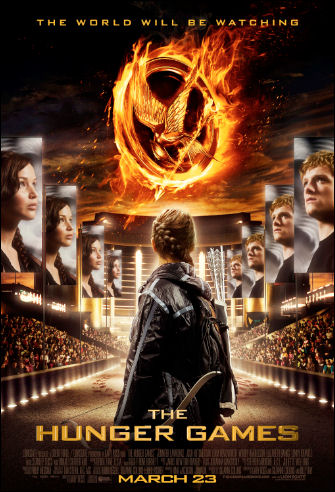
The Hunger Games: A Review & Essay

by Rebecca Longster

Teens of the Future on Survivor ~ for real

A review of The Hunger Games, directed by Gary Ross, starring Jennifer Lawrence, Josh Hutcherson, Liam Hemsworth, Woody Harrelson, and Lenny Kravitz
Several years ago I had a story idea that went something like this: The protagonist was a young mother in a society that had (d)evolved into one in which, by law, couples were limited to a certain number of children ~ while birth control of any kind was illegal.

And if, in the world of this story, one did have too many children? Then one had a certain amount of time to surrender the “extra” children to the local “welfare” office, thereafter to be processed and sent to a “relocation” center ~ kind of like sending concentration camp prisoners to the “showers” in Nazi Germany.

I didn’t write it for two reasons. The first was that the idea was horrifying. It had come to me in a stress dream, and it was indicative of my state of mind at the time as a single parent trying to raise 4 children on little more than the faith of a mustard seed praying for loaves and fishes (and school clothes would have been nice, too).

The second reason I didn’t write the story was really paramount though ~ I could have overcome the first, if only to see where the story would take me. But I didn’t write it mainly because I didn’t think there would be a market for it (even if I had had the first clue where to look for a publisher).

Who would buy, in either sense, a story about a society in which human beings just like us would allow even one of their children to be taken ~ who would, indeed, obediently offer up their children to be killed ~ just because it was a law? The idea seemed ludicrous.

True, there are many stories and movies of dystopian societies that sacrifice, both figuratively and literally, their freedom and their citizenry for one reason or another. The Running Man? Sure. 1984? Right. Even “The Lottery.” No problem. Because, even in the last instance, the sheep to the slaughter are grown-ups, adults who at least have age and experience and the choice, no matter how austere the alternative, of whether or not to participate in that society and be governed by its laws.

Adults might be able to rationalize the routine sacrifice of one of their number, I reasoned, but no civilized people would submit to a government that would routinely kill their children ~ therefore, no market for such a story. (My husband says I always give people too much credit.)

Well, as one of S.E. Hinton’s characters so memorably said: That was then. This is now.

It’s not that big a leap ~

Apart from the first chapter of the first novel that I downloaded as a sample, I haven’t read The Hunger Games novel on which the movie is based. However, having seen the movie, I think Suzanne Collins, and I must be sisters under the skin. The main difference is, she’s a much younger sister, a sister of a whole other generation.

Collins grew up during an age in which such a scenario seemed more than plausible. She is of the generation raised on so-called reality TV ~ television shows, in prime time, that seemed designed to dismantle the system of values that we have long prided ourselves on teaching our children, values of honesty and fairness and compassion for one’s fellow humans.

I don’t know what the original idea was behind Survivor and Big Brother (and you know where that name came from, don’t you?) and others of their ilk, but what these weekly TV shows rapidly became was object lessons in the values of whoever-lies-and-cheats-the-best-lasts-the- longest.

These shows pitted people against each other, encouraged two or more to form alliances ~ and then made it impossible to “win” without betraying that trust and turning on each other. Each week, and with each “new” reality TV series, supposed adults reenacted, for the entertainment of the television audience, ever more cruel and debasing versions of Lord of the Flies.

Small wonder, then, that the premise of The Hunger Games became not only plausible but well received by young adult and adult audiences alike. It doesn’t hurt anything that the story, like most dystopian fiction, is set in the future and elsewhere, either. We can allow for and even enjoy the premise of a far distant society full of people who let the government take 24 of their teenaged sons and daughters every year and put them to death at each others hands ~ because, while such a thing could surely happen, nothing like that could happen here, in our society.

Katniss Everdeen shines ~

It occurs to me that the above makes it appear that I didn’t “like” The Hunger Games, when nothing could be further from the truth. In fact, the movie was so well done, the characters and storyline so compelling that, even though the movie was complete in and of itself, I won’t be satisfied, now, until I read the books.

Much about the movie is well done, including setting, costuming, and camera work, as well as the actors portrayals of characters, key and low key. Lenny Kravitz, for example, turns in a stunning portrayal of Cinna, making the most quiet, low key scene into an emotional gut punch by mere expression or muted gesture reminding us of why he’s staging these young people in the first place, while simultaneously providing a near perfect foil for Woody Harrelson’s Haymitch.

Equally effective, in a more chilling, where’s-the-exit-again? way is the incarnation of the aptly named Caesar Flickerman (Stanley Tucci), the over-the-top host of the televised Hunger Games. To say this guy has mad skills would be much too ironic, not to mention an understatement.

But what makes the movie a success, ultimately, is the heroine herself: Katniss Everdeen.

When you see the movie, you’ll find the camera work in the early scenes disorienting and disconcerting, but once the focus comes to rest on Katniss Everdeen, everything becomes steady, implying that in this reality nothing is certain or sure, no one steadfast, but Katniss herself ~ and that first impression is, itself, consistently demonstrated through out the movie, in Jennifer Lawrence’s portrayal of Katniss.

There’s a point, after they’ve been selected and taken to the Capitol, when Peeta, the male “tribute” from District 12, tells Katniss that, while he fully expects to die in the games, he wants “them” to know they don’t own him, that he doesn’t want to be changed by the experience into something or someone he’s not.

Katniss understands, but she just “can’t afford to think like that.”

Yet, from the moment she volunteers to take her little sister’s place as the female tribute in the Hunger Games through her clear relief that Gale (Liam Hemsworth) isn’t chosen as the male; through her unspoken but obvious decision to simply do her best to survive as long as possible, rather than joining forces with the likes of Cato (Alexander Ludwig) and his group to kill off the other tributes; to her final choice to cheat “them” of their winner ~ it is Katniss who, ultimately, remains true to herself.

It is her repeated refusal to compromise her personal set of values, even at the cost of her own life, that holds us all in thrall ~ and that thralldom, itself, shines with hope for the real life future that will be molded by our teens.

The popularity of Katniss Everdeen and The Hunger Games illustrates that somehow ~ in spite of the culture of “reality” TV and the shifting sands of uncertainty that have become the hallmark of some of our “advanced” societies and governments ~ there is still something within some of us (apparently a lot of us, to judge by the box office) that believes in and aspires to the ideal.

We, including our teens, are drawn to Katniss because she embodies that ideal ~ she is that person of honor and valor and indomitable spirit who may be maimed, broken, even killed, but who, having chosen the moral high ground, will not be moved.

That’s a shining beacon of hope if I ever saw one.

~

Rebecca Longster is a writer, an avid reader, and just generally addicted to words in a row. In addition to writing fiction and non-fiction, both for the web and for print publication, she currently teaches writing at Purdue University in West Lafayette, IN and lives “across the river” in Lafayette, with her husband, James (artist, photographer, and renaissance man) and two crazy kitties. You can get in touch with her at Rebecca@RenaissanceWomanInk.com or visit her website of the same name (currently under reconstruction).

Posted in Books and Literature, Reviews, Science Fiction, Uncategorized, Young Adult Literature | Tagged , , , , , , , | 3 Comments

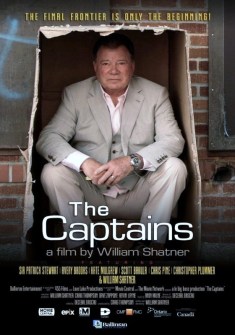
Review: The Captains (2011), a film by William Shatner

Review by Rebecca Whitus Longster

The Captains: in the beginning ~ 

At the risk of showing my inner nerd, geek, dweeb or whatever it’s called these days, I’ve got to say how pleased and impressed I was, watching William Shatner’s “affable documentary,” (Netflix) The Captains (2011).

Yet, what I found most enlightening may not have been what he intended ~ and that is the apparently huge divide between his perception of himself and his contribution to the Star Trek universe ~ and ours.

I read on the NPR site last week about his one man show, and I wonder how much material used there came from the same place as the revealing, almost intimate, glimpse The Captains ends up giving us into Shatner himself, into the man whose portrayal of Captain James T. Kirk made such an indelible mark on the universe that grew up around the original Star Trek series.

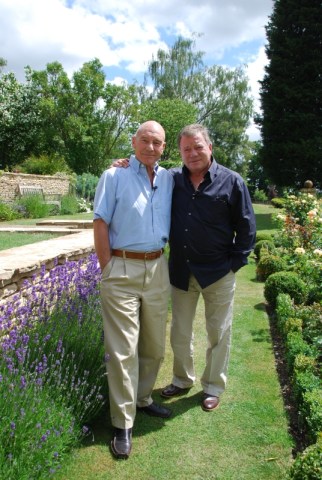
In the documentary, Shatner interviews Sir Patrick Stewart (Jean-Luc Picard), Avery Brooks (Benjamin Sisko), Kate Mulgrew (Kathryn Janeway), and Scott Bakula (Jonathan Archer), all captains of their own ships, Enterprise and otherwise, in the Star Trek universe, along with Chris Pine, the most recent Captain of the Enterprise, by virtue of his incarnation as the young Jim Kirk.

Yet the connection between these captains, forged by their shared legacy of the big chair (and, I’ve got to say, one of my favorite throw away lines in the 2009 Star Trek movie is young acting-captain Spock’s dry drawl to young not-yet-captain Kirk: “out of the chair,” during a tactical planning session) is but a framework for a discussion that becomes much less about the characters they once played than about the people they are, the things they value, and how, at least in part, their lives and perceptions of themselves have been impacted by their shared heritage and yet uniquely individual experiences as Star Trek captains.

Essentially, “polling” his “peers” in this one common (yet so uncommon) experience, on matters beyond that shared experience, Shatner himself gains insights that change, or at least aid in the change of, his own perceptions ~ and in, I think, a very positive way.

“Unprecedented,” Patrick Stewart says of the phenomenon that is Star Trek, of the fact that so much grew out of William Shatner’s portrayal of Kirk and the relationships between him and his bridge crew.

“A magical kind of relationship,” Scott Bakula says of the relationship between characters inhabited by the members of the ensemble cast at the core the original Star Trek series’ success ~ but a seemingly unique magic, he continues, as no one else had been able to replicate it.

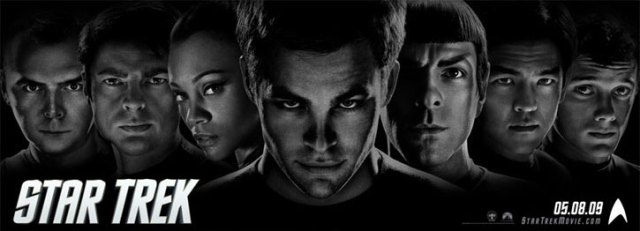
Yet Chris Pine, Zachary Quinto, Zoe Saldana, Carl Urban, Anton Yelchin, John Cho, and Simon Pegg (and even Bruce Greenwood) manage to recreate it in J.J. Abrams’ 2009 tour de force.

Jim Kirk’s World: we wish we lived in it

I remember how nervous I was to see the 2009 Star Trek in the theater. I had gone into the theater, the film, and the universe itself, so afraid they were going to . . . well, screw it up.

And they so didn’t.

I wasn’t sold right from the start. Not by the utterly heart wrenching scene in which George Kirk chooses to sacrifice himself to ensure the crew’s escape, even as his son is being born in the escape shuttle. The circumstances of his birth, the scant few seconds George has with his wife over the com link to share the joy and decide what to call their baby boy, their love for each other a tangible thing standing out from and separate to the chaos of the moment, is so poignant that I’m clearing my eyes of tears so I don’t miss anything ~ even as part of me is saying “that never happened” in the “real” Trek universe.

And it didn’t, this isn’t the “real” Trek universe, and the cadets who become the crew of the Enterprise aren’t the real crew of the original series. And yet, somehow it is ~ and somehow they are.

The actors’ portrayals of these iconic characters ~ Kirk, Uhura, McCoy, Spock, Chekov, Sulu, Scotty, even Captain Pike ~ are so spot on, while at the same time so delightfully unique to the actors portraying them, that you are sold on their reality perhaps by those very divergences.

I literally wept at the end ~ not because it was sad, but because it did feel so real. I had entered in to the universe once more and, somehow, I had time traveled back to the beginning of the adventure, when the young crew had it all before them. So real were they to me that I envied them that adventure.

I felt so like the older Spock, who, looking down on the scene of the young Kirk’s newly minted captaincy, murmurs, with a kind of bittersweet longing: “thrusters on full.” I was sad that I, too, must remain behind, like the older Spock, a relic, out of time.

And still, in this alternate time line of a universe, the young Captain Kirk is the linchpin, the axis on which all of the action turns and around which all of the other characters orbit, defined by their interactions with and relationship to him and each other.

Picard and Kirk: the yin and yang coalesce

While the documentary cuts back and forth between Shatner’s interviews of the different Captains, on topics as far ranging as their beliefs about what happens to us after death, and contains brief remarks by other individual stars in the Star Trek firmament, like Johnathan Frakes and even Christopher Plummer, in truth, the unifying thread is largely a conversation between Shatner and Stewart, the two most iconographic Captains of all.

It always comes back to those two, Shatner and Stewart, the yin and yang of Enterprise captains, and their discussions seem underscored by a certain depth of affection and trust between them that I find most appealing and reassuring.

But most revealing, and surprising, is Shatner’s revelation, during a discussion with Stewart, that for the longest time he felt embarrassed by his association with Star Trek, felt that people derided and looked down on him because of it ~ even in the face of the thousands of fans that show up at conventions year after year, decades after the original series wrapped, and despite the standing ovations and roof raising cheers his appearance at these conventions always occasions. For all those years, he believed that every “beam me up, Scottie” was derisive, meant to belittle, and so it seemed he would never be at peace with what has become his most memorable role.

Like Patrick Stewart, William Shatner can look back on a depth and richness that is his body of work, multiple roles well acted and scenes well played, and yet his perception of Captain Kirk as an embarrassing interlude has long cast a shadow over all of that. As Julia Roberts says in Pretty Woman: the bad things are easier to believe.

And so, unbeknownst to the rest of us, and even when those “bad things” had no substance in reality, they have been easier to believe for William Shatner ~ until now. Finally, in what is a very revealing 90 minutes, we are allowed a glimpse of insecurities we never even suspected existed within the talent and presence of our Captain Kirk. Best of all, somehow that chink of uncertainty shines a bit more light on the absurdity of our own negative perceptions of our own work and the dangers inherent in projecting that negativity onto others’ reactions and observations.

Completely in keeping with our perceptions of William Shatner and James T. Kirk, however, we are only made privy to these insecurities now that he has come to terms with them. It’s also clear that Patrick Stewart is instrumental in that resolution and influential in Shatner’s perceptual shift.

Sir Patrick Stewart in talking with Shatner reflects upon the joy he took in his role as Captain of the Enterprise in TNG, illustrating that he brought to that role the same passion he brings to the exercise of his craft and to every role he plays.

In his openness and equally revealing observations, Stewart in some way illustrates to Shatner, by his own example, the value of what they each contributed. As they talk, one can almost see that perceptual shift taking place in Shatner’s eyes and expression.

The man who originally defined the role that made him, William Shatner, as iconic as the character he inhabited, seems at last at peace with, and perhaps even proud of, that role.

Perception is a tricky thing ~ our perception of ourselves, of reality, of truth ~ of how other people perceive us. Testing our perceptions against a more objective yardstick is trickier still, I think, and requires much more courage. To forge on in spite of ones fears and insecurities is the very definition of courage, and that quality is something both Jim Kirk and Bill Shatner have always had in abundance.

For the fans, The Captains is enjoyable just for the opportunity to see again some of our favorite people, and I hope to see William Shatner’s one man show (Shatner’s World, We Just Live In It) for the same reason.

The Captains may have originally been meant to give us some insight into the shared experience of being a Star Trek Captain, or perhaps it was meant to try to discover why the Star Trek Universe continues to be such a powerful draw for so many people (the as yet untitled sequel to J.J. Abrams’ 2009 Star Trek is filming even now).

Whatever the intent, and whatever else it may be, in the end, The Captains provides us with a unique insight into the power of one’s own perception ~ for good or ill ~ even for an icon like William Shatner.

~

Rebecca Longster is a writer, an avid reader, and just generally addicted to words in a row. In addition to writing fiction and non-fiction, both for the web and for print publication, she currently teaches writing at Purdue University in West Lafayette, IN and lives “across the river” in Lafayette, with her husband, James (artist, photographer, and renaissance man) and two crazy kitties. You can get in touch with her at Rebecca@RenaissanceWomanInk.com or visit her website of the same name (currently under reconstruction).
Posted in Movies, Reviews, Science Fiction, Uncategorized | Tagged , , | 1 Comment

Review: Prophets of Science Fiction

TV Series: Prophets of Science Fiction
Network: Science Channel
Executive Producer: Ridley Scott

Prophets of Science Fiction by executive producer Ridley Scott is a new documentary series produced by the Science Channel–a series that hasn’t received any of the attention that it deserves. The series takes on the work of eight science fiction authors, examines the science with the work, and then shows how it inspired scientists to develop new technologies.

There really is little doubt that we are living in the age of science fiction. In the early days of science fiction, before the term science fiction even existed, Mary Shelley was writing a novel about a scientist who dreamt of reanimating a dead body. Then there was Well’s inspired story about a man who wanted to travel through time and Asimov’s vision of how robots could fit into mankind’s future. Prophets of Science Fiction delves into the science fiction of the past and analyze it’s affect on scientific developments that have come to be ordinary and commonplace in today’s society.

“The “Science Fiction” of the past has now simply become “Science”. And the science of the future was strangely prophesied by a group of visionaries whose dreams once may have deemed them renegades and “mad scientists,” have become reality!”–The Science Channel

Not only is Prophets of Science Fiction fascinating from a science fiction lover’s perspective, but it’s educational. With mini interviews from today’s top authors as well as cutting edge scientists, Ridley Scott creates a wonderful new series that erases the lines between science and science fiction. The series will leave you wondering what science fiction technologies being written about today will find their ways into our lives in the future. Whether you’re into science or science fiction, you’re going to love Prophets of Science Fiction.

The first episode features the work of Mary Shelley and premiered in November 2011. Since then additional episodes include Phillip K. Dick, H.G. Wells, Arthur C. Clarke, Isaac Asimov, Jules Verne, Robert Heinlein, and George Lucas. If you missed any of the previously aired episodes, you can view them on the Science Channel’s website, on the Science Channel, or OnDemand. It’ll be fun to see what comes next in this new series. Kudos to Ridley Scott for a truly fascinating new series.

Episode Guide from the Science Channel’s Website:

Mary Shelley
Mary Shelley 
Premiere: Wednesday, November 9 at 10PM e/p
It’s alive! Mary Shelley set out to create a monster–along the way she created a masterpiece. In 1816, teenager Mary begins stitching together a patchwork of ancient legend, modern technology, and personal tragedy–giving life to her novel,Frankenstein…and the genre of science fiction.
WATCH VIDEO
Philip K. Dick
Philip K. Dick 
Premiere: Wednesday, November 16 at 10PM e/p
Literary genius, celebrated visionary, paranoid outcast: Writer Philip K. Dick lived a life of ever-shifting realities straight from the pages of his mind-bending sci-fi stories. His books have inspired films like Blade RunnerTotal Recall, and Minority Report. His work confronts readers with a deceptively simple question: What is reality?
WATCH VIDEO
H.G. Wells
H.G. Wells 
Premiere: Wednesday, November 23 at 10PM e/p
“I told you so…” H.G. Wells’ self penned epitaph underscores a lifetime of grim yet uncanny prophecy. With stories like The Time MachineThe Invisible ManThe World Set Free, and The War of the Worlds, H.G. Wells established himself as a sci-fi writer of almost clairvoyant talent.
WATCH VIDEO
Arthur C. Clarke
Arthur C. Clarke 
Premiere: Wednesday, November 30 at 10PM e/p
Some sci-fi storytellers are content to merely predict, but Sir Arthur C. Clarke creates. The writer is single-handedly responsible for the cornerstone of modern telecommunication technology: the satellite. Clarke’s collaboration with director Stanley Kubrick on the iconic 2001 predicted videophones, iPads, and commercial spaceflight, while redefining science-fiction cinema for a new generation.
Isaac Asimov
Isaac Asimov 
Premiere: Wednesday, February 15 at 10PM e/p
He saved the future from Evil Robots! Isaac Asimov dreamed a better future where we need not fear our own technology. His I, Robot stories of a sci-fi future where robots can do our jobs for us lead to the creation of real-life industrial robots and paved the way for a robo-friendly world.
WATCH VIDEO
Jules Verne
Jules Verne 
Premiere: Wednesday, February 22 at 10PM e/p
He put a man on the Moon in the Victorian Era. He criticized the Internet…in 1863. Jules Verne is the ultimate futurist, with a legacy of sci-fi stories predicting everything from fuel cell technology to viral advertising. The extraordinary voyages of Jules Verne have inspired art, industry, culture, and technology.
Robert Heinlein
Robert Heinlein 
Premiere: Wednesday, February 29 at 10PM e/p
Sci-fi legend Robert Heinlein is a walking contradiction. His stories address themes of patriotism, and duty while stressing the importance of personal freedom and expression. His groundbreaking stories like Starship Troopers and Stranger in a Strange Landcontinue to challenge readers with a steadfast theme: what is freedom?
George Lucas
Premiere: Wednesday, March 7 at 10PM e/p
From Luke Skywalker’s light sabre to Darth Vader’s Death Star, the Star Wars franchise is one of the defining science fiction works of the later 20th century. George Lucas’ prolific imagination has already inspired two generations of scientists and engineers to push the envelope of technology. By introducing computers into the filmmaking process,
Posted in Reviews, Science Fiction, Television | Tagged , , , | Leave a comment

Movie Review: The Woman In Black

The Woman in Black (2012)
Director: James Watkins
Writers: Susan Hill (novel), Jane Goldman (screenplay)
Stars: Daniel Radcliffe, Janet McTeer and Ciarán Hinds

“Do you believe in ghosts?”

Arthur Kipps (played by Daniel Radcliffe) is a young widowed lawyer from London who is sent to settle the affairs of a recently deceased client in a remote seaside village. He is cooly received by the townspeople who are keeping a frightening secret. He soon learns that there is a dangerous ghost haunting his deceased client’s house, a ghost who is bent on vengeance against those who took what belonged to her.

The Woman in Black is an exceptional film. At a mere 95 minutes, the movie wastes no time with unnecessary drama or exaggerated tension that has become commonplace within the recent slew of ghost story/horror films. Instead The Woman in Black takes advantage of the story’s natural rhythms, alternating between action and reflection that subtly build the tension throughout the film until at just the right moment (even when you are expecting “something” to happen) the trap is sprung and you jump…and this happens over and over again.

The director, James Watson, does a fabulous job of weaving traditional ghost story horror elements together with the tale of the young widowed lawyer (Radcliffe) who is struggling to keep his life together after his wife’s death. The use of imagery, lighting, and sound create a darkly real Victorian period piece that easily transitions between the supernatural and the ordinary. In addition, there are moments that seem truly inspired by Hitchcock himself, making them all the more frightening for giving us exactly what was expected–but not necessarily in the way we expected it. The Woman in Black is an excellent example of how a nimble horror story can twist and turn, surprising you in spite of yourself.

For many people Daniel Radcliffe is Harry Potter. After all, an entire generation grew up with Radcliffe playing the part of the young wizard. Like the character he played in Rowling’s books, Radcliffe grew up–and into a fine young actor whose talent breaks him out of the stereotypical roles that trap many child stars. Viewer be warned, Harry Potter does not make an appearance in The Woman in Black. However, Radcliffe gives an excellent performance as a lawyer and single father who is at home in the 19th Century–with no resemblance to the Hogwartz wizard that made him famous. If you have young children who want to see Harry Potter in a new scary movie, don’t bring them to The Woman In Black. This isn’t the movie for them.

The Woman In Black easily joins the top ranks of the ghostly horror genre, including The Others, The Shining, Poltergeist, The Amityville Horror, Stir of Echoes, Two Sisters, The Haunting, The Orphanage, The Sixth Sense, and more. The Woman in Black is a disquieting film that feels hauntingly real

Image of Arthur Kipps exploring odd noises in the mansion. Image from The Woman in Black Website.

Posted in Horror, Movies, Reviews, Uncategorized | Tagged , , | 1 Comment

Review: Fracture by Megan Miranda

Author: Megan Miranda
Publisher: Walker Childrens
Print Date: January 17, 2012
ISBN-13: 978-0802723093

Fracture cover blurb:

Eleven minutes passed before Delaney Maxwell was pulled from the icy waters of a Maine lake by her best friend Decker Phillips. By then her heart had stopped beating. Her brain had stopped working. She was dead. And yet she somehow defied medical precedent to come back seemingly fine–despite the scans that showed significant brain damage. Everyone wants Delaney to be all right, but she knows she’s far from normal. Pulled by strange sensations she can’t control or explain, Delaney finds herself drawn to the dying. Is her altered brain now predicting death, or causing it?

Then Delaney meets Troy Varga, who recently emerged from a coma with similar abilities. At first she’s reassured to find someone who understands the strangeness of her new existence, but Delaney soon discovers that Troy’s motives aren’t quite what she thought. Is their gift a miracle, a freak of nature-or something much more frightening?

For fans of best-sellers like Before I Fall and If I Stay, this is a fascinating and heart-rending story about love and friendship and the fine line between life and death.

Fracture by Megan Miranda, is a wonderful  young adult novel novel that adeptly combines Miranda’s scientific education in the fields of biology and anthropology with her ability to tell a good story. The plot and characters are very strong, the pacing is good, and it’ll keep you turning pages until there is nothing left to turn.

Delaney Maxwell is an average teenage girl who struggles to come to terms with her near death experience after waking from a coma with brain injuries that show up on a scan, but don’t seem to be affecting her ability to function normally. It’s not long before she realizes that she came back “different,” and there is no one for her to talk to who would understand or believe what she was experiencing.

Fracture does a wonderful job of tapping into the trials of being a teen and doing it in a very realistic way that keeps you solidly on Delaney’s side as she comes to terms with her unique situation. One of the best things about Fracture is how well it illustrates the emotions that teens feels and how isolated they feel from their loved ones and friends–especially when something serious is happening.

Throughout the novel you can’t help but to empathize with Delaney and her situation, but there’s also a part of you screaming at her to “tell someone the truth.” Yet, Miranda tells the story in such a way that it feels completely believable that Delaney would bottle up her emotions, desperate to be normal and to find her own way through the mess that has become her life.  As a result of her secrets, she begins acting erratically causing those around her to worry that she’s not as well recovered from her accident as they had hoped.

Fracture is a young adult book that treats teens and their issues seriously, even if it is done through events that step beyond the realm of the ordinary. Sometimes it takes an extraordinary event to make us realize that we’re not alone and that there are people who are willing to put themselves on the line for us.

Special thanks to the publisher for providing this book for review.

Posted in Reviews, Uncategorized, Young Adult Literature | Tagged , , | Leave a comment

New Writer Spotlight: Lori T. Strongin

It’s always fun to find new and interesting writers such as Lori T. Strongin. Her debut novel, Bite Me, is about some very funny and unique college student with who are dealing with more than just papers and professors. I have had the pleasure to getting to know Lori as a writer and now is your chance to know her, too.

~

For those who haven’t yet read a Lori Strongin story, how would you describe the type of fiction you write?

Tropes exist for me to destroy. I mean, rework. ☺ I love looking at a character type and thinking, ‘How can I make them different from what’s come before?’ For example, in the Shadows of the Emerald City anthology, my piece featured a middle-aged Dorothy who was an alcoholic, chain-smoking, wreck of a woman working as an exotic dancer while hiding under Oz’s version of the witness protection program. Definitely not your typical Dorothy Gale from Kansas.

I’ve done the same with Bite Me. The book features a surfer-boy werewolf, a Buddhist, vegetarian vampire, a shapeshifter with ferret envy, a banshee with laryngitis issues, and a wizard whose only successful spell is making people’s clothes disappear.

Bite Me, your debut novel, is described as “a humorous, urban fantasy ‘buddy novel’ about a co-ed vampire and werewolf who loathe each other, yet are forced to partner together to stop Woodstock, New York’s most unusual psychopath.” What inspired this quirky novel idea?

It actually came from a conversation at writing group one night about genre clichés. We were talking about vampires and crosses and, being the smartass that I am, asked, “Well, what if my vampire is Jewish?” And while my question met that special kind of uncomfortable silence usually associated with epic!fail, it spawned a series of short stories that were fairly well received by readers. When one person suggested I give these characters their own novel, I knew it was a challenge I had to accept.

Your mantra is “Normal is overrated”. What does that mean to you?

Haha, oh man, is this a loaded question. I have never been normal. I hate milk in my cereal, won’t touch salad dressing or peanut butter, and think sporks are the most awesome invention on the planet. I’d rather wear a Renaissance-era gown than jeans, think the Lord of the Rings musical was the best thing I’ve ever seen on any stage, and burst out into song in random intervals. But you know what? I have FUN being different. To quote an actor I truly admire (Chris Colfer), being different is the best thing about me. It’s taken me a long time to realize the normalcy everyone is so hung up on when we’re young is just a choke chain stifling who we really are and who we could one day be. So, I’m proud not to be normal, and I hope I never am again.

This is your first published novel. Have you published any other fiction for readers to find?

Sure have! I’ve been lucky enough to have my work included in several lit mags and anthologies. I’m incredibly proud of the Shadows of the Emerald City book I mentioned earlier, not just because of the amazing stories and contributing authors in there, but it was ranked 9th best anthology of 2009 in the Predators and Editors annual poll. I’m also proud of the upcoming Ride the Moon anthology coming out next month from Tyche Books.

All my publications are listed at my website, www.loristrongin.com under the Current Publications tab.

What has been the biggest challenge or the most fun for you when writing Bite Me?

Most fun was seeing the looks on the faces of my writing group after I read them the marshmallow Peep scene. Actually, no, the best moment has to be when we shot the book trailer for Bite Me and blew up a dollhouse with something called the Insta-Crater.

Biggest challenge? The path to publication. I think a part of me always knew this would be my debut novel (versus the others trunked in my Word doc files), but finding an agent or publisher who agreed with me was a long journey—one that had me doubting my dream and myself. So I don’t think it surprised anyone that, when I got that acceptance email from Mundania, I burst into tears.

To some degree writers write a bit of themselves into their characters. Which character is most like you? Which character would you most like to resemble?

Tough question! I think probably Talbot, Fletcher, and Julian have the most of myself in them. Talbot just wants people to like him, and he works pretty hard to be the guy others will go to because he likes being needed. Julian, on the other hand, has had a lot of bad experiences in his past with trusting people, so he tends to push potential friends away before anyone else can hurt him. And as for Fletcher…well, he has no brain-mouth filter and sometimes, I’d love to be that way…if I didn’t worry about terminal foot-in-mouth disease, that is.

Even though Bite Me is your debut novel, you’ve been writing short stories and articles for years. What advice can you share with someone who would like to write, but hasn’t yet published?

Never stop writing. The more crap you produce, the more room you have in your head for the good stuff. Also, look for critiquers who will be honest with you and not sugarcoat your problem areas. And, of course, listen to the advice they’re giving you and take their suggestions into account before writing them off, no matter how harsh the comments might feel.

Do you have a mentor or another writer who helped to guide you through your writing process or with developing your career? Who do you turn to for advice?

Definitely. Author Marie Dees took me under her wing when we met at writing group…oh goodness, ten years ago? She took one look at the chapter I submitted for critique and told me it sucked. BUT, then she taught me how to make it better. She also showed me the difference between a dabbler who jots down stories for fun and the writer who wants to BE a writer. And I can’t thank her enough for that.

Who are a few of your favorite authors? What is it about these authors that resonate most with you?

Well, no one can world-build like J.K. Rowling and J.R.R. Tolkien. I’m also a big fan of Carlos Ruiz Zafon and Paulo Coelho, for the beautiful lyricism of their prose. And Piers Anthony maybe had the biggest influence on me because it was his Xanth series that convinced me to pursue a career in writing.

When did you first know you wanted to be a writer? Is there a moment where the need to write crystallized for you? How did that realization feel?

Excellent segue, eh? There really wasn’t a singular moment, but kind of a lifetime of just knowing. My parents said that, as a toddler, I’d line my stuffed animals along the wall and baby-babble stories at them. Then when I was older, I’d tell stories for Peter Pan, who I was absolutely certain was just outside my window, waiting to whisk me off to adventure in Neverland. And I don’t think it surprised anyone when I declared an English-Creative Writing major in college.

What are you working on next?

Surprisingly, a contemporary YA! The idea came to me at last year’s Romantic Times convention in a panel about under-represented voices in YA fiction. Which got me thinking about which groups don’t have a voice in YA but should. And so Outside In was born, a story about a male-to-female transgendered teen seeking acceptance both from her peers, and from herself. What the MC goes through might be the most painful thing I’ve ever written, but there’s an honesty in this project that makes me love it even that much more.

Thank you so much for having me here today, Erin! It’s been a blast, and I hope you enjoy reading Bite Me as much as I enjoyed writing it!

~

“Normal is overrated” is the mantra of author Lori T. Strongin. A hard-core Taurus with a love for elves, zombie squirrels, and cannibalistic cotton balls, Lori is an avid reader, a cat wrangler, and can usually be found glued to her laptop, killing people.
Born and bred on the New Jersey shore–yes that Jersey shore–Lori currently lives in theme park central, otherwise known as Central Florida, where she spends her days fending off the most dangerous of creatures: tourists. She’s been to all fifty states, thirteen countries, and holds the distinction of being among the few people in the world to faceplant not into one, but two glaciers. In her free time, she’s lead soloist in her shower, a champion horseback rider, and Queen of General Geekery.

An English/Creative Writing honors graduate of the University of Colorado at Boulder, Lori is the author of more than a dozen creepy and warped tales—most containing fairly high body counts. Check out www.loristrongin.com for pictures, fan art, and further insight into a truly twisted mind. You can also find Lori on Tumblr and Twitter.

Posted in Interviews, Signal Boost, Uncategorized, Writing, Young Adult Literature | Tagged , | 3 Comments

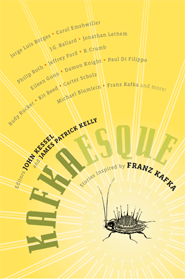
Review: Kafkaesque by John Kessel and James Patrick Kelly

Title: Kafkaesque: Stories Inspired by Franz Kafka
Editors: John Kessel and James Patrick Kelly
Publisher: Tachyon (November 2011)
ISBN: 978-1616960490

~

Kafkaesque: Stories Inspired by Franz Kafka is a smart and provocative anthology that celebrates Franz Kafka through a variety of stories that derive from Kafka’s work, stories that use Franz Kafka as a character, and stories that use the methods or materials of Kafka. Through their careful selection of stories, Kelly and Kessel have succeeded in crafting a Kafkaesque literary experience of their own, which nicely accentuates Kafka’s work without defining it. A very Kafkaesque act!

It seems especially fitting that Kafka’s short story “The Hunger Artist” was chosen by Kelly and Kessel as the flagship piece for the collection. In the Editors’ Notes section, Kelly comments that “The Hunger Artist” is “a story that twists and squirms as it resists interpretation.” One of the most striking aspects of Kafka’s work is that his fiction can be read through a variety of lens, inspiring a different meaning or interpretation for each piece depending on the lens being used. It is for this reason that “The Hunger Artist” seems particularly appropriate for this anthology.

For example, as the hunger artist comes to realize the growing apathy of the crowds for his accomplishments, the narrator says, “Try to explain the art of hunger! Those who don’t feel it can’t be made to understand.” This line is the exclamation point for the story, and from it the argument can be made that “The Hunger Artist” is an allegory that contrasts the lean times against the opulent times of plenty where sympathetic understanding and respect for those who suffer has been lost by those who don’t feel the pangs of suffering. And yet, like all of Kafka’s stories, “The Hunger Artist” squirms away from this interpretation, creating a dozen more interpretations that could also fit this piece.

Each story within Kafkaesque offers something new, interesting and very Franz Kafka. The quality of the collection is superb and will provide hours of mind-boggling reading  enjoyment. However, it could just as easily be used in the classroom as a contemporary literary companion to Kafka’s original material since, like Kafka’s own work, many of the pieces within Kafkaesque also defy interpretation.

Whether you are trying to understand the art of hunger, out to view a beached giant, or looking for Franz Kafka himself, you are sure to find many pieces in Kafkaesque that will stick with you.

  • Introduction: Stories After Kafka
  • Kafka Chronology
  • A Hunger Artist – Franz Kafka
  • The Downed Giant – J.G. Ballard
  • The Cockroach Hat – Terry Bisson
  • Hymenoptera – Michael Blumlein
  • The Lottery in Babylon (tr. Hurley) – Jorge Luis Borges
  • The Big Garage – T. Coraghessan Boyle
  • The Jackdaw’s Last Case – Paul Di Filippo
  • Report to the Men’s Club – Carol Emshwiller
  • Bright Morning – Jeffrey Ford
  • The Rapid Advance of Sorrow – Theodora Goss
  • Stable Strategies for Middle Management – Eileen Gunn
  • The Handler – Damon Knight
  • Receding Horizon – Johnathan Lethem – Carter Scholz
  • A Hunger Artist – David Mairowitz and Robert Crumb (a graphic story)
  • “I Always Wanted You to Admire My Fasting”; or, Looking at Kafka – Philip Roth
  • The 57th Franz Kafka – Rudy Rucker
  • The Amount to Carry – Carter Scholz
  • Kafka in Brontëland – Tamar Yellin
Posted in Books and Literature, Reviews, Uncategorized | Tagged , , , , , | 4 Comments

Interview with Michael Scott & Colette Freedman, coauthors of The Thirteen Hallows

One of my favorite things is talking to authors about their work. After I read The Thirteen Hallows, I jumped at the chance to interview coauthors Michael Scott and Colette Freedman.

Together they have created a fantastic new dark fantasy/thriller series that was exciting and fun to read. Bringing together the perfect blend of genres as well as imbuing the story with a very tangible feel of modern day London, The Thirteen Hallows will likely find itself on several “Best of 2011” lists for a variety of genres. You can also read the review of The Thirteen Hallows.

~

How did the two of you first meet?

Colette: We are both represented by the same LA management agency. Our manager, knowing that Michael was looking for a writing partner on a project introduced us, thinking we would be a good fit. We had several meetings, initially in LA and later in Dublin and London before we finally decided to work on The Thirteen Hallows.

The combination of a bestselling young adult writer from Dublin and an award-winning playwright from Los Angels is an unlikely writing duo that seems like something straight out of a novel. What brought the two of you together as a writing team?

Michael: Although I’m probably better known in the US as a YA writer, I have a huge body of adult horror and fantasy behind me. What I was looking for in a collaborator was someone with Colette’s particular skills – skills which she honed in novels, short stories and especially that most difficult of mediums: plays. Good collaboration essentially boils down to personalities who work well together and are able to integrate each other’s notes and ideas without killing each other. (Not that we ever fought. Ever. No, really!)

How did Colette’s experience writing screenplays affect the planning or writing of The Thirteen Hallows? What were some of the biggest challenges you faced as you learned to work together on this novel?

Colette: We’ve both written screenplays, which helped tremendously when it came to writing dialogue and giving characters’ unique voices. Sarah, a twenty two year old from a sheltered family cannot sound the same as the thug Robert Elliot, who has a much different set of experiences he is bringing to the story. The biggest challenge in working together is simply listening; however, Michael’s years of experience as writer meshed well with my experience as an actress to give the characters each a distinctive voice.

In another interview, Michael mentions that he came across the legend of the hallows at various points in his life while researching other projects. How did the idea of these hallows develop into The Thirteen Hallows?

Michael: My specialty is mythology. And there are artifacts like the hallows scattered through just about every mythology. However, what makes the Celtic hallows so interesting is that they are a self-contained group of objects. Usually – though not always thirteen – they are inextricably entwined with Irish, Welsh, Scottish, English and Arthurian lore. Each hallow had its own history and it was a natural step to explore those stories and weave them into a contemporary novel.

What is the biggest difference for you, Michael, between writing young adult fiction and adult fiction? Colette what was the biggest difference or more surprising difference for you between writing screenplays and fiction?

Michael: There really is no difference in the actual writing or plotting. I choose to tell different stories for the younger reader and, of course, I would never put sex and extreme violence in a YA book. But writing for adults and children requires the same care and attention. In fact, writing for younger adults is tougher. They remember everything and if they spot a problem, they’ll be sure to let you know.

Colette: The length. An average play is 75 pages. An average screenplay is 105. Our book pushes 400 pages, close to 100,000 words. I was probably most surprised by how much plotting there was to do in the story. Because we were on different continents, Michael insisted we plot the book right down to the chapter-by-chapter level. He introduced me to an amazing computer tool called THE BRAIN and we’d plot in each character and storyline as a star on the graph, until the book looked like an uber complex galaxy of plot points.

The mystery and history of The Thirteen Hallows touches real historical and mythological figures as well as many of the objects being referenced in historical events. What were some of the most exciting discoveries or connections that you made while planning and writing for the book?

Colette: For me it was learning about the history of the Hallows. Michael’s been doing this kind of research for years. This opened my eyes to an entirely new world with enormous possibilities. The sword alone has a mythology that touches on some of the most exciting moments and dynamic people in history.

Michael: Research is always the best part. As we dug deeper into the history and mythology behind each of the hallows, we discovered more and more stories – some of them deserving of novels in themselves. The research did bring home just how much of what we believe to be the great English legend of King Arthur and his Knights of the Round Table, was really borrowed from Irish and Welsh stories and then pulled together by a Frenchman.

What literary works or writers have most influenced you as a reader and as a writer? Did any of them influence your work on The Thirteen Hallows?

All great literary works influence us as writers, not their stories as much as their storytelling ability. Joseph Campbell is one of the literary giants whom we both respect and whose work has influenced us. Michael prefers fantasy and science fiction writers while Colette prefers playwrights and fiction. We have both also been influenced by the ‘classical storytellers’: Mark Twain, Charles Dickens, H.G. Wells, Arthur Conan Doyle, Jane Austin as well as the Brothers Grimm and Hans Christian Anderson fairy tales.

In the novel, as Sarah moves closer toward solving the mystery of the Hallows, she digs herself more deeply into a difficult situation for herself. Which of Sarah’s scenes were the most difficult for you to write? What was it about that scene that was such a challenge?

Colette: When Sarah travels back into the past, we had to make sure the audience was able to track her on her journey so that they could piece together her experiences, with the experiences of the sword. This is much more complicated than it seems because this twenty two year old woman is suddenly becoming connected to 2,000 year old history. These flashback scenes took extra time and consideration in order to smoothly marry the present with the past.

This novel is a wonderful combination of fantasy, thriller and contemporary adult fiction that also deftly taps into the genres of historical and horror fiction. What did you enjoy most about writing The Thirteen Hallows?

Michael: The research. It is always the best part of writing. And, of course, it is the great excuse to travel. We visited every location in the book and the first hand experience gave us a much richer vocabulary and short hand with each other when we approached writing the novel.

Colette: Let me add that it is interesting to see how the lines between genres are breaking down with publishers and readers. As you’ve seen, Hallows is not a pure horror story, nor is it fantasy. I think readers nowadays are happy to have genres blurred. We’re seeing that on screen too: The Pirates of the Caribbean mashes up history and fantasy, Cowboys and Aliens mixes the Western and the Science Fiction genres.

For readers who have finished The Thirteen Hallows and who are looking for more fiction from the two of you, what else is out there for them to read? What are you working on now?

We are almost finished with the sequel: The Hallowed Keepers and we have several projects we are both working on, collectively and individually.

For more information you can visit our websites www.dillonscott.com and www.colettefreedman.com

~

Michael Scott

Irish-born Michael Scott began writing over twenty-five years ago, and is one of Ireland ‘s most successful and prolific authors, with one hundred titles to his credit, spanning a variety of genres, including Fantasy, Science Fiction and Folklore. He writes for both adults and young adults and is published in thirty-seven countries, in twenty languages. He is considered one of the authorities on the folklore of the Celtic lands and is credited with the resurgence of interest in the subject in the mid-1980′s. His collections, Irish Folk & Fairy Tales, Irish Myths & Legends and Irish Ghosts & Hauntings have remained continuously in print for the past twenty years and are now included amongst the definitive and most-quoted works on the subject.

Colette Freedman

An internationally produced playwright with over 15 produced plays, Colette Freedman was voted “One of 50 to Watch” by The Dramatist’s Guild. Her play Sister Cities was the hit of the 2008 Edinburgh Fringe and earned five star reviews: It has been produced around the country and internationally, including Paris (Une Ville, Une Soeur) and Rome (Le Quattro Sorelle). She has co-written, with International bestselling novelist Jackie Collins, the play Jackie Collins Hollywood Lies, which is gearing up for a National Tour. In collaboration with The New York Times best selling author Michael Scott, she has just sold the thriller The Thirteen Hallows, to Tor/Macmillan, which comes out Dec 6, 2011.

Posted in Books and Literature, Fantasy, Interviews, Science Fiction | Tagged | 4 Comments

Review: The Thirteen Hallows by Michael Scott and Colette Freedman

Title: The Thirteen Hallows
Authors: Michael Scott & Colette Freedman
Publisher: TOR
ISBN: 978-0-7653-2852-6

When Sarah Miller saves an elderly woman from a brutal attack and robbery she soon learns that there was more to saving Judith Walker than the impulse to help an old lady hold onto her bag. Sarah is inexplicably pulled into an ancient struggle that dates back thousands of years as a mysterious enemy seeks to destroy everything around her in his attempt to claim the rusted piece of metal that Judith entrusted her to guard. The action in The Thirteen Hallows burns across every page from start to finish as Sarah risks everything to protect the sword in her effort to stop the encroaching hoard of demons from gaining access to our world.

The Thirteen Hallows is an exciting blend of fantasy, mystery, and modern day thriller. With every new revelation comes a new twist that digs Sarah more deeply into the secret of the hallows and pits her against an enemy who will stop at nothing to kill her, and anyone else who may stand in his way, as he seeks to bring the thirteen hallows together.

One of the most impressive things about The Thirteen Hallows is the extensive, yet intricate, web of historical facts that the authors weave into the novel, which helps to establish a solid sense of the story’s probably and elevates it from the status of “just another fantasy” to something that feels fresh and new. The Thirteen Hallows is a thoughtful, action packed novel that is the first in what is sure to be a very exciting new modern day fantasy/thriller series.

Readers who enjoy modern and urban fantasies with a taste of good old-fashioned epic fantasy elements will love this book. In addition, readers who enjoy thrillers, mysteries, and crime dramas and who are open to stories with fantastical themes will also find The Thirteen Hallows to be a fun and interesting ride into a very dark and dangerous world that is steeped in equal parts of history and ancient lore.

I have to thank the publisher for sending me The Thirteen Hallows because I hadn’t heard of it prior to being asked if I’d like to review it. I said, “yes,” thinking that it sounded interesting. However, interesting doesn’t come close to capturing how much I enjoyed this novel. I really loved it and I’m already looking for the next installment. I can’t wait to see what happens next. Whatever it is, I’m sure it’s going to be well-written, extremely exciting, and very satisfying. The Thirteen Hallows was an exciting novel that was a joy to discover.

Posted in Books and Literature, Fantasy, Reviews, Uncategorized | Tagged , , | 3 Comments

Interview: Joining Trent Zelazny on the Dark Side of Fiction

You might have seen him around. His name is Zelazny. Trent Zelazny. If you read dark fiction he’s someone you want to know, or more to the point, he’s a writer that you want to read. Some people write from the heart, but Trent Zelazny leaves his blood on the page, creating fiction that feels like you’re living an experience while tucked safely in your own cozy home. He is definitely making his mark, writing some terrific pieces–most of which have just been published this year.

Perhaps one of the most impressive things about Trent Zelazny is his ability to keep moving despite the obstacles thrown in his path. Troubles aside, Trent had continued to produce some excellent heart pounding stories that are likely to worm their way into your “To Be Read” pile until you’ve got nothing left from him to read–at which point you will join the rest of us who are waiting for more. Luckily, he’s agreed to give Underwords an interview so that we have a little something to tide us over for now.

~

Drummer. Writer. Movie buff. How would you describe that guy people call Trent Zelazny?

Reserved.  A bit neurotic.  Still healing.  My life has taken a lot of twists and turns.  2009 and 2010 were both pretty much one big downward spiral, filled with alcohol and the death of my fiancée, bouncing aimlessly around Florida, staying in flophouses and some nights on the street.  Thankfully, with the help of family and friends, I was able to pull out of it.  The 2011, the new Model T is a vast improvement, though it still clinks and clanks when it runs.

What can readers expect when they pick up your newest publication Destination Unknown?

Hopefully a story with characters they can relate to.  Hopefully it’s exciting to them, too.  A far-fetched scenario but one that, I think, is quite plausible, even moreso possible.  To me it asks the question: Can you stick together if you’ve already fallen apart?

What literary (or other) influences have been the most powerful on your development as a writer?

Horror was the big one at the start.  Matheson, Bloch, King, Koontz.  Over time this evolved into crime and mystery, especially the old pulps from the 40s and 50s, and Film Noir.  And not to come off as pretentious, but you have to sound pretentious when you use the word, existentialism, especially Sartre and Kierkegaard.  The best mentor I’ve had is Jane Lindskold.  I seriously doubt I’d be as far along as I am without her.  I’ve kind of let that friendship slip away, and deeply regret that, knowing it’s mostly my doing.

Your fiction is a mixture of horror, noir, crime, and comedy in varying degrees. As a writer or reader, what attracts you most to this combination of literary genres?

It would be more as a reader than a writer, I think.  They are typically my favorite things to read, so I guess it would make sense that they’re the things that come through most when I write.  Dave Barry and Donald Westlake can make me laugh so hard that I practically wet my pants.  Joe Lansdale has the mind-boggling talent to frighten you, make you cringe, and laugh out loud, all at the same time.  I also really love heavy drama.  Judith Guest’s Ordinary People was and is a personal favorite, as is the movie.  I’d love to be able to write something like that one day.

You’ve worked with a variety of the darker genres, but haven’t touched much on the fantastic. Since fantasy and horror often go hand in hand, do you think you’ll explore this combination of these genres?

I have a little.  When I was younger I wrote a lot of fantasy and some science fiction.  As time went on, however, I found that, overall, I just wasn’t very good at it.  I think, with my father being who he was, I kind of thought that that’s what I was supposed to be doing.  I have fantastical elements in pieces, usually dark.  The book I’m working on now has a big supernatural subplot, and I have a sort of fantastical story coming out in the anthology Fantastic Stories of the Imagination.  I try to let the story tell me what it is.  Often not, but at times it waves its arms and says, “Hey, there’s some fantasy in this one.”

What story or scene has been the most challenging for you to write or pushed you the furthest outside of your comfort zone? 

The book I’m working on has done that a good amount.  Fractal Despondency would likely be the biggest so far, I think.  Semi-autobiographical.  My fiancée had only been dead four or five months when I wrote it.

[sample chapter of Fractal Despondency]

If you had one chance to ask anyone (alive or dead/real or fictional) one question, what question would you ask? Why that question?

At the moment of this interview, it would probably be Kierkegaard.  I’d wanna ask him why the hell he had to say “Life can only be understood backwards; but it must be lived forwards.”  Because it is one of the truest things I’ve ever heard and, to me, it’s not an all-together pleasant thought.

In an interview with Darrel Schweitzer for Fantasy Magazine in which you were answering a question about your father’s (award winning author Roger Zelazny) influence on your writing, you said, “He gave advice and helped with certain must-knows, but he always encouraged individuality.” Looking back, how has that encouragement helped to shape your fiction into what it is today?

Well, it almost contradicts what I said above about feeling like writing fantasy was what I should be doing.  Last thing he ever wanted was to turn anyone into a literary clone of himself.  I have an older brother and a younger sister—I’m the Jan Brady.  Whatever any of us took interest in, he encouraged.  He encouraged my music, my writing, my drawing.  Anything I seemed to take a real interest in.  He wasn’t a cheerleader, but an encourager.  I’m pretty sure he did that with my brother and sister as well.  When he saw that I was gravitating more and more towards writing, we’d sit in his office and talk about it.  He rattled off a few things that every writer should probably read (Shakespeare, for example) but otherwise told me more about fundamentals.  He used favorite books of his as examples (Alfred Bester’s The Demolished Man, which is an amazing book, comes to mind), but he never told me I had to read them.  He wanted me to find my own way.

In another interview that you did with Gabrielle Faust, part of your advice to new writers was not to be afraid to write something unpublishable. Why do you think this is so important? 

This is often where writer’s block comes in, I think.  Not that the words won’t come, but more a fear that the words will be bad, or wrong, and this will somehow, in some way, confirm that you don’t have what it takes.  That you’re not a real writer.  I still write stories that are beyond help.  Am I let down when I finish?  Yes.  Am I glad that I wrote it?  Yes.  It’s a little like blowing your nose, clearing the gunk and crap out so you can breathe, and sometimes you’re really stuffed up.  You may have to go through an entire box of tissues, but eventually you’ll breathe better, and you’ll be glad you got rid of all that snot.

Within the last year you have published a solid stream of fiction. What are you working on next? 

    • Destination Unknown – print & eBook (Dec 2011)
    • “Snow Blind” in Stupefying Stories –  eBook (Dec 2011)
    • A Crack in Melancholy Time – eBook (Sept 2011)
    • Shadowboxer – eBook (Aug 2011)
    • To Sleep Gently – eBook (Aug 2011),
    • A story in Kizuna [Fiction for Japan] – print & eBook (Aug 2011)
    • Fractal Despondency – eBook (Apr 2011), print (Jun 2011)
    • The Day the Leash Gave Way and Other Stories – print (Aug 2010)

Currently working on a new novel, as well as a short novelette for a shared world anthology, and a project I’m not allowed to discuss (tease, I know).  I’m sure a short story or two will pop up soon enough.  With 2009-2010 being what they were, I was at least blessed this year with a bit more publishing success.

~

Trent Zelazny is the author of Destination Unknown, To Sleep Gently, Fractal Despondency, Shadowboxer, The Day the Leash Gave Way and Other Stories, and A Crack in Melancholy Time. He was born in Santa Fe, New Mexico. He has lived in California, Oregon, Arizona, and Florida. He currently roams throughout the country aimlessly. He also loves basketball.  You can visit Trent on Facebook, Twitter, and on his website.
Posted in Uncategorized | 7 Comments